Local Service Information
Kenmore
A city at the north end of Lake Washington where the Sammamish River enters the lake.
County: King County
ZIP Codes Served: 98028
Neighborhoods: Downtown Kenmore, Inglewood, Uplake, Moorlands
Nearby Communities: Bothell, Lake Forest Park, Kirkland, Woodinville
Common Property Types: Predominantly single-family homes with townhomes and some condominiums and multifamily housing; commercial property includes retail, office, and small mixed-use buildings.
Local Tree & Landscape Notes: Common regional trees include Douglas fir, western red cedar, western hemlock, bigleaf maple, and red alder, alongside many ornamental species. Wet soils and dense canopy are common considerations for access and scheduling.
Permit Considerations: Permit requirements vary depending on tree size, species, protected areas, shoreline regulations, critical areas, and local municipal code. Always verify current requirements with the local jurisdiction before beginning work.
Climate: Marine west coast climate typical of the Puget Sound region: mild, wet winters and warm, relatively dry summers, with most rainfall from fall through spring. Occasional wind, snow, and ice events and seasonal soil saturation influence tree health and the timing of tree work.
Kenmore sits at the north end of Lake Washington in King County, where Log Boom Park and the lakefront anchor a community that blends suburban neighborhoods with waterfront character. Across Downtown Kenmore, Inglewood, Uplake, and Moorlands, landscaping ranges from established residential yards to lakeside and hillside properties. With Bothell, Lake Forest Park, Kirkland, and Woodinville close by, outdoor spaces here often balance everyday livability with the mild, green Puget Sound setting.
Landscaping in Kenmore commonly focuses on established suburban yards, hillside drainage, and lakeside considerations near the north end of Lake Washington. Homeowners across Inglewood, Uplake, and Moorlands often want practical, attractive designs that handle the region’s wet winters.
Site Conditions: In zone 8b of the Puget Sound lowlands, Kenmore has glacially influenced soils that can be dense and slow-draining, holding moisture in winter and firming up by summer, especially on slopes running toward the lake. Sun and shade vary with mature trees and grade.
Seasonal Considerations: As the ground warms, Kenmore’s spring workload centers on reviving lawns, edging beds, and topping up mulch, and by summer the focus turns to irrigation and mowing through dry weeks. Fall means significant leaf cleanup and drainage checks before the rains, while the mild, wet winters near Lake Washington suit dormant pruning and planning upgrades for spring.
Common Project Types: Common projects include lawn renovation, drainage and downspout solutions, retaining walls on sloped lots, patios, and mixed plantings for single-family homes, townhomes, and condominiums. Privacy screening and lakeside-friendly gardens are also popular around town.
Property Styles: Kenmore’s properties span single-family homes, townhomes, and condominiums, from flat suburban lots in Downtown to sloped and lakeside parcels in Uplake and Moorlands. This range suits landscaping that manages grade and drainage while enhancing everyday outdoor living.
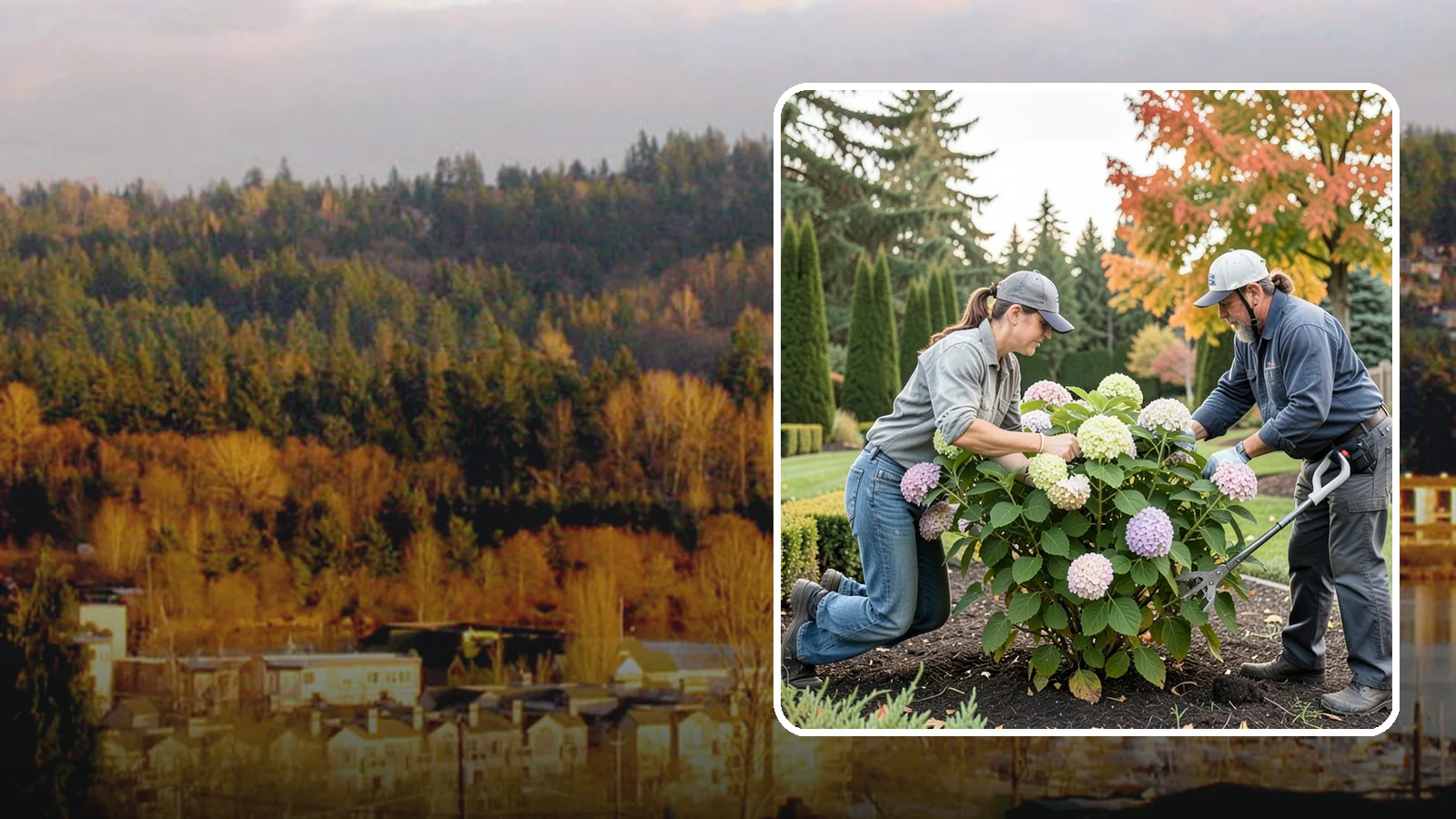
Local Materials & Plants: Dependable Northwest selections like rhododendrons, hydrangeas, ferns, and evergreen shrubs thrive in Kenmore’s mild climate, paired with hardy perennials and lawns suited to wet winters. Bark mulch, gravel, and natural stone support beds, paths, and drainage on the area’s varied lots.
Planning Your Project: Planning in Kenmore often weighs winter drainage, slope access, and staging on established lots, so grading and hardscape are best scheduled for the drier months. Downspout and runoff management deserve early attention, and general local guidance should be reviewed before significant earthwork near the lake.
If you’re improving drainage, refreshing a lakeside yard, or updating a lot near Log Boom Park, reach out to talk through your Kenmore property and build a landscaping plan that fits your goals.