Local Service Information
Lake Forest Park
A heavily wooded residential city at the north end of Lake Washington.
County: King County
ZIP Codes Served: 98155
Neighborhoods: Sheridan Beach, Brookside, and the Town Center area
Nearby Communities: Shoreline, Kenmore, Seattle
Common Property Types: Predominantly established single-family residential properties, many on larger landscaped lots; commercial development is very limited.
Local Tree & Landscape Notes: Common regional trees include Douglas fir, western red cedar, western hemlock, bigleaf maple, and red alder, alongside many ornamental species. Wet soils and dense canopy are common considerations for access and scheduling.
Permit Considerations: Permit requirements vary depending on tree size, species, protected areas, shoreline regulations, critical areas, and local municipal code. Always verify current requirements with the local jurisdiction before beginning work.
Climate: Marine west coast climate typical of the Puget Sound region: mild, wet winters and warm, relatively dry summers, with most rainfall from fall through spring. Occasional wind, snow, and ice events and seasonal soil saturation influence tree health and the timing of tree work.
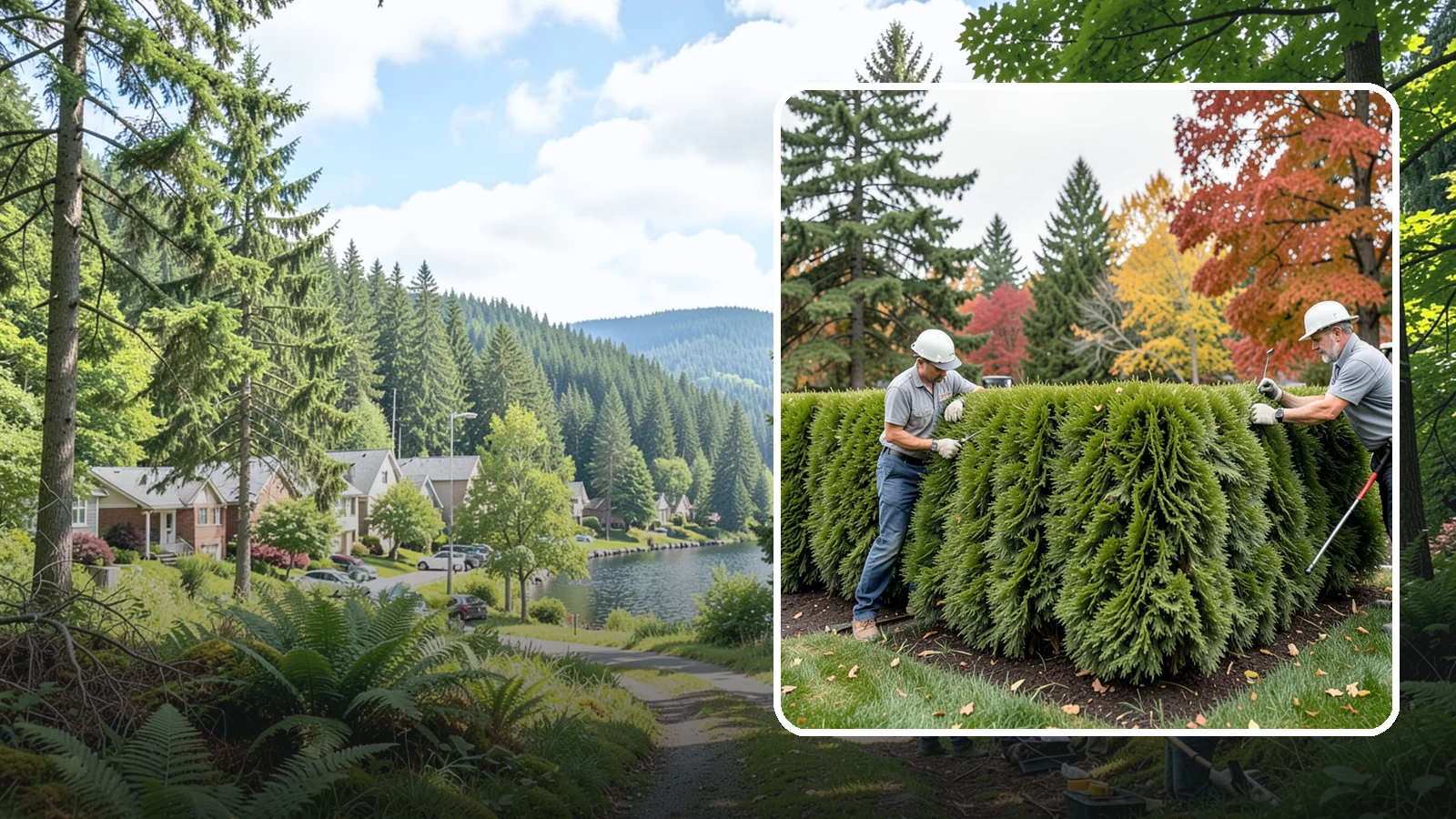
True to its name, Lake Forest Park is a leafy, tree-shaded community where landscaping is defined by mature woodland canopy and generous, established lots. Neighborhoods like Sheridan Beach and Brookside sit among tall conifers and big-leaf maples, so much of the work here revolves around managing shade, roots, and understory rather than open lawn. With the Burke-Gilman Trail threading through and the Town Center nearby, residents tend to value naturalistic, low-key landscaping that blends into the surrounding King County greenery.
Landscaping here is shaped by heavy tree cover and larger, wooded parcels, so services often center on canopy management, shade-tolerant beds, and keeping paths and drives clear of debris. Owners near Sheridan Beach and Brookside typically want designs that feel woodsy and unforced, working with the existing forest rather than clearing it away.
Site Conditions: Deep shade under a dense conifer canopy is the defining condition across much of Lake Forest Park, along with root-filled, acidic forest soil and slopes that channel runoff toward Lake Washington. Moisture stays high and sunny openings are limited, so plant selection and drainage planning both hinge on how much light each spot actually receives.
Seasonal Considerations: Spring cleanups here focus on clearing winter leaf litter and moss from shaded lawns and paths. Summers are mild and only lightly stressful for established woodland plants, though newer plantings still need water. Autumn brings a heavy leaf drop from the big deciduous trees that demands ongoing management, and winter is the season for careful pruning, storm cleanup, and checking that runoff moves cleanly off sloped lots.
Common Project Types: Projects in Lake Forest Park frequently involve shade gardens, moss-tolerant or alternative ground covers, natural stone paths, drainage improvements on sloping lots, and selective tree and understory work. Larger landscaped properties near Brookside often call for refreshed woodland beds, while Town Center-adjacent homes may want tidier, lower-maintenance frontage.
Property Styles: Lake Forest Park is dominated by established single-family homes on larger, heavily landscaped lots, with very little commercial development beyond the Town Center. These wooded parcels often come with significant grade changes, mature specimen trees, and layered understory, rewarding designs that respect the existing canopy and work around root zones.
Local Materials & Plants: Shade-loving Northwest natives shine here: sword ferns, salal, vine maple, hostas, and evergreen huckleberry all thrive under the canopy, while rhododendrons and hydrangeas suit the acidic soil. Bark mulch, moss, and natural stone fit the woodland aesthetic far better than manicured turf or formal ornamentals.
Planning Your Project: Working under a mature canopy means planning around root protection, limited equipment access on wooded lots, and the reality that shaded ground dries slowly after rain. Timing soil-disturbing work for drier stretches helps, and any tree work or grading near slopes and the lake side is worth reviewing against local requirements first.
Whether your Lake Forest Park property is a shaded woodland lot near Sheridan Beach or a tidy home close to the Town Center, reach out to talk through a landscaping approach that works with your trees, your grade, and this forested setting.