Shaping Your Outdoors. Surpassing Expectations.

Lake Stevens Bark Installation
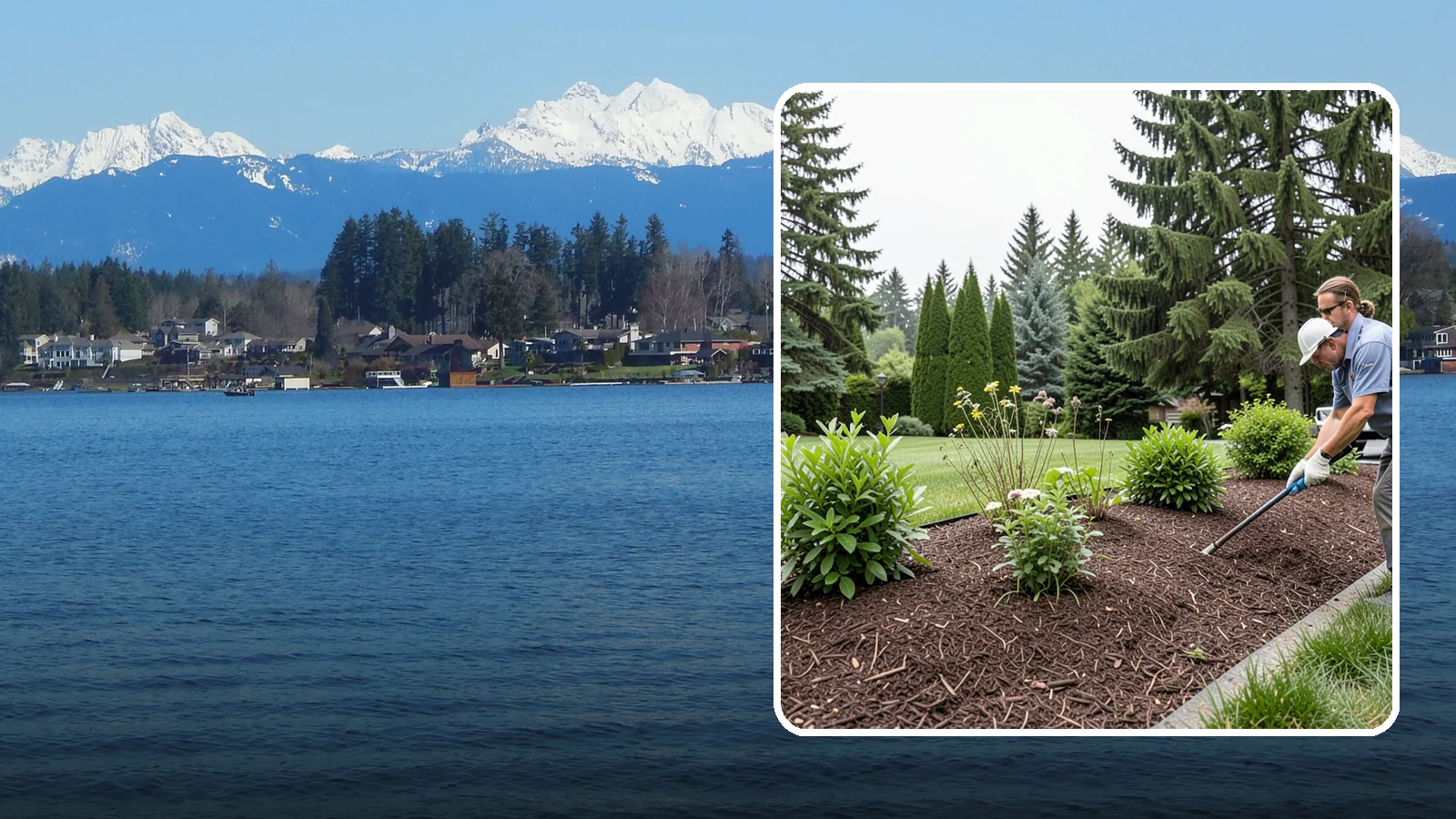
Bark mulch and beauty bark installed for a rich, uniform finish that suppresses weeds and holds moisture.
Your beds look thin. Soil shows through in patches, weeds push up through old mulch, and the bark you laid a few years ago has broken down into dark crumbs. In Lake Stevens, that usually means it is time for a fresh layer.
Washington Landscaping installs bark in planting beds, around trees and along borders. We have been in business since 2004 and offer free estimates. Call or text 425-433-9444 to talk through your yard.
Bark installation in Lake Stevens: wet winters, dry July
Bark breaks down because it stays damp and soil organisms feed on it. Over a few seasons a layer that started deep becomes thin and fine. Once it thins, light reaches the soil and weeds sprout again.
Rain timing matters here. Per Daymet data for 2005-2025, about 78% of Lake Stevens's yearly precipitation falls from October to April. Bare soil in those months takes the full force of the rain. Bark helps shield it from splashing and crusting. It also slows runoff from beds. Spreading bark in early fall, before the wet season starts, lets it do that work through winter.
July is the dry month. It averages about 0.74 in of rain over the same period. Bark holds moisture in the soil beneath it and slows evaporation, which helps shrubs and young trees through summer. Even so, newly mulched beds still need watering when it is dry. Mulch reduces watering needs. It does not replace watering.
Slope is another factor. About 12% of Lake Stevens's land slopes 15% or more, per USGS 3DEP elevation data. That figure describes the city as a whole, and your yard may be flatter or steeper. On a steep bed, loose bark can wash downhill in heavy rain. Coarser, chunkier bark tends to stay put better than fine bark. Edging or a shallow step in the bed can also help hold it.
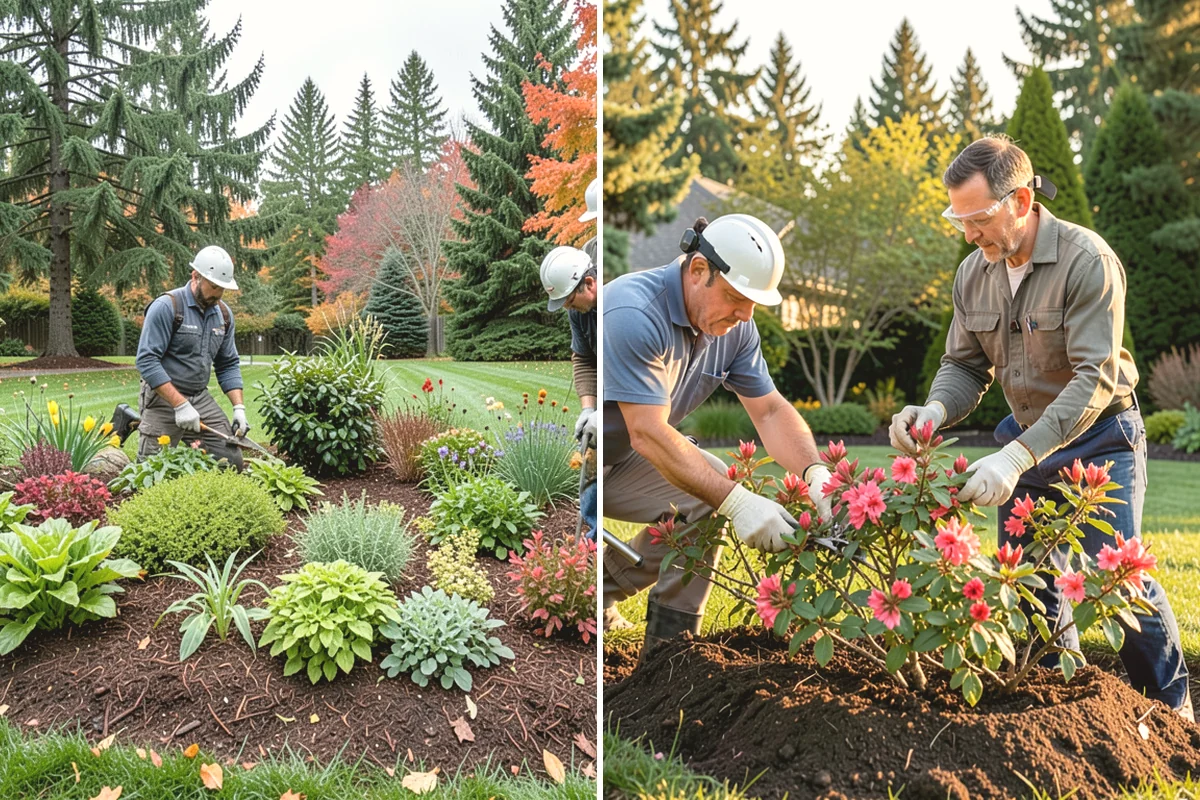
The work itself is simple and done in order. We clear weeds and debris from the bed, define the edges, and check how much old bark remains. Then we spread new bark to an even depth, usually a few inches. We keep it back from trunks and stems, because piled bark against the base of a plant holds moisture and can cause rot.
We offer free estimates, so you can see the scope before any work starts.
Lake Stevens yard conditions at a glance
| Frost-free season | about 225 days |
|---|---|
| Tree canopy | 31.4% of the city |
| Days with 0.1 in or more of rain | 136 a year |
| Dry months (under 1.25 in) | July |
| Last / first frost (median) | Mar 24 / Nov 10 |
A year in a Lake Stevens yard
- Late winter
- Dormant pruning for most deciduous trees and shrubs, before buds break.
- Spring
- Last frost is usually around Mar 24; in 1 year in 10 it comes on or after Apr 12. Plant frost-tender annuals and vegetables after that.
- Early summer
- Check sprinklers and drip lines before July, the start of the dry months here.
- Summer
- July average 0.7 in. Water deeply and less often; mulch beds to hold moisture.
- Fall
- Aerate, overseed and plant trees and shrubs while the soil is warm; first frost is usually around Nov 10. Winterize irrigation before then.
- Winter
- About 40 days a year freeze at night and thaw by day: keep drains, paver joints and wall weep holes clear.
Dates are medians for the city from Daymet 2005-2025; your yard and any given year can differ.
Sources: Daymet daily weather (NASA/ORNL), 2023 USDA Plant Hardiness Zone Map data (PRISM, Oregon State University), USDA SSURGO soil survey, USGS 3DEP elevation, USFS/NLCD tree canopy 2025, US Census ACS 2020-2024.
Lake Stevens Bark Installation
Local Service Information
Lake Stevens
A city surrounding the lake of the same name in central Snohomish County.
Benefits
Rich, uniform color that lasts; Longer-lasting than finer mulches; Suppresses weeds and holds moisture; Fine to nugget grades to suit the look; The classic PNW beauty bark finish
Process

Bark Installation in nearby areas
Also serving Lake Stevens
- Wood milling in Lake Stevensat Washington Tree Services
Get a Free Bark Installation Estimate in Lake Stevens
Tell us about your project. We’ll review your needs and provide a customized, no-obligation proposal.
Request a Free Consultation
Complete the form or call our team to discuss your project.
On-Site Assessment
We’ll review your property, discuss your goals, and recommend an appropriate solution.
Receive a Customized Proposal
Receive a detailed estimate outlining the proposed work and pricing.