Shaping Your Outdoors. Surpassing Expectations.

Lake Stevens Lawn Dethatching
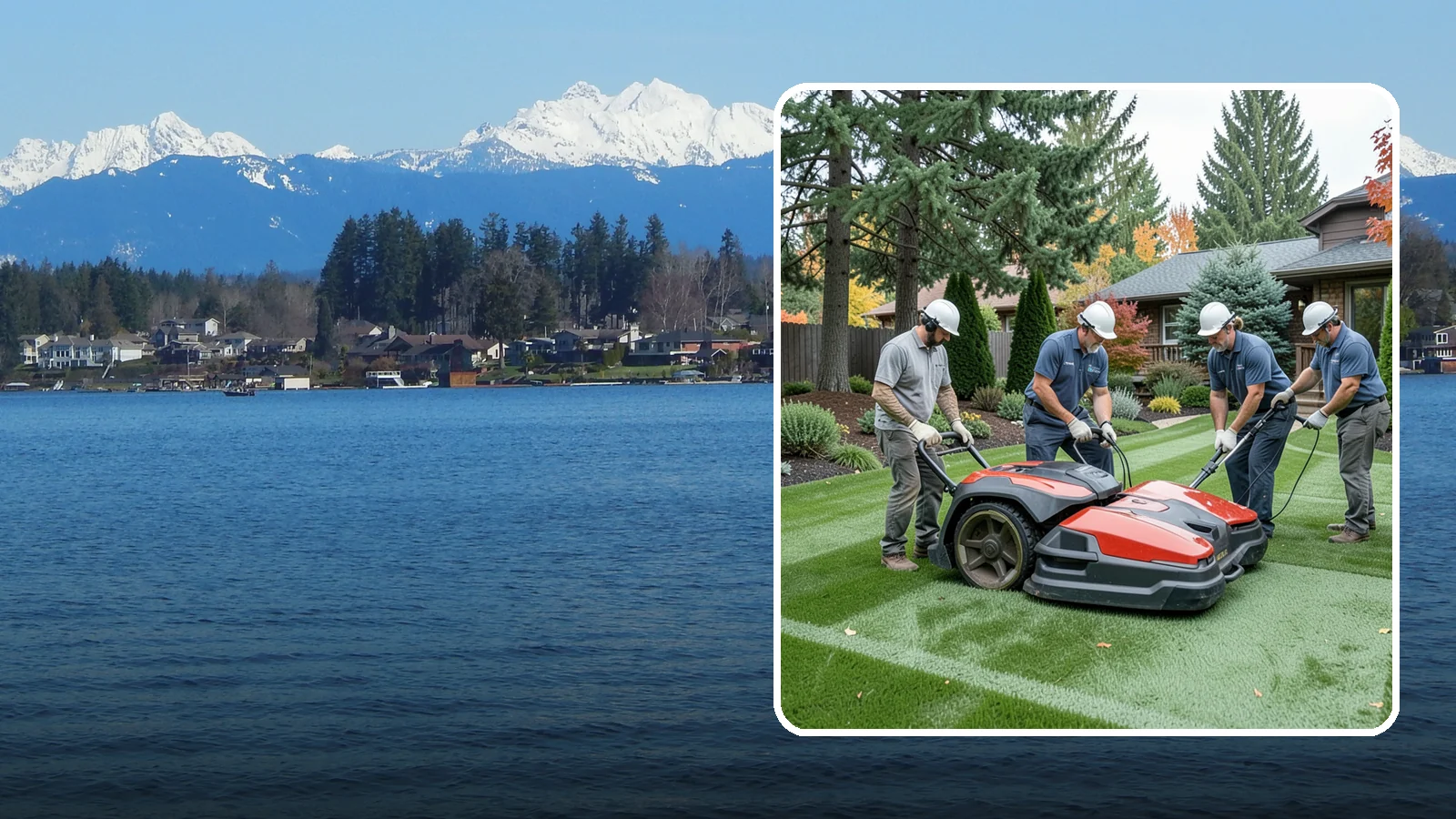
Dethatching that removes the built-up layer of dead grass smothering your lawn.
The lawn feels spongy underfoot. Water runs off instead of soaking in, and the grass looks thin even though you mow and feed it. In many Lake Stevens yards, a layer of dead stems and roots has built up between the green blades and the soil.
That layer is thatch. Lawn dethatching removes it so air, water and fertilizer can reach the roots again. Washington Landscaping, based in Bothell and in business since 2004, offers free estimates if you want someone to look at your lawn first.
Why Lake Stevens Lawns Build Thatch and How We Remove It
Thatch is a mix of living and dead stems, roots and runners that piles up faster than it breaks down. A thin layer is normal and even helpful. Once it gets thick, it holds water at the surface, blocks fertilizer and shelters pests and disease. Heavy feeding, frequent shallow watering and vigorous grasses can all speed the buildup.
Local conditions matter here. Per Daymet records for 2005-2025, Lake Stevens gets about 136 days a year with 0.1 inch or more of rain. A lawn that stays wet that often is more prone to moss and slow decomposition, and a thick thatch layer acts like a sponge on top of the soil. Dethatching will not fix poor drainage, but it removes one reason the surface stays soggy.
Tree cover is another factor. The USFS/NLCD 2025 data shows tree canopy over about 31.4% of Lake Stevens as a whole. Your own yard may have more or less shade. In shaded areas, grass grows thinner and moss moves in, and dethatching alone may not be enough. We can talk through thinning branches, overseeding with shade-tolerant seed or accepting a different groundcover in the darkest spots.
How the work goes
We mow the lawn short, then run a power dethatcher across it. The machine pulls up thatch, which we rake and haul away. Then we look at the lawn again. Bare patches are often followed by overseeding, and compacted soil may call for aeration. Because dethatching stresses the turf, timing matters. The median last spring frost in Lake Stevens is March 24 (Daymet, 2005-2025). Frost can come earlier or later in a given year, so we usually wait until the grass is actively growing and the soil is workable. Early fall is another common window in Puget Sound lawns.
Call or text 425-433-9444 for a free estimate. Financing is available, subject to credit approval.
Lake Stevens yard conditions at a glance
| Soil drainage (rated land) | 4% well, 88% moderately well, 8% poorly drained |
|---|---|
| Dry months (under 1.25 in) | July |
| Frost-free season | about 225 days |
| Tree canopy | 31.4% of the city |
| Days with 0.1 in or more of rain | 136 a year |
A year in a Lake Stevens yard
- Late winter
- Dormant pruning for most deciduous trees and shrubs, before buds break.
- Spring
- Last frost is usually around Mar 24; in 1 year in 10 it comes on or after Apr 12. Plant frost-tender annuals and vegetables after that.
- Early summer
- Check sprinklers and drip lines before July, the start of the dry months here.
- Summer
- July average 0.7 in. Water deeply and less often; mulch beds to hold moisture.
- Fall
- Aerate, overseed and plant trees and shrubs while the soil is warm; first frost is usually around Nov 10. Winterize irrigation before then.
- Winter
- About 40 days a year freeze at night and thaw by day: keep drains, paver joints and wall weep holes clear.
Dates are medians for the city from Daymet 2005-2025; your yard and any given year can differ.
How Lake Stevens’s soils drain
- Well drained4%
- Moderately well88%
- Poorly drained8%
Share of rated land in the USDA SSURGO soil survey; built-over ground is not rated. A soil check on your lot tells you what you have.
Sources: Daymet daily weather (NASA/ORNL), 2023 USDA Plant Hardiness Zone Map data (PRISM, Oregon State University), USDA SSURGO soil survey, USGS 3DEP elevation, USFS/NLCD tree canopy 2025, US Census ACS 2020-2024.
Lake Stevens Lawn Dethatching
Local Service Information
Lake Stevens
A city surrounding the lake of the same name in central Snohomish County.
Benefits
Removes the barrier that blocks water and nutrients; Reduces moss, pests, and disease pressure; Lets new growth and overseeding thrive; Improves the effectiveness of fertilization; Revives tired, spongy-feeling lawns
Process
Lawn Dethatching in nearby areas
Get a Free Lawn Dethatching Estimate in Lake Stevens
Tell us about your project. We’ll review your needs and provide a customized, no-obligation proposal.
Request a Free Consultation
Complete the form or call our team to discuss your project.
On-Site Assessment
We’ll review your property, discuss your goals, and recommend an appropriate solution.
Receive a Customized Proposal
Receive a detailed estimate outlining the proposed work and pricing.