Shaping Your Outdoors. Surpassing Expectations.

Lake Stevens Playground Turf Installation
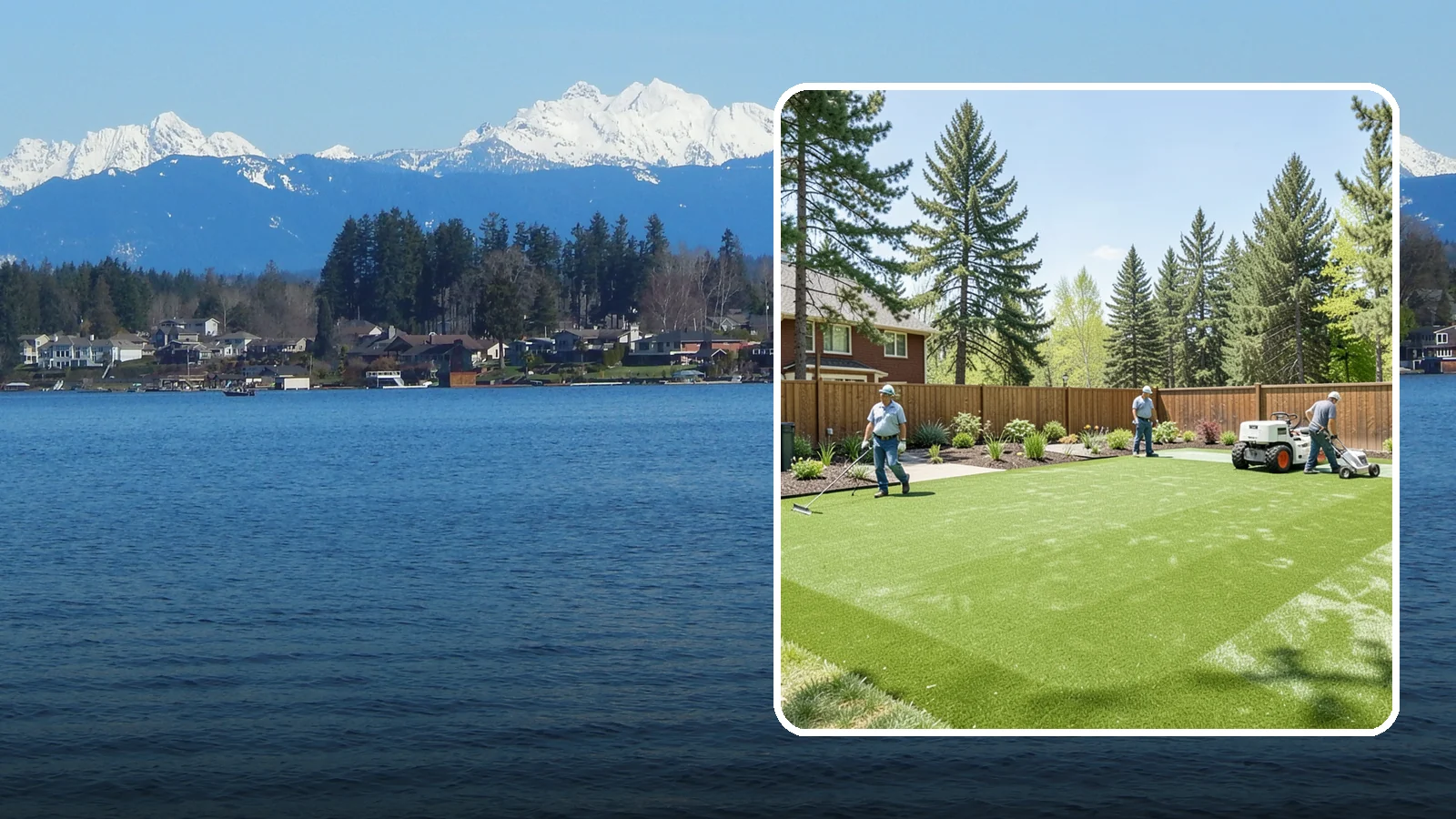
Safe, cushioned playground turf with impact padding for a soft, clean, all-weather play surface.
The best window for playground turf installation in Lake Stevens is the dry stretch of summer. July averages about 0.74 in of rain (Daymet, 2005-2025), so the base can be prepared and compacted without working in mud. Rain is common through the rest of the year, with about 136 days a year at 0.1 in or more.
Washington Landscaping installs playground turf for homeowners, and we can walk your play area with you before any work is scheduled. Estimates are free. Below is how planning works, what changes the scope, and what to expect on site.
Planning Playground Turf in Lake Stevens, WA
Start with the play area itself. Note where the swing set, slide or climbing structure sits, where kids land, and where water collects after a storm. Turf is only as good as what is under it, so the base matters as much as the surface.
Drainage drives the base work
Per the USDA soil survey, about 88% of Lake Stevens's rated land is moderately well drained, about 4% is well drained and about 8% is poorly drained. That describes the city as a whole. Your yard may differ, especially in a low spot or near a downspout. If water sits on the surface for a day or two after rain, tell us. A soggy area may need more attention to the base and how water leaves the site before turf goes down.
What affects scope
Several things change the size of the job:
The square footage of the play area and its shape. Existing grass, roots or old bark mulch that must be removed. Slope, which may need leveling. Edging along lawn or beds. The play equipment, since turf must be cut and fitted around posts and anchors. Access also matters, because a narrow gate limits what equipment can reach the yard.
What to expect
The usual sequence is clearing the area, grading, spreading and compacting a crushed rock base, laying the turf, securing the edges and seams, and finishing the infill if the product calls for it. Because the ground is easiest to work when it is dry, a July start gives the base its best chance to settle properly. Rain can still delay a job, so keep the schedule flexible.
We are licensed, bonded and insured, and financing is available subject to credit approval. If your structure sits near a fence line or a grade change, permit needs are checked with the city before work starts.
One practical tip: before we visit, run a hose on the play area for ten minutes and watch where the water goes. Take a photo and share it with us when you call or text 425-433-9444.
Lake Stevens yard conditions at a glance
| Dry months (under 1.25 in) | July |
|---|---|
| Days with 0.1 in or more of rain | 136 a year |
| Soil drainage (rated land) | 4% well, 88% moderately well, 8% poorly drained |
| Tree canopy | 31.4% of the city |
A year in a Lake Stevens yard
- Late winter
- Dormant pruning for most deciduous trees and shrubs, before buds break.
- Spring
- Last frost is usually around Mar 24; in 1 year in 10 it comes on or after Apr 12. Plant frost-tender annuals and vegetables after that.
- Early summer
- Check sprinklers and drip lines before July, the start of the dry months here.
- Summer
- July average 0.7 in. Water deeply and less often; mulch beds to hold moisture.
- Fall
- Aerate, overseed and plant trees and shrubs while the soil is warm; first frost is usually around Nov 10. Winterize irrigation before then.
- Winter
- About 40 days a year freeze at night and thaw by day: keep drains, paver joints and wall weep holes clear.
Dates are medians for the city from Daymet 2005-2025; your yard and any given year can differ.
How Lake Stevens’s soils drain
- Well drained4%
- Moderately well88%
- Poorly drained8%
Share of rated land in the USDA SSURGO soil survey; built-over ground is not rated. A soil check on your lot tells you what you have.
Sources: Daymet daily weather (NASA/ORNL), 2023 USDA Plant Hardiness Zone Map data (PRISM, Oregon State University), USDA SSURGO soil survey, USGS 3DEP elevation, USFS/NLCD tree canopy 2025, US Census ACS 2020-2024.
Lake Stevens Playground Turf Installation
Local Service Information
Lake Stevens
A city surrounding the lake of the same name in central Snohomish County.
Benefits
Soft, cushioned surface for falls; Meets playground safety standards; Clean and usable in any weather; No mud, no mowing; Durable for heavy play
Process

Playground Turf Installation in nearby areas
Also serving Lake Stevens
- Privacy Screen Installation in Lake Stevensat Washington Construction
Get a Free Playground Turf Installation Estimate in Lake Stevens
Tell us about your project. We’ll review your needs and provide a customized, no-obligation proposal.
Request a Free Consultation
Complete the form or call our team to discuss your project.
On-Site Assessment
We’ll review your property, discuss your goals, and recommend an appropriate solution.
Receive a Customized Proposal
Receive a detailed estimate outlining the proposed work and pricing.