Shaping Your Outdoors. Surpassing Expectations.

Lake Stevens Roof Snow Removal
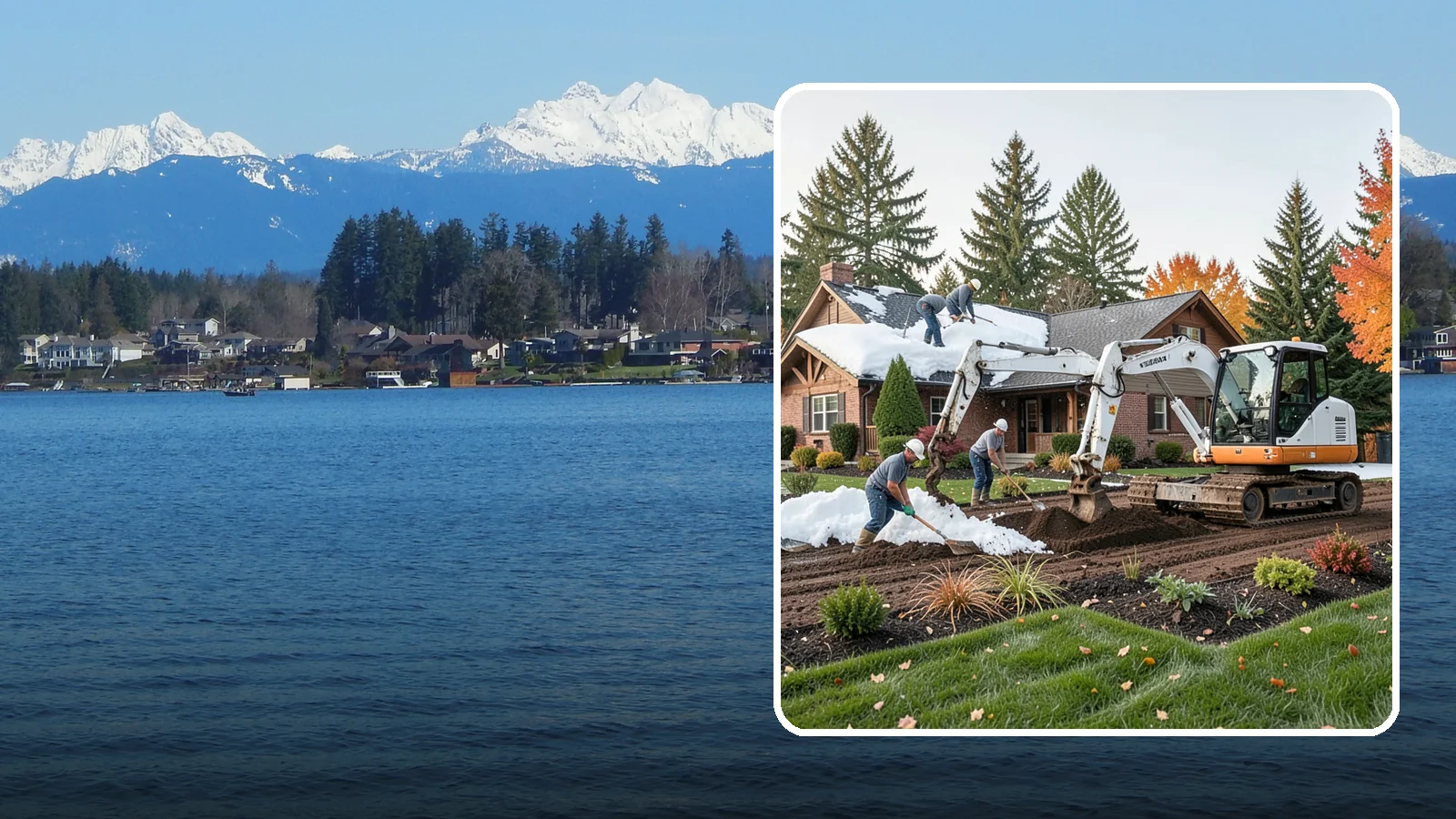
We safely remove heavy, wet snow loads from roofs to protect Puget Sound structures from stress, leaks, and collapse.
You look up after a snowfall and see a thick layer sitting on the roof. Maybe the gutters sag, or you hear creaks from the attic, or ice is building along the eaves. Then you wonder whether the snow should come off.
Washington Landscaping offers roof snow removal in Lake Stevens. Snow here is not constant, but when it does stack up, wet snow on a roof can get heavy. This page explains what causes the problem, how local conditions affect it, and how the work is done.
Roof snow and freezing nights in Lake Stevens
Most roof snow trouble starts with weight and with melt cycles. Fresh snow is light. Wet, packed or refrozen snow is much heavier, and it sits on a structure that was built for a set load. Ice dams form when heat escaping from the house melts snow on the upper roof. The water runs down, hits the cold eave, and freezes again. Backed-up water can then work under shingles.
Lake Stevens does not get a lot of snow. The average is 7.8 inches per season, and only about 2.4 days a year bring an inch or more. That means many winters pass with little to remove. It also means a heavy storm can catch homeowners off guard, since few people keep tools or a plan ready for it.
Freezing nights matter as much as snowfall. The city sees about 41 nights a winter, October to April, that drop below freezing. Those are nights, not days that stay frozen all day, so snow often softens by afternoon and refreezes after dark. That cycle is what builds ice at the eaves. Frost can also come earlier or later in any given year.
Elevation is another factor. Lake Stevens ranges from about 105 feet to 441 feet, per USGS 3DEP. Higher parts of town can hold snow longer than lower parts, so your own street may behave differently from a neighbor's across town.
The work itself is careful and plain. We clear snow from the roof in sections, usually with light tools made for the job, and we take care not to scrape shingles, flashing, vents or gutters. The goal is to lower the load and open the eaves, not to bare every inch of roof. We also look at the ground below for where the snow will land, such as walkways, plants and fixtures. If you want a look at your roof, call or text 425-433-9444. Estimates are free.
Lake Stevens yard conditions at a glance
| Average snowfall | 7.8 in a season; 2.4 days with 1 in or more |
|---|---|
| Days that freeze at night and thaw by day | 40 a year |
| Last / first frost (median) | Mar 24 / Nov 10 |
| Elevation range | 105 to 441 ft |
A year in a Lake Stevens yard
- Late winter
- Dormant pruning for most deciduous trees and shrubs, before buds break.
- Spring
- Last frost is usually around Mar 24; in 1 year in 10 it comes on or after Apr 12. Plant frost-tender annuals and vegetables after that.
- Early summer
- Check sprinklers and drip lines before July, the start of the dry months here.
- Summer
- July average 0.7 in. Water deeply and less often; mulch beds to hold moisture.
- Fall
- Aerate, overseed and plant trees and shrubs while the soil is warm; first frost is usually around Nov 10. Winterize irrigation before then.
- Winter
- About 40 days a year freeze at night and thaw by day: keep drains, paver joints and wall weep holes clear.
Dates are medians for the city from Daymet 2005-2025; your yard and any given year can differ.
Sources: Daymet daily weather (NASA/ORNL), 2023 USDA Plant Hardiness Zone Map data (PRISM, Oregon State University), USDA SSURGO soil survey, USGS 3DEP elevation, USFS/NLCD tree canopy 2025, US Census ACS 2020-2024.
Lake Stevens Roof Snow Removal
Local Service Information
Lake Stevens
A city surrounding the lake of the same name in central Snohomish County.
Benefits
Relieves dangerous structural loads from wet, heavy snow; Reduces ice-dam formation along eaves and valleys; Protects roofing materials from careless clearing damage; Helps prevent interior leaks and water intrusion; Performed by crews trained for safe roof access
Process
Roof Snow Removal in nearby areas
Also serving Lake Stevens
- Brush Chipping in Lake Stevensat Washington Tree Services
- Per-Push Snow Removal in Lake Stevensat Washington Snow Removal
Get a Free Roof Snow Removal Estimate in Lake Stevens
Tell us about your project. We’ll review your needs and provide a customized, no-obligation proposal.
Request a Free Consultation
Complete the form or call our team to discuss your project.
On-Site Assessment
We’ll review your property, discuss your goals, and recommend an appropriate solution.
Receive a Customized Proposal
Receive a detailed estimate outlining the proposed work and pricing.