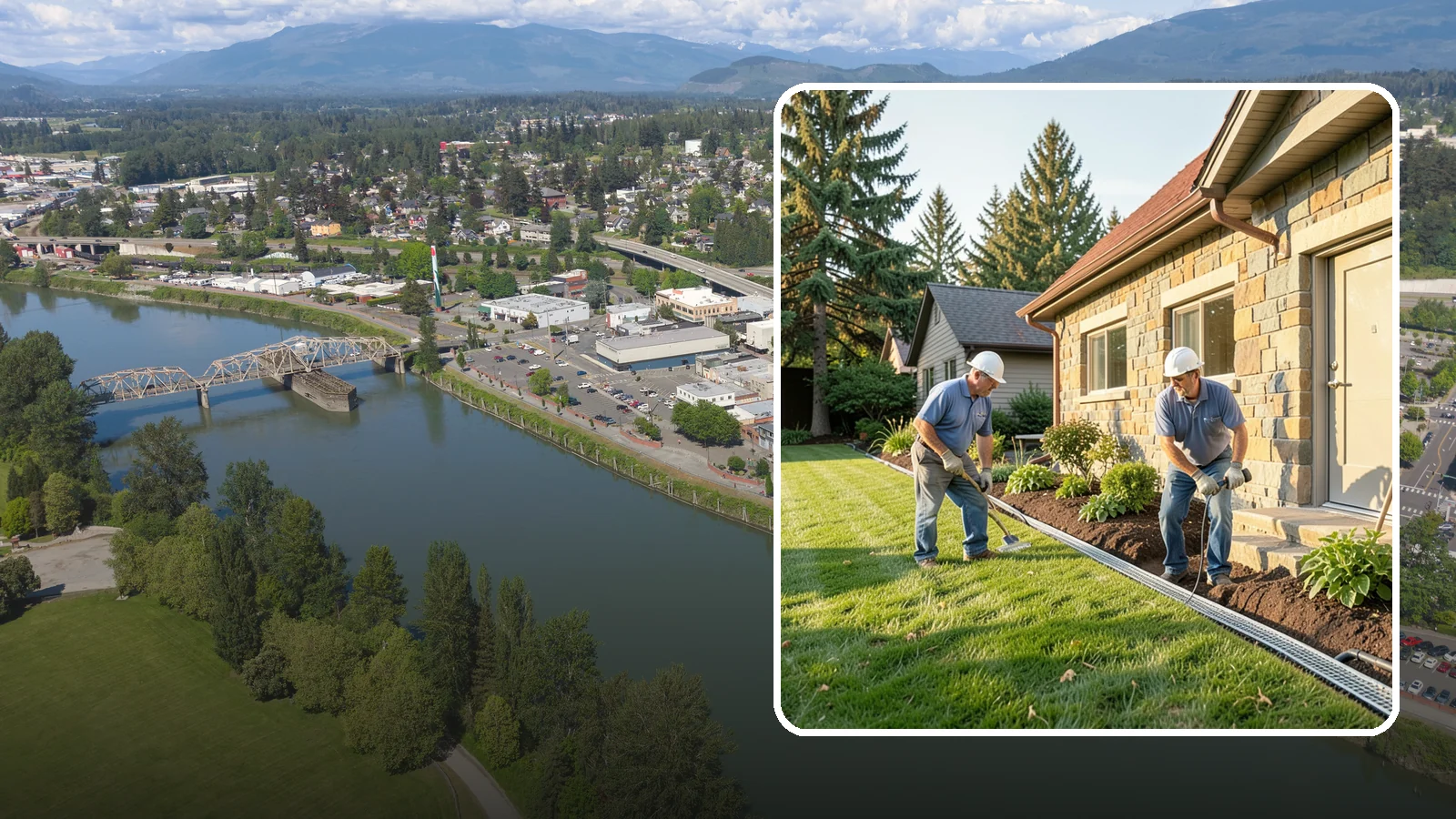
Local Service Information
Mount Vernon
The Skagit County seat, set in the Skagit River valley amid farmland.
County: Skagit County
ZIP Codes Served: 98273, 98274
Neighborhoods: Downtown, College Way, Little Mountain
Nearby Communities: Burlington, Sedro-Woolley, Anacortes, La Conner
Common Property Types: Predominantly single-family homes, with some townhomes and multifamily housing; commercial property includes small retail, civic, and light commercial buildings.
Local Tree & Landscape Notes: Common regional trees include Douglas fir, western red cedar, western hemlock, bigleaf maple, and red alder, alongside many ornamental species. Wet soils and dense canopy are common considerations for access and scheduling.
Permit Considerations: Permit requirements vary depending on tree size, species, protected areas, shoreline regulations, critical areas, and local municipal code. Always verify current requirements with the local jurisdiction before beginning work.
Climate: Marine west coast climate typical of the Puget Sound region: mild, wet winters and warm, relatively dry summers, with most rainfall from fall through spring. Occasional wind, snow, and ice events and seasonal soil saturation influence tree health and the timing of tree work.
Mount Vernon sits along the Skagit River at the heart of the Skagit Valley, a region famous for its tulip fields, and landscaping here draws naturally on that rich agricultural, garden-loving identity. Neighborhoods from Downtown to College Way and Little Mountain range from historic in-town lots to newer hillside homes, and residents near the Skagit River waterfront and Little Mountain Park often embrace colorful, productive gardens. With Burlington, Sedro-Woolley, and La Conner close by, the valley’s fertile character shapes how yards are planted and used.
Landscaping in Mount Vernon reflects the valley’s gardening heritage, with strong interest in flower beds, productive plantings, and well-kept lawns across single-family neighborhoods. Services range from routine maintenance to seasonal color installations, and homeowners near the tulip-field countryside frequently want landscapes that celebrate the area’s reputation for vibrant spring displays.
Site Conditions: The Skagit Valley floor around Mount Vernon holds famously fertile, often fine-textured soils, though low-lying areas near the Skagit River can drain slowly and stay moist. As part of the Puget Sound lowlands in zone 8b, winters are mild and wet; the Little Mountain lots offer better drainage and slope, while valley yards range from full sun to shade under mature trees.
Seasonal Considerations: Spring is the marquee season here, with bed prep, bulb displays, and lawn feeding as the valley bursts into color. Summer focuses on irrigation and upkeep of productive and ornamental gardens, fall brings leaf cleanup, aeration, and bulb planting for next spring, and winter suits pruning, soil building, and planning the coming season’s plantings.
Common Project Types: Typical Mount Vernon projects include flower and perennial bed installations, raised vegetable gardens, lawn renovation, and refreshed front-yard plantings that lean into the valley’s colorful reputation. Hillside homes near Little Mountain may want terraced beds and drainage work, while in-town lots often call for garden restoration and seasonal color.
Property Styles: Mount Vernon properties span compact historic downtown lots, established neighborhoods off College Way, and newer homes climbing Little Mountain. Many yards have room for gardens and lawns, reflecting the valley’s productive character, and the range from flat in-town parcels to sloping hillside lots shapes how planting and outdoor space are approached.
Local Materials & Plants: Given the valley’s fertile ground, tulips and other spring bulbs, dahlias, hydrangeas, and productive vegetables all thrive around Mount Vernon. Moisture-tolerant plants suit low valley spots, drought-hardy perennials fit the drier Little Mountain slopes, and compost-rich amendments, bark mulch, and raised-bed timber support the area’s strong gardening tradition.
Planning Your Project: Planning in Mount Vernon can lean into the valley’s seasonal rhythm, timing bulb planting for fall and major color installs for spring. Drainage work on valley-floor lots is best done in drier stretches, hardscape suits summer, and any grading or river-adjacent project should be reviewed generally for local requirements before work begins.
Want a Mount Vernon landscape that reflects the Skagit Valley’s love of color and gardens? Reach out to discuss your yard and create a planting plan suited to your neighborhood and soil.