Local Service Information
North Bend
A city at the base of Mount Si in the upper Snoqualmie valley, surrounded by mountains and forest.
County: King County
ZIP Codes Served: 98045
Neighborhoods: Downtown North Bend, Tanner, and Si View
Nearby Communities: Snoqualmie, Issaquah
Common Property Types: Predominantly single-family homes, with some townhomes and multifamily housing; commercial property includes small retail, civic, and light commercial buildings.
Local Tree & Landscape Notes: Mountain and heavily forested setting with large conifers including Douglas fir, western hemlock, and western red cedar. Steep terrain, limited access, and large trees are key considerations for planning and rigging.
Permit Considerations: Permit requirements vary depending on tree size, species, protected areas, shoreline regulations, critical areas, and local municipal code. Always verify current requirements with the local jurisdiction before beginning work.
Climate: Marine west coast climate typical of the Puget Sound region: mild, wet winters and warm, relatively dry summers, with most rainfall from fall through spring. Occasional wind, snow, and ice events and seasonal soil saturation influence tree health and the timing of tree work.
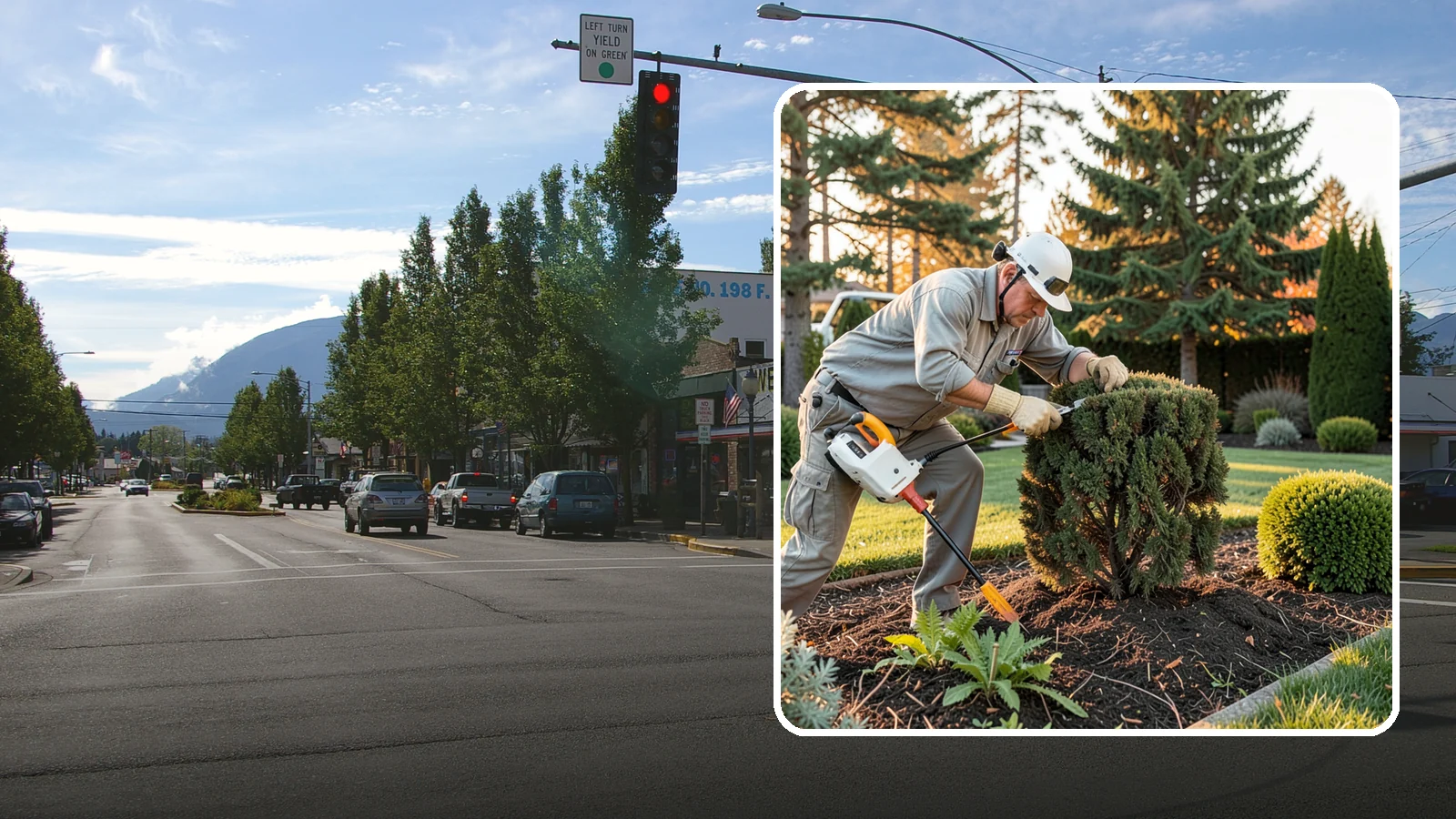
Landscaping in North Bend carries a distinctly foothills character, with yards that sit in the shadow of Mount Si and often back onto the wooded slopes leading toward Rattlesnake Ledge. Properties around Downtown North Bend, Tanner, and the Si View area range from tidy in-town lots to larger parcels edging the Snoqualmie River, so plantings here have to hold up to cool, wet valleys and the occasional dusting of mountain snow. Homeowners tend to favor a rugged, naturalistic look that blends mowed lawn with native evergreens and shrub borders feeling at home against the surrounding forest.
Because North Bend sits higher and colder than the Puget Sound lowlands nearer Snoqualmie and Issaquah, landscaping work is usually scheduled around a shorter, later-starting growing season and a real risk of lingering frost. Many residents lean on hardy, low-fuss plantings and durable hardscape so their yards stay presentable through long, damp winters without constant fussing.
Site Conditions: Valley-floor lots near the Snoqualmie River often deal with heavy, moisture-holding soil and slow drainage, while parcels rising toward Mount Si can be rockier and steeper. Cold air settles in the valley overnight, so shaded, wet pockets are common and frost lingers later here than out in the flatter lowlands.
Seasonal Considerations: Spring arrives a bit late in the valley, so seeding and fresh planting are best held until the ground truly warms; summer brings a short, bright stretch ideal for building beds and mulching. Autumn is prime time for clearing leaves off riverside lots and cutting back perennials, and winter calls for protecting tender plants and keeping drainage paths clear of debris and snowmelt.
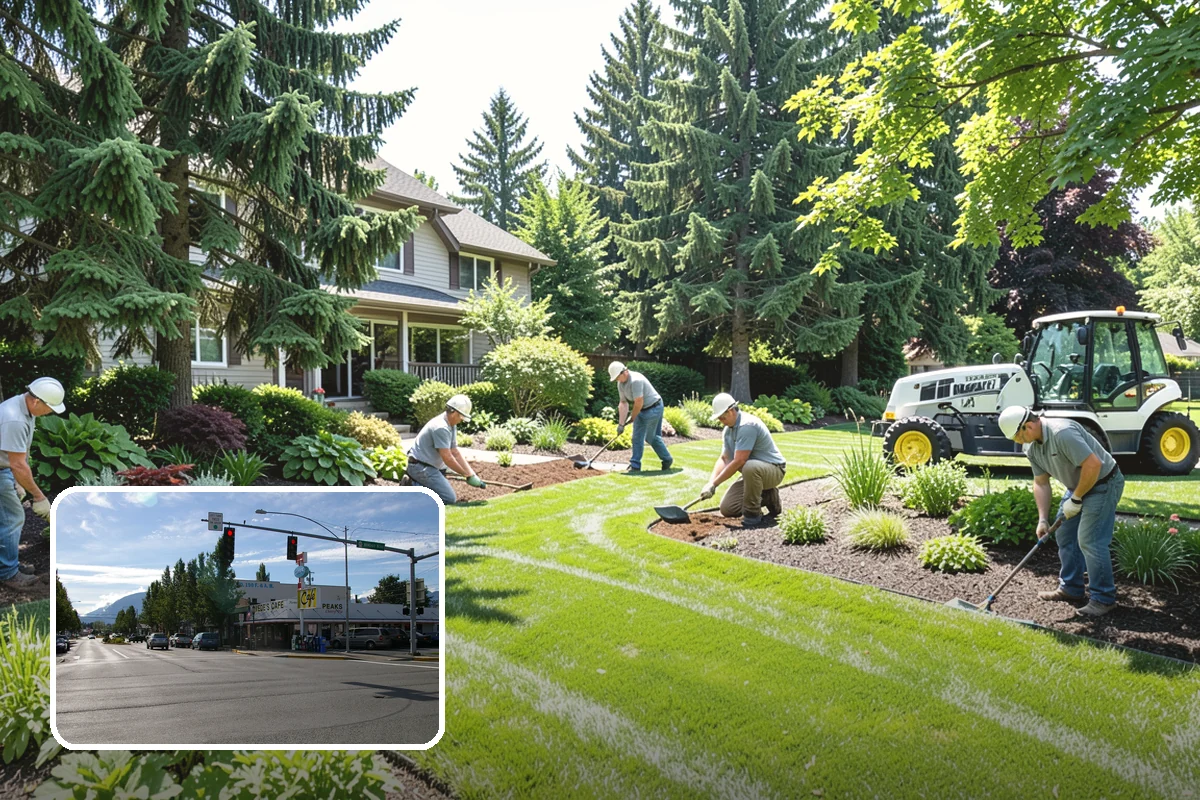
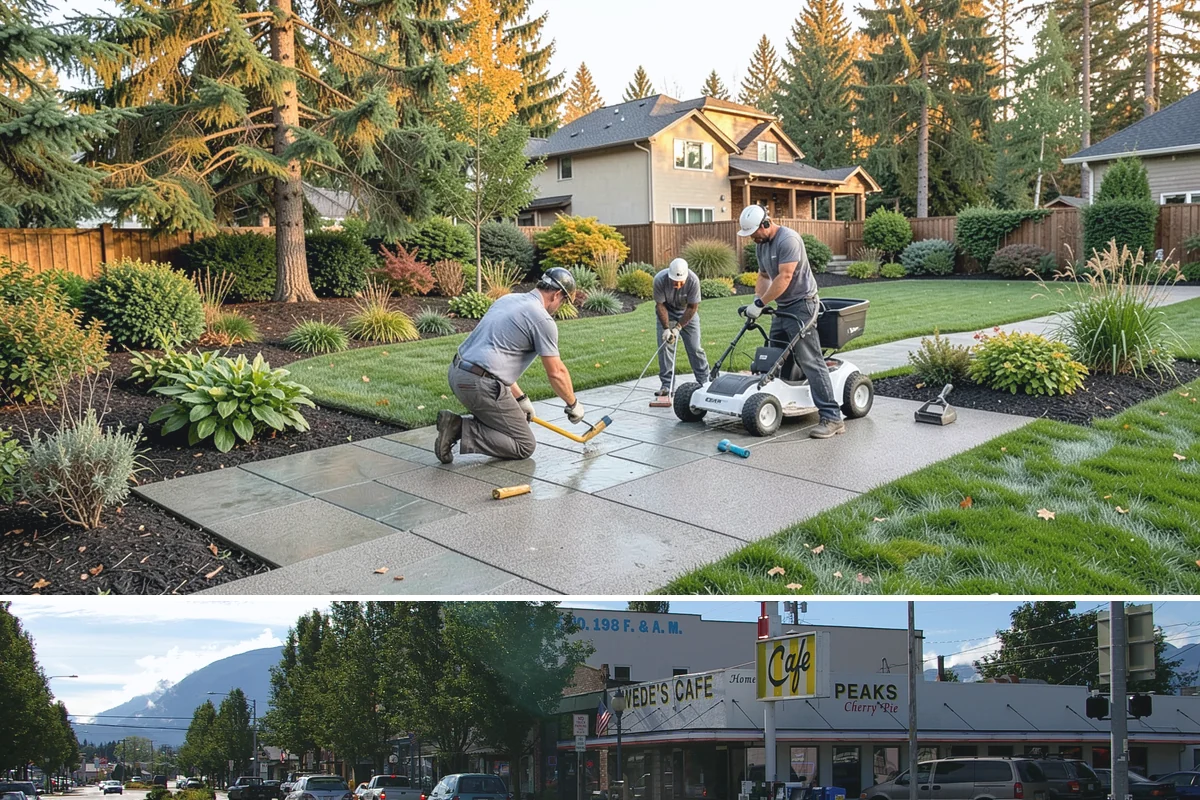
Common Project Types: Typical jobs around North Bend include lawn renovation on in-town Tanner and Si View lots, native shrub and evergreen borders that tie yards into the forest, gravel and paver paths built to shed rain, and rockery or terracing on the sloping parcels that climb toward the ridgelines.
Property Styles: Homes here run from compact single-family lots in the downtown grid to roomier parcels and a scattering of townhomes, many with wooded edges and long sightlines toward Mount Si that owners prefer to frame rather than hide behind screening.
Local Materials & Plants: Cold-tolerant, forest-friendly choices do best here, including sword fern, salal, red-twig dogwood, and native conifers, paired with crushed rock, basalt boulders, and bark mulch that stand up to freeze-thaw and heavy winter rain far better than delicate ornamentals.
Planning Your Project: Planning around the later thaw pays off, so major planting and seeding are usually booked once the valley soil has dried and warmed. Because some parcels sit near the river or on slopes, it is worth confirming access, drainage routes, and any general setback or clearing considerations before larger work begins.
If your North Bend yard could use a plan that suits its foothills setting and river-valley soil, reach out to talk through options, from a simple lawn refresh to native beds framed by Mount Si.