Shaping Your Outdoors. Surpassing Expectations.

Ruston Evergreen Pruning

Species-aware evergreen pruning that maintains shape and health without leaving dead, bare patches.
For evergreen pruning in Ruston, the dry months of July and August are a common window for light shaping, since July averages about 0.46 in of rain and August about 0.81 in (Daymet, 2005-2025). Cuts dry quickly and you can see the tree's shape clearly. Heavier structural work is often planned for the cooler, wetter part of the year, when trees are less stressed by heat.
Washington Landscaping has an ISA Certified Arborist on staff to look at your conifers and hedges, and estimates are free. Call or text 425-433-9444 to talk through what your trees need.
Planning Evergreen Pruning in Ruston, WA
Start by deciding what the pruning is for. Common goals are clearing a roofline, lifting low branches off a walkway, thinning a dense hedge, or removing dead wood. Each goal calls for a different cut and a different amount of foliage removed.
What affects scope
Species matters most. Many conifers, such as pines, spruces and firs, do not regrow from bare old wood the way a yew or a laurel can. Cutting back past the green growth can leave a permanent gap. Height and access also change the job. A tall tree near a house or power line needs more careful work than a shrub you can reach from the ground.
Canopy covers about 17.9% of Ruston (USFS/NLCD 2025). That is a city-wide figure, and your own yard may have more or fewer trees. Where crowns overlap with a neighbor's trees, pruning one tree can change light and airflow for the others, so it helps to look at the whole group.
What to expect
An arborist will usually walk the property with you first and point out which branches would come off and why. Work is typically done with hand pruners, loppers and pole or hand saws, and cuts are made just outside the branch collar. Debris is cleaned up after. Expect the tree to look more open at first, not bare.
Timing also matters for wet weather. About 84% of Ruston's yearly precipitation falls from October to April (Daymet, 2005-2025). Fresh cuts stay wet longer in those months, so large cuts on susceptible trees are often better scheduled for drier weather.
One practical tip: before the visit, walk your yard and tie a bit of ribbon on any branch that worries you. It gives the arborist a starting point and keeps nothing from being missed.
Ruston yard conditions at a glance
| USDA hardiness zone (2023) | 9a |
|---|---|
| Last / first frost (median) | Mar 18 / Nov 17 |
| Tree canopy | 17.9% of the city |
| Share of rain October to April | 84% |
| Dry months (under 1.25 in) | July and August |
A year in a Ruston yard
- Late winter
- Dormant pruning for most deciduous trees and shrubs, before buds break.
- Spring
- Last frost is usually around Mar 18; in 1 year in 10 it comes on or after Apr 4. Plant frost-tender annuals and vegetables after that.
- Early summer
- Check sprinklers and drip lines before July, the start of the dry months here.
- Summer
- July and August average 0.5 in and 0.8 in. Water deeply and less often; mulch beds to hold moisture.
- Fall
- Aerate, overseed and plant trees and shrubs while the soil is warm; first frost is usually around Nov 17. Winterize irrigation before then.
- Winter
- About 28 days a year freeze at night and thaw by day: keep drains, paver joints and wall weep holes clear.
Dates are medians for the city from Daymet 2005-2025; your yard and any given year can differ.
Sources: Daymet daily weather (NASA/ORNL), 2023 USDA Plant Hardiness Zone Map data (PRISM, Oregon State University), USDA SSURGO soil survey, USGS 3DEP elevation, USFS/NLCD tree canopy 2025, US Census ACS 2020-2024.
Ruston Evergreen Pruning
Local Service Information
Ruston
A very small city on Commencement Bay surrounded by Tacoma and Point Defiance.
Benefits
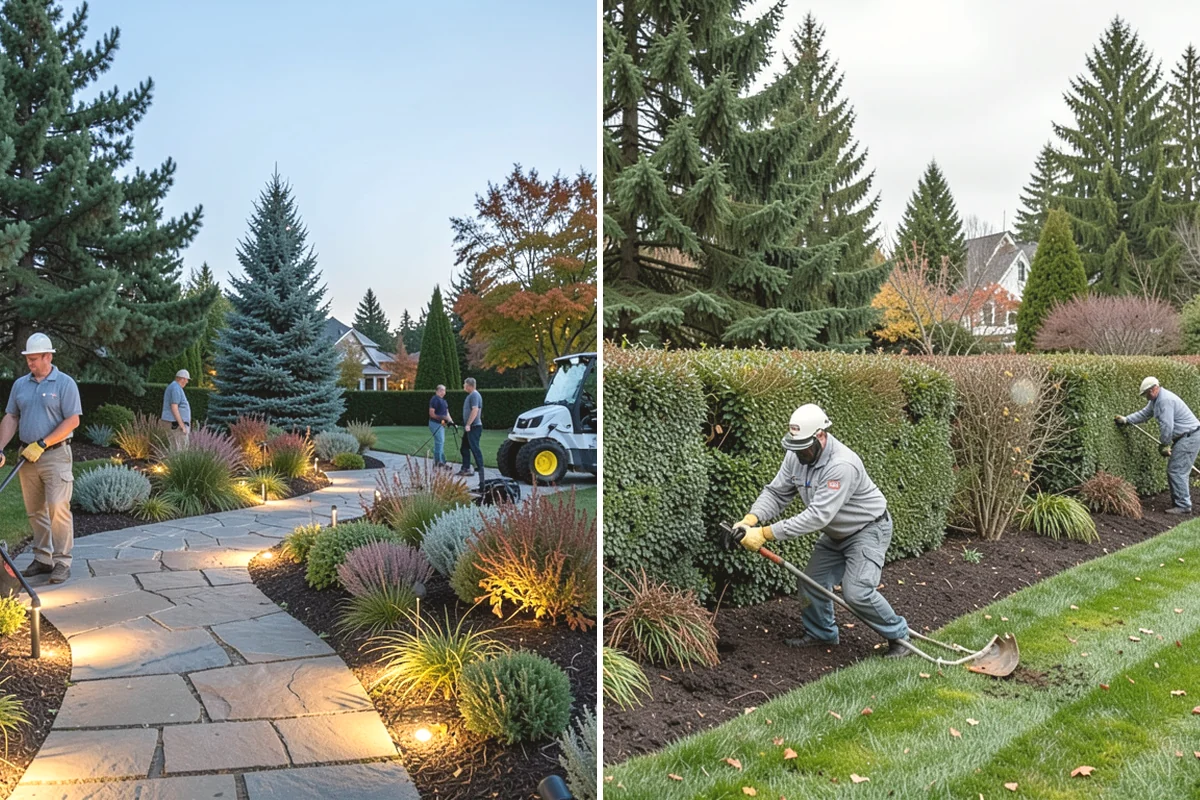
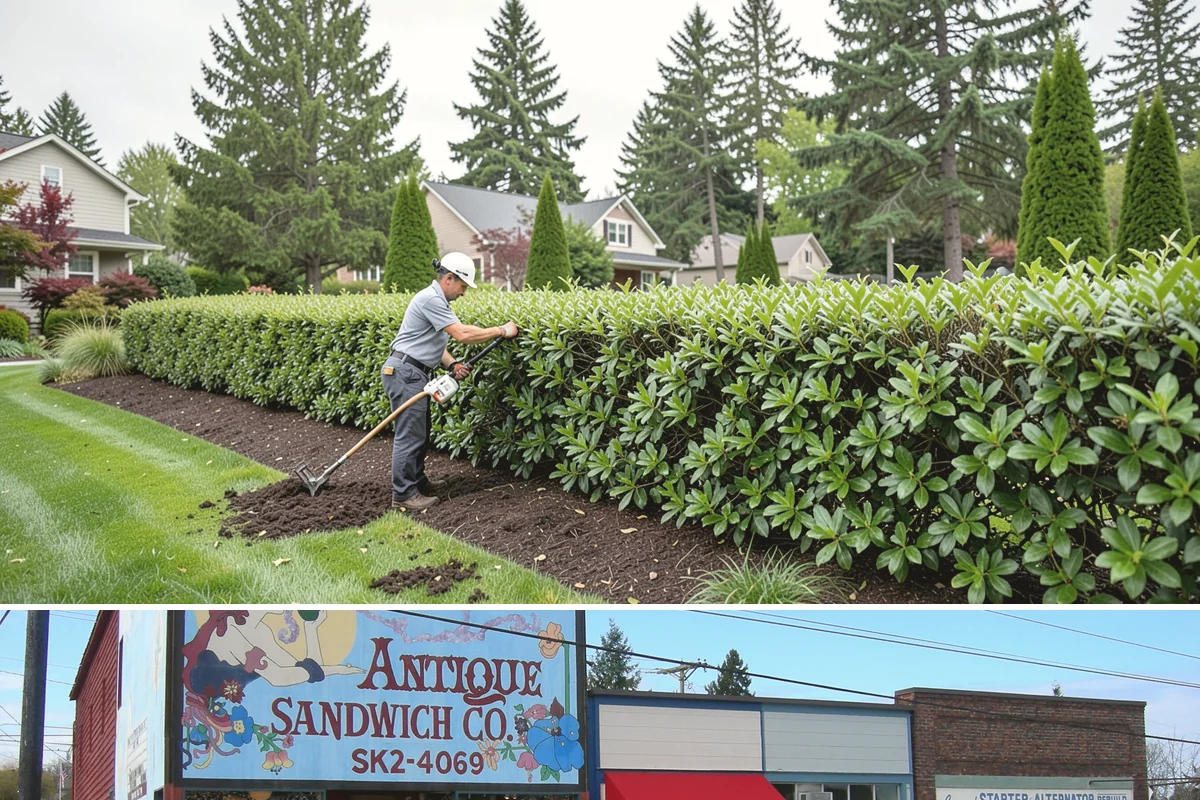
Cuts kept within living green to avoid bare spots; Natural silhouette preserved, not sheared; Size and density controlled thoughtfully; Approach tailored to conifers vs. broadleaf evergreens; Healthier, fuller year-round structure
Process
Evergreen Pruning in nearby areas
Also serving Ruston
- Tree Monitoring in Rustonat Washington Tree Services
Get a Free Evergreen Pruning Estimate in Ruston
Tell us about your project. We’ll review your needs and provide a customized, no-obligation proposal.
Request a Free Consultation
Complete the form or call our team to discuss your project.
On-Site Assessment
We’ll review your property, discuss your goals, and recommend an appropriate solution.
Receive a Customized Proposal
Receive a detailed estimate outlining the proposed work and pricing.