Shaping Your Outdoors. Surpassing Expectations.

Ruston Yew Hedge Trimming
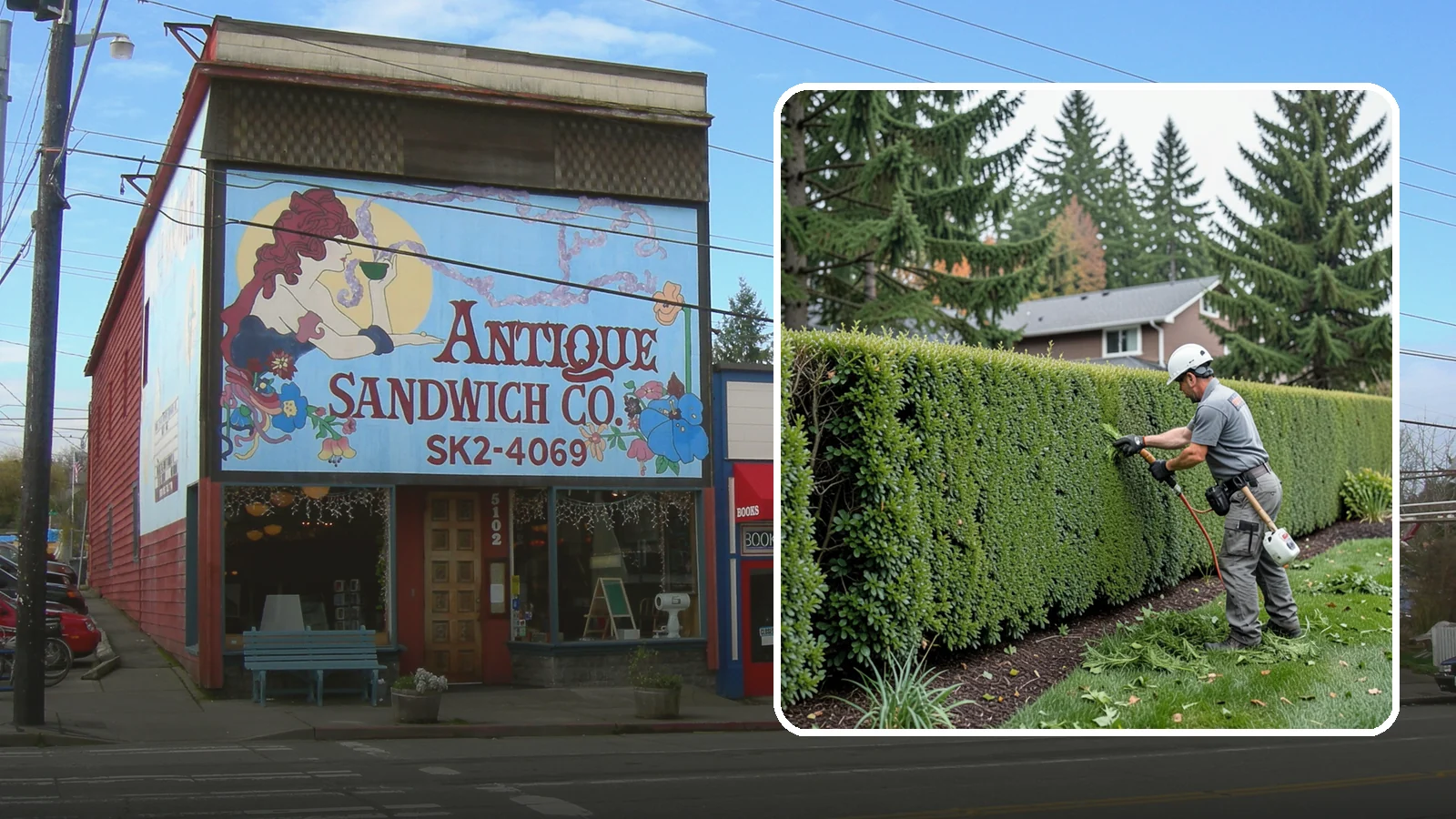
Traditional yew hedge trimming that shapes this classic conifer into dense formal walls, with the rare ability to regrow from old wood.
For yew hedges in Ruston, the main trim usually makes sense once the frost-free season is under way. The median last spring frost is Mar 18 (Daymet, 2005-2025), so growth that follows a trim is less likely to be nipped by cold. Frost can still come earlier or later in any given year.
Yew takes shearing well and recovers from hard cuts better than most conifers. That gives you some room on timing. Washington Landscaping trims yew hedges with an ISA Certified Arborist on staff, so questions about plant health get a qualified answer.
Planning a Yew Hedge Trim in Ruston, Washington
Planning around the season
Ruston has a frost-free growing season of about 245 days, from about Mar 18 to Nov 17 (median, Daymet 2005-2025). Those are medians, so a frost can arrive sooner or later. A trim in spring or early summer gives the hedge most of the season to fill in. A light tidy in late summer is common practice. Heavy cuts very late in the year leave fresh growth exposed to the first fall frost, median date Nov 17.
What affects the scope
Hedge size is the biggest factor. A low, tidy hedge is a quick shear. A tall or wide hedge needs ladders or staging and more cleanup. Other things matter too:
Overgrowth changes the plan. If a hedge has gone well past its intended line, bringing it back may take more than one visit. Yew can regrow from old wood, but cutting back in stages is gentler on the plant. Access also counts. Tight side yards, fences, and slopes slow the work and make hauling clippings harder.
Yew is toxic if eaten, so clippings need to be collected, especially where pets or children play. Tell us about this when we plan the job.
What to expect
You can expect a walk-through of the hedge before any cutting, with a discussion of the height and width you want. Estimates are free. The work itself is shearing for a clean, even face, with the top and sides shaped so light reaches lower foliage. Clippings are cleaned up afterward. If we see signs of stress, dieback, or disease, the ISA Certified Arborist can advise on next steps.
Your own hedge may behave differently from the city-wide frost medians, since sheltered or low spots can run colder or warmer.
Practical tip: before we visit, mark any spots where the hedge touches a fence, a neighbor's property line, or utility lines. It helps us plan the cut and the access.
Ruston yard conditions at a glance
| USDA hardiness zone (2023) | 9a |
|---|---|
| Last / first frost (median) | Mar 18 / Nov 17 |
| Tree canopy | 17.9% of the city |
| Share of rain October to April | 84% |
| Dry months (under 1.25 in) | July and August |
A year in a Ruston yard
- Late winter
- Dormant pruning for most deciduous trees and shrubs, before buds break.
- Spring
- Last frost is usually around Mar 18; in 1 year in 10 it comes on or after Apr 4. Plant frost-tender annuals and vegetables after that.
- Early summer
- Check sprinklers and drip lines before July, the start of the dry months here.
- Summer
- July and August average 0.5 in and 0.8 in. Water deeply and less often; mulch beds to hold moisture.
- Fall
- Aerate, overseed and plant trees and shrubs while the soil is warm; first frost is usually around Nov 17. Winterize irrigation before then.
- Winter
- About 28 days a year freeze at night and thaw by day: keep drains, paver joints and wall weep holes clear.
Dates are medians for the city from Daymet 2005-2025; your yard and any given year can differ.
Sources: Daymet daily weather (NASA/ORNL), 2023 USDA Plant Hardiness Zone Map data (PRISM, Oregon State University), USDA SSURGO soil survey, USGS 3DEP elevation, USFS/NLCD tree canopy 2025, US Census ACS 2020-2024.
Ruston Yew Hedge Trimming
Local Service Information
Ruston
A very small city on Commencement Bay surrounded by Tacoma and Point Defiance.
Benefits
Forms dense, dark-green formal walls; Uniquely regrows from bare old wood; Needs only one or two trims per year; Tolerates hard renovation of overgrown plants; Keeps a clean, moss-free, well-drained base

Process
Yew Hedge Trimming in nearby areas
Also serving Ruston
- Building clearance pruning in Rustonat Washington Tree Services
Get a Free Yew Hedge Trimming Estimate in Ruston
Tell us about your project. We’ll review your needs and provide a customized, no-obligation proposal.
Request a Free Consultation
Complete the form or call our team to discuss your project.
On-Site Assessment
We’ll review your property, discuss your goals, and recommend an appropriate solution.
Receive a Customized Proposal
Receive a detailed estimate outlining the proposed work and pricing.