Shaping Your Outdoors. Surpassing Expectations.

Sammamish Camellia Pruning
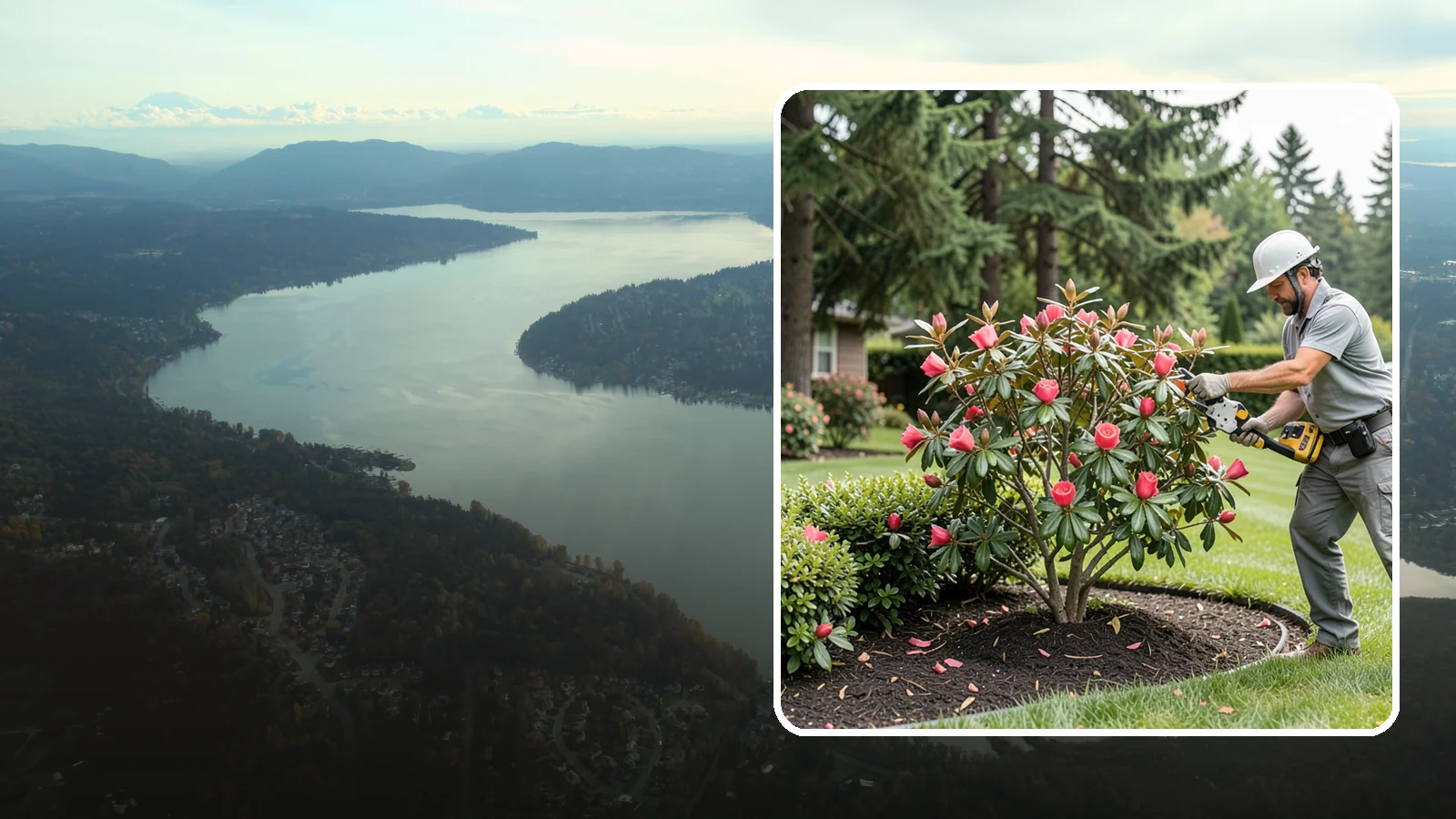
Post-bloom pruning of camellias to shape the canopy, remove deadwood, and protect the coming season’s flower buds.
Sammamish sits in USDA zone 8b, with parts of the city running 8b to 9a, and the median last spring frost (32 F) falls on Mar 24 (Daymet, 2005-2025). That matters for camellias, because pruning too early can remove buds or expose fresh growth to a late cold snap. Frost can come earlier or later in any given year.
Washington Landscaping prunes camellias for Sammamish homeowners. We have an ISA Certified Arborist on staff. Pruning is aimed at shape, airflow and light, not at cutting the plant back hard.
How We Prune Camellias in Sammamish Yards
Camellias are usually pruned right after they finish blooming. They set next year's flower buds in summer, so cutting late in the year removes flowers. Timing also depends on the variety. Sasanqua types bloom in fall and early winter. Japonica types bloom in late winter and spring.
The basic steps
- Look at the plant first and find dead, crossing or rubbing branches.
- Remove dead and damaged wood back to healthy tissue.
- Thin crowded interior stems so light and air reach the center.
- Shorten overlong branches just above a leaf node to keep the natural shape.
- Clean up fallen petals and leaves to reduce the spread of petal blight.
We avoid heavy shearing. Camellias respond best to selective cuts, and large cuts into old bare wood may be slow to recover.
Why Sammamish conditions matter
The median last frost date is Mar 24, so a Japonica pruned right after bloom in spring may push new growth before the cold has fully passed. Median means frost can arrive later some years. We keep cuts light on plants that are still flowering or just starting to grow, and we watch the forecast.
Zone 8b is on the edge of what some camellias tolerate. The average coldest winter night is about 19.8 F, and your own yard may be colder or milder than the city figure. A sheltered spot against a wall can differ from an open corner. Frost-damaged tips are best trimmed after the risk of cold has passed, not in midwinter.
Tree canopy covers about 40.6% of Sammamish (USFS/NLCD 2025). Many camellias here grow in partial shade under tall conifers. Dense shade and poor airflow encourage leaf problems, so thinning inside the plant helps. If overhead branches are the real issue, we can talk about that too.
Call or text 425-433-9444 for a free estimate. We are licensed, bonded and insured.
Sammamish yard conditions at a glance
| USDA hardiness zone (2023) | 8b (parts 8b to 9a) |
|---|---|
| Last / first frost (median) | Mar 24 / Nov 14 |
| Tree canopy | 40.6% of the city |
| Share of rain October to April | 80% |
| Dry months (under 1.25 in) | July and August |
A year in a Sammamish yard
- Late winter
- Dormant pruning for most deciduous trees and shrubs, before buds break.
- Spring
- Last frost is usually around Mar 24; in 1 year in 10 it comes on or after Apr 10. Plant frost-tender annuals and vegetables after that.
- Early summer
- Check sprinklers and drip lines before July, the start of the dry months here.
- Summer
- July and August average 0.7 in and 1.2 in. Water deeply and less often; mulch beds to hold moisture.
- Fall
- Aerate, overseed and plant trees and shrubs while the soil is warm; first frost is usually around Nov 14. Winterize irrigation before then.
- Winter
- About 34 days a year freeze at night and thaw by day: keep drains, paver joints and wall weep holes clear.
Dates are medians for the city from Daymet 2005-2025; your yard and any given year can differ.
Sources: Daymet daily weather (NASA/ORNL), 2023 USDA Plant Hardiness Zone Map data (PRISM, Oregon State University), USDA SSURGO soil survey, USGS 3DEP elevation, USFS/NLCD tree canopy 2025, US Census ACS 2020-2024.
Sammamish Camellia Pruning

Local Service Information
Sammamish
A residential plateau city on the east side of Lake Sammamish.
Benefits
Preserves the next round of flowers by timing cuts to each variety’s bloom; Improves airflow to reduce petal blight and sooty mold in damp conditions; Controls size and shapes leggy or overgrown specimens; Encourages fresh growth and denser foliage from old wood; Removes dead and crossing branches for a healthier plant

Process
Also serving Sammamish
- Shrub pruning in Sammamishat Washington Tree Services
Get a Free Camellia Pruning Estimate in Sammamish
Tell us about your project. We’ll review your needs and provide a customized, no-obligation proposal.
Request a Free Consultation
Complete the form or call our team to discuss your project.
On-Site Assessment
We’ll review your property, discuss your goals, and recommend an appropriate solution.
Receive a Customized Proposal
Receive a detailed estimate outlining the proposed work and pricing.