Shaping Your Outdoors. Surpassing Expectations.

Sammamish Deck Landscaping
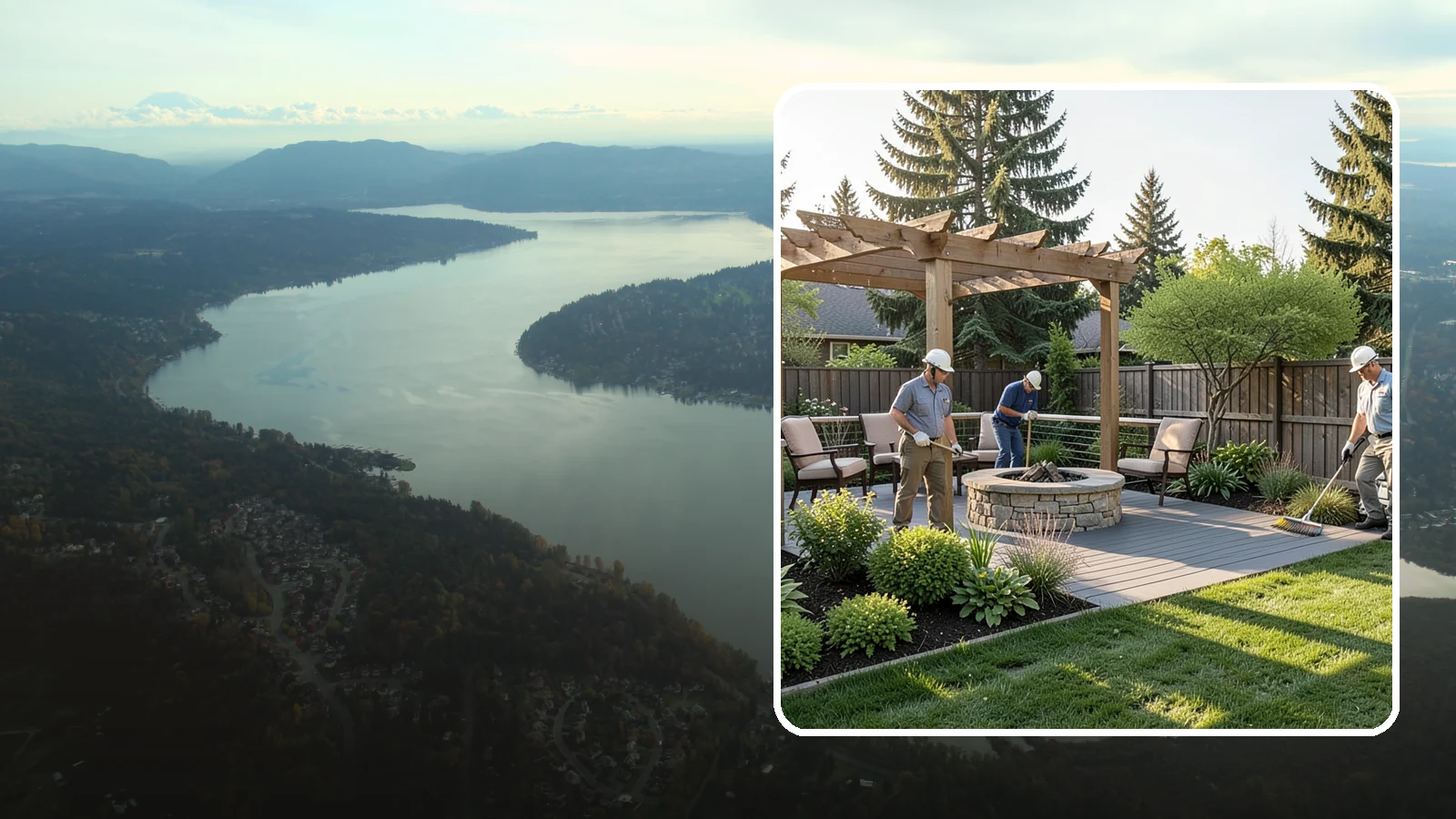
We integrate decks with surrounding plantings, borders, and features to create a seamless outdoor living space.
Deck landscaping in Sammamish usually makes the most sense in spring or early fall. Soil is workable then, rain is steady enough to help new roots settle, and plants are not facing summer heat or a hard freeze right after planting.
Deck landscaping means the beds, plantings, screening and ground treatment around and beneath a deck. Done well, it softens the structure, manages runoff from above, and ties the deck to the rest of the yard. Washington Landscaping, based in Bothell, offers free estimates for this kind of work.
Planning Deck Landscaping in Sammamish, WA
Start with how you use the deck. A deck off a kitchen needs different plantings than one that overlooks a slope. Think about views, privacy, shade and how you walk from the deck to the yard.
Slope and drainage
Per USGS 3DEP elevation data, about 19% of Sammamish land slopes 15% or more. That describes the city as a whole, and your own yard may differ. If your deck sits on a grade, water will move along and under it. Planting beds may need regrading or edging so soil does not wash out. Any retaining wall or grading change is checked with the city for permit needs before work starts.
Shade and trees
Tree canopy covers about 40.6% of Sammamish (USFS/NLCD 2025). Many decks here sit in partial or deep shade, and the space under a deck is darker still. That points toward shade-tolerant plants such as ferns, hostas and sword fern rather than sun lovers. Falling needles and leaves also collect between boards, so beds near the deck should be easy to clean around.
Plant selection
The USDA hardiness zone here is 8b, with an average coldest winter night of about 19.8 F. Parts of the city range from 8b to 9a. Frost dates are medians, so frost can come earlier or later in a given year. Choose plants rated for zone 8b so a cold snap is less likely to set them back.
What affects scope
Scope depends on deck height, access for equipment, soil condition, the amount of shade, and whether you want screening, lighting or new paths. Skirting or lattice under the deck is a separate decision from the beds beside it.
What to expect
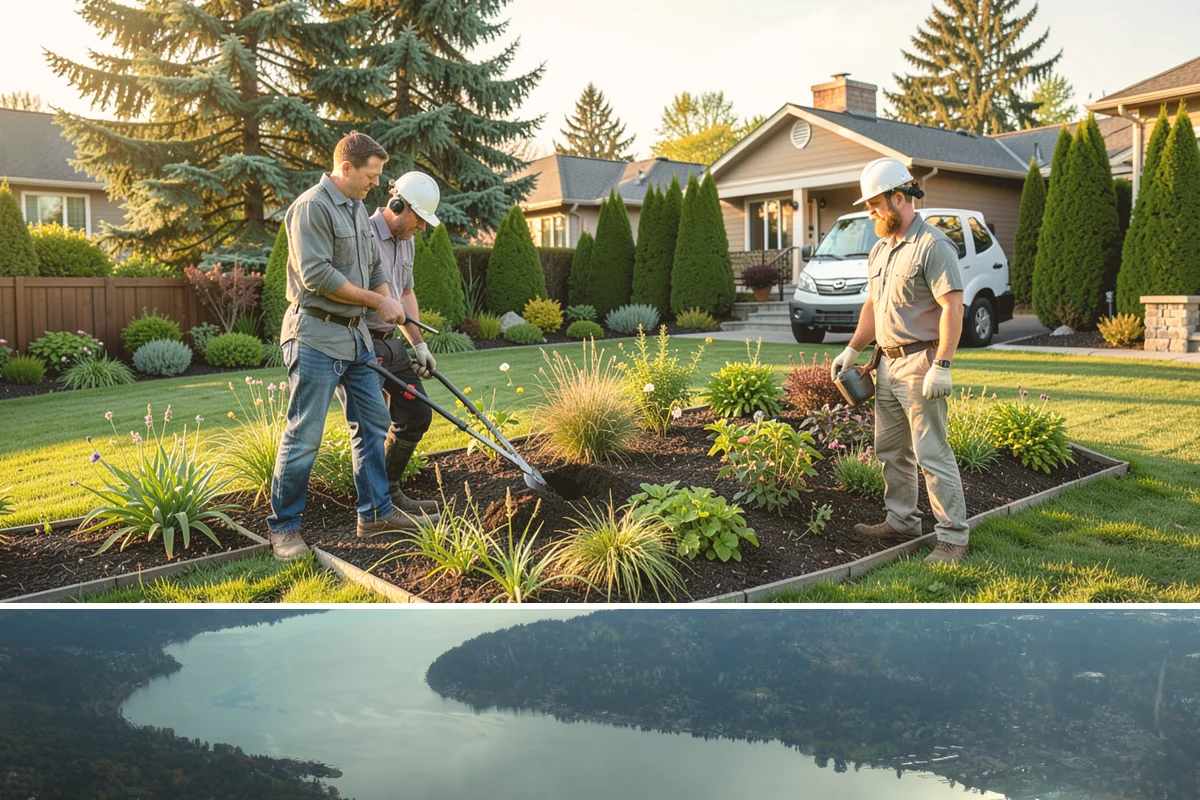
A typical job begins with a site walk and a free estimate. Work often follows this order: clearing, grading and drainage, soil preparation, planting, then mulch. Financing is available subject to credit approval. The company has been in business since 2004 and is licensed, bonded and insured ($2M).
One practical tip: before you buy plants, note how much light the spot gets at morning, noon and late afternoon. Sun patterns under a deck and near tall trees change a lot, and that tells you what will survive.
Sammamish yard conditions at a glance
| USDA hardiness zone (2023) | 8b (parts 8b to 9a) |
|---|---|
| Land sloping 15% or more | 19% (40% or more: 3%) |
| Soil drainage (rated land) | 24% well, 72% moderately well, 4% poorly drained |
| Tree canopy | 40.6% of the city |
| Single-family detached homes | 81% of housing |
A year in a Sammamish yard
- Late winter
- Dormant pruning for most deciduous trees and shrubs, before buds break.
- Spring
- Last frost is usually around Mar 24; in 1 year in 10 it comes on or after Apr 10. Plant frost-tender annuals and vegetables after that.
- Early summer
- Check sprinklers and drip lines before July, the start of the dry months here.
- Summer
- July and August average 0.7 in and 1.2 in. Water deeply and less often; mulch beds to hold moisture.
- Fall
- Aerate, overseed and plant trees and shrubs while the soil is warm; first frost is usually around Nov 14. Winterize irrigation before then.
- Winter
- About 34 days a year freeze at night and thaw by day: keep drains, paver joints and wall weep holes clear.
Dates are medians for the city from Daymet 2005-2025; your yard and any given year can differ.
How Sammamish’s soils drain
- Well drained24%
- Moderately well72%
- Poorly drained4%
Share of rated land in the USDA SSURGO soil survey; built-over ground is not rated. A soil check on your lot tells you what you have.
Sources: Daymet daily weather (NASA/ORNL), 2023 USDA Plant Hardiness Zone Map data (PRISM, Oregon State University), USDA SSURGO soil survey, USGS 3DEP elevation, USFS/NLCD tree canopy 2025, US Census ACS 2020-2024.
Sammamish Deck Landscaping
Local Service Information
Sammamish
A residential plateau city on the east side of Lake Sammamish.
Benefits
Seamless transition between deck and garden; Shade- and moisture-tolerant plantings for Northwest light; Drainage details that prevent muddy deck surrounds; Layered borders and containers for year-round interest; A cohesive outdoor living space that boosts curb appeal

Process
Also serving Sammamish
- Privacy Screen Installation in Sammamishat Washington Construction
- Concrete Patio Cleaning in Sammamishat Washington Pressure Washing
Get a Free Deck Landscaping Estimate in Sammamish
Tell us about your project. We’ll review your needs and provide a customized, no-obligation proposal.
Request a Free Consultation
Complete the form or call our team to discuss your project.
On-Site Assessment
We’ll review your property, discuss your goals, and recommend an appropriate solution.
Receive a Customized Proposal
Receive a detailed estimate outlining the proposed work and pricing.