Shaping Your Outdoors. Surpassing Expectations.

Sammamish Evergreen Pruning
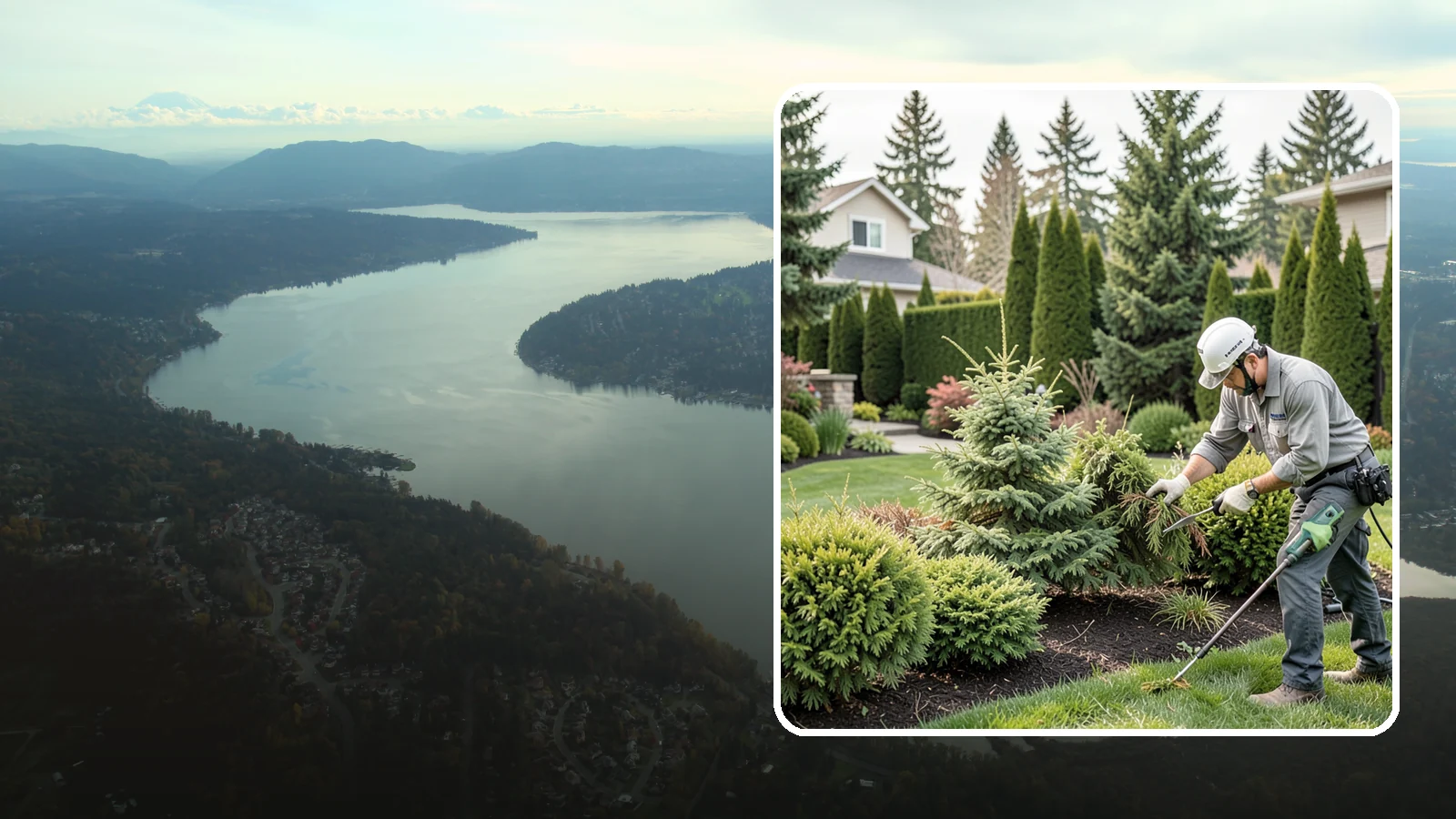
Species-aware evergreen pruning that maintains shape and health without leaving dead, bare patches.
In Sammamish, evergreen pruning is easiest to plan around the dry stretch. July and August average under 1.25 inches of rain (about 0.71 in for July and 1.21 in for August, per Daymet, 2005-2025). Dry weather makes it simpler to get crews and equipment onto a property without churning up turf and beds.
Roughly 80% of the city's yearly precipitation falls from October to April, so wet ground is the norm for much of the year. If you have firs, cedars, pines or hedges that need attention, it helps to start the conversation early and set a schedule.
Planning Evergreen Pruning in Sammamish
Evergreens do not respond to pruning the way many deciduous shrubs do. Many conifers will not push new growth from bare, leafless wood. A cut that goes too far back can leave a permanent gap. That is why the first step is deciding what you want the tree to do: clear a roofline, open a walkway, thin a dense crown, or hold a hedge to a set height.
What affects scope
Size and access matter most. A tall Douglas fir near the house is a different job than a row of laurel or arborvitae along a fence. Branches near power lines, structures or steep slopes call for more care and more time. The number of trees, how much material comes off, and how far debris has to be hauled also shape the work.
Tree canopy covers about 40.6% of Sammamish (USFS/NLCD 2025). That figure describes the city as a whole, and your own lot may have more or less shade. Still, it is a reminder that many yards here have mature trees close together. Crowded crowns can rub, shade each other out, and hold moisture against roofs and siding through the long wet season.
What to expect
Washington Landscaping has an ISA Certified Arborist on staff, so a visit can include an assessment of tree health and structure, not just a trim. Expect a walk through the property to talk about goals, which branches should go, and whether any tree needs a different approach. Estimates are free. Work usually involves hand pruning, pole or climbing work for taller trees, and cleanup of the cuttings.
Results depend on the species and the tree's condition. Some trees may be better phased over more than one visit instead of removing a lot at once.
Practical tip: before we visit, walk your yard and mark the branches that bother you with a bit of ribbon, or take photos from a few angles. It makes the conversation faster and the scope clearer.
Sammamish yard conditions at a glance
| USDA hardiness zone (2023) | 8b (parts 8b to 9a) |
|---|---|
| Last / first frost (median) | Mar 24 / Nov 14 |
| Tree canopy | 40.6% of the city |
| Share of rain October to April | 80% |
| Dry months (under 1.25 in) | July and August |
A year in a Sammamish yard
- Late winter
- Dormant pruning for most deciduous trees and shrubs, before buds break.
- Spring
- Last frost is usually around Mar 24; in 1 year in 10 it comes on or after Apr 10. Plant frost-tender annuals and vegetables after that.
- Early summer
- Check sprinklers and drip lines before July, the start of the dry months here.
- Summer
- July and August average 0.7 in and 1.2 in. Water deeply and less often; mulch beds to hold moisture.
- Fall
- Aerate, overseed and plant trees and shrubs while the soil is warm; first frost is usually around Nov 14. Winterize irrigation before then.
- Winter
- About 34 days a year freeze at night and thaw by day: keep drains, paver joints and wall weep holes clear.
Dates are medians for the city from Daymet 2005-2025; your yard and any given year can differ.
Sources: Daymet daily weather (NASA/ORNL), 2023 USDA Plant Hardiness Zone Map data (PRISM, Oregon State University), USDA SSURGO soil survey, USGS 3DEP elevation, USFS/NLCD tree canopy 2025, US Census ACS 2020-2024.
Sammamish Evergreen Pruning
Local Service Information
Sammamish
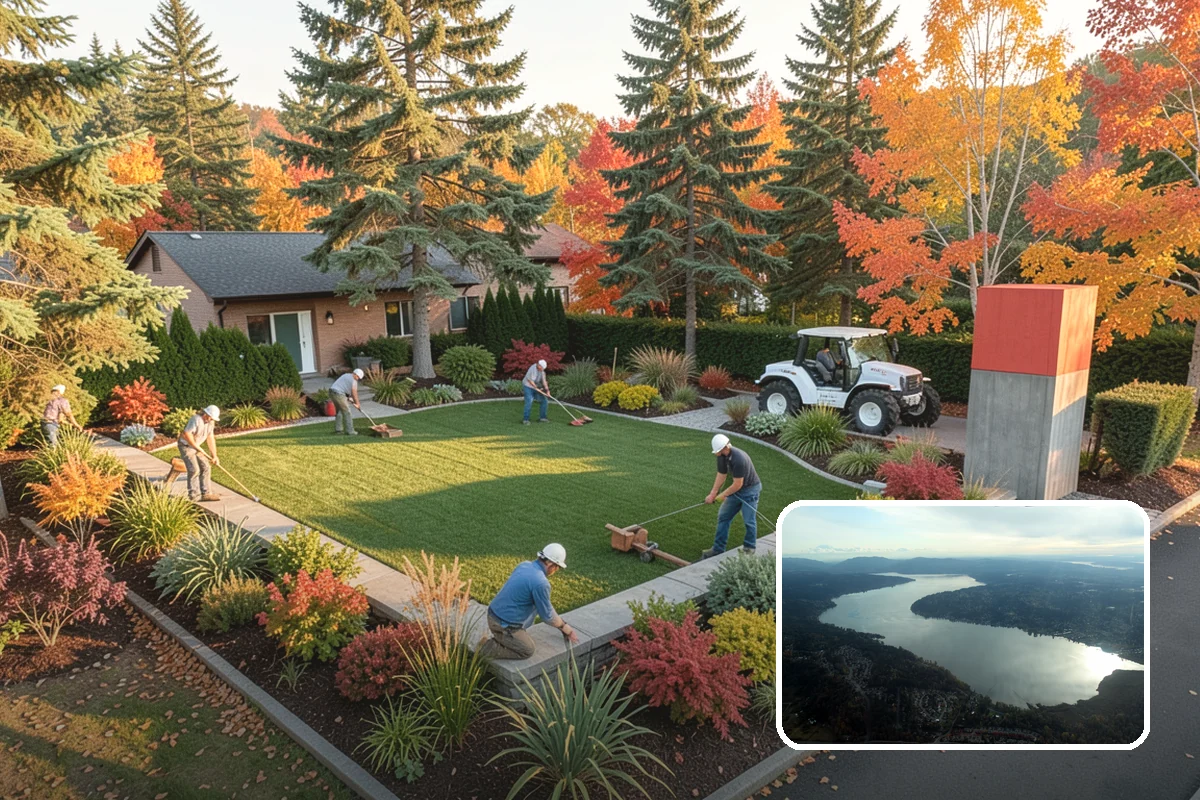
A residential plateau city on the east side of Lake Sammamish.
Benefits
Cuts kept within living green to avoid bare spots; Natural silhouette preserved, not sheared; Size and density controlled thoughtfully; Approach tailored to conifers vs. broadleaf evergreens; Healthier, fuller year-round structure
Process
Also serving Sammamish
- Tree health inspection in Sammamishat Washington Tree Services
Get a Free Evergreen Pruning Estimate in Sammamish
Tell us about your project. We’ll review your needs and provide a customized, no-obligation proposal.
Request a Free Consultation
Complete the form or call our team to discuss your project.
On-Site Assessment
We’ll review your property, discuss your goals, and recommend an appropriate solution.
Receive a Customized Proposal
Receive a detailed estimate outlining the proposed work and pricing.