Shaping Your Outdoors. Surpassing Expectations.

Sammamish Living Wall Installation
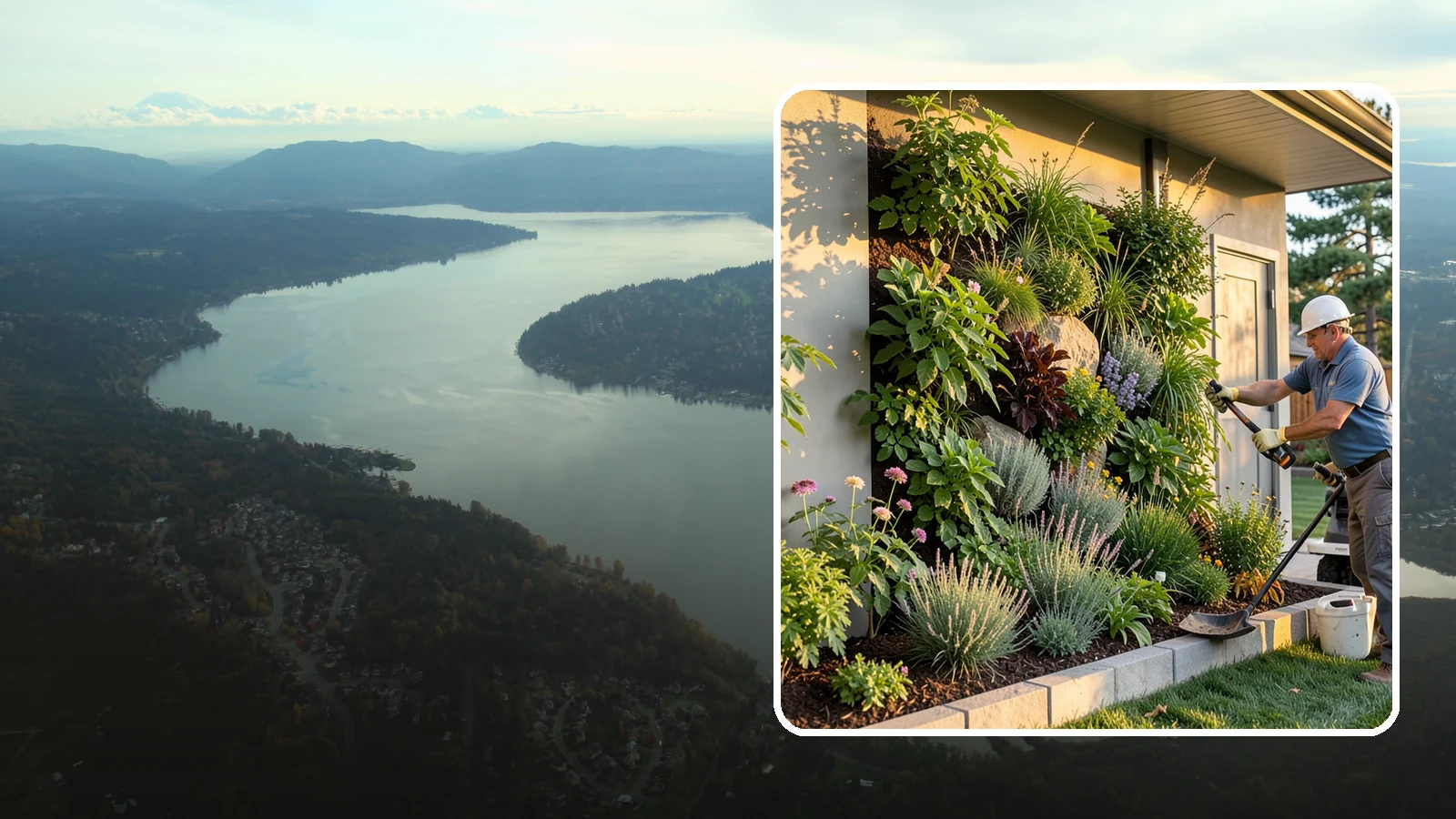
Vertical gardens and green walls that bring lush plantings to walls and fences, indoors or out.
In Sammamish, July averages about 0.71 in of rain and August about 1.21 in (Daymet, 2005-2025). A living wall holds a small amount of soil, so it dries out fast in those months. Watering is the main question to settle before anything is built.
Washington Landscaping installs living walls for Sammamish homes and buildings. We plan the plants, the frame and the irrigation together, so the wall fits your site and how much upkeep you want. Estimates are free, and you can call or text 425-433-9444.
How a Sammamish living wall installation is planned and built
A living wall is a vertical frame or set of panels filled with growing medium and plants. Here is how the work usually goes.
1. Choose the wall
We look at the surface, the light it gets and how easily water can reach it. A wall in deep shade needs different plants than one facing open sky. Sammamish has 196 apartment and office buildings mapped in OpenStreetMap, so some people ask about larger commercial walls. The same planning steps apply at any size. If the wall is part of a structure, permit needs are checked with the city before work starts.
2. Plan the irrigation
This is the step that matters most here. July and August are the dry months, averaging under 1.25 in of rain. Rain will not keep a vertical planting alive in summer. We plan a drip system with a timer so the plants are watered on a schedule. Rain also rarely reaches walls under eaves or overhangs, so those need irrigation all year.
3. Pick plants for the climate
Sammamish is USDA zone 8b, with an average coldest winter night of about 19.8 F (2023 USDA map). Parts of the city range from 8b to 9a, so your own yard may differ. Winter lows can still run colder than average in a given year. We favor hardy plants such as ferns, sedges and heucheras, and we match them to the light on your wall.
4. Install and settle in
We mount the frame, connect the water line, fill the panels and plant them. New plants need close attention in the first weeks while roots take hold.
What to expect afterward
- Regular checks of the irrigation system
- Trimming and replacing plants that struggle
- Feeding on a light schedule
Washington Landscaping has been in business since 2004 and is licensed, bonded and insured. Financing is available, subject to credit approval.
Sammamish yard conditions at a glance
| USDA hardiness zone (2023) | 8b (parts 8b to 9a) |
|---|---|
| Last / first frost (median) | Mar 24 / Nov 14 |
| Late last frost (1 year in 10) | on or after Apr 10 |
| Frost-free season | about 231 days |
| Dry months (under 1.25 in) | July and August |
| Soil drainage (rated land) | 24% well, 72% moderately well, 4% poorly drained |
A year in a Sammamish yard
- Late winter
- Dormant pruning for most deciduous trees and shrubs, before buds break.
- Spring
- Last frost is usually around Mar 24; in 1 year in 10 it comes on or after Apr 10. Plant frost-tender annuals and vegetables after that.
- Early summer
- Check sprinklers and drip lines before July, the start of the dry months here.
- Summer
- July and August average 0.7 in and 1.2 in. Water deeply and less often; mulch beds to hold moisture.
- Fall
- Aerate, overseed and plant trees and shrubs while the soil is warm; first frost is usually around Nov 14. Winterize irrigation before then.
- Winter
- About 34 days a year freeze at night and thaw by day: keep drains, paver joints and wall weep holes clear.
Dates are medians for the city from Daymet 2005-2025; your yard and any given year can differ.
How Sammamish’s soils drain
- Well drained24%
- Moderately well72%
- Poorly drained4%
Share of rated land in the USDA SSURGO soil survey; built-over ground is not rated. A soil check on your lot tells you what you have.
Sources: Daymet daily weather (NASA/ORNL), 2023 USDA Plant Hardiness Zone Map data (PRISM, Oregon State University), USDA SSURGO soil survey, USGS 3DEP elevation, USFS/NLCD tree canopy 2025, US Census ACS 2020-2024.
Sammamish Living Wall Installation

Local Service Information
Sammamish
A residential plateau city on the east side of Lake Sammamish.
Benefits
Greenery where there is no ground; A dramatic vertical focal point; Proper structure and irrigation; Exterior accent or interior feature; Improves air and ambiance
Process
Also serving Sammamish
- Residential Construction in Sammamishat Washington Construction
- Vinyl Siding Washing in Sammamishat Washington Pressure Washing
- Roof Sheathing Replacement in Sammamishat Washington Roofing
Get a Free Living Wall Installation Estimate in Sammamish
Tell us about your project. We’ll review your needs and provide a customized, no-obligation proposal.
Request a Free Consultation
Complete the form or call our team to discuss your project.
On-Site Assessment
We’ll review your property, discuss your goals, and recommend an appropriate solution.
Receive a Customized Proposal
Receive a detailed estimate outlining the proposed work and pricing.