Shaping Your Outdoors. Surpassing Expectations.

Sammamish Pine Tree Pruning
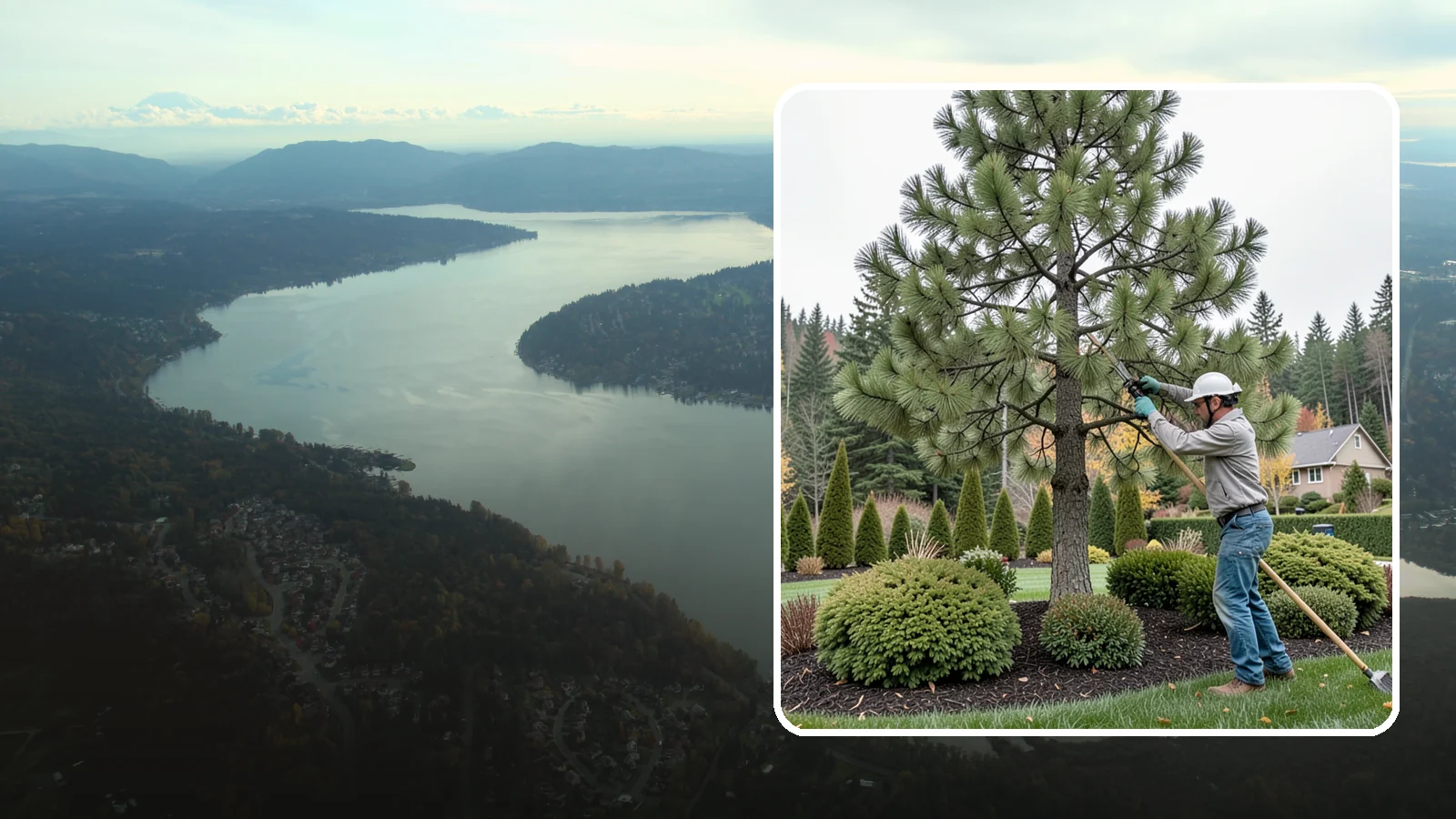
Pine pruning for health, safety, and form, using techniques suited to conifers.
For pine pruning in Sammamish, the dry stretch of July and August is a sensible time to plan around. Rainfall averages about 0.71 in in July and about 1.21 in in August (Daymet, 2005-2025). Drier weather makes it easier to get equipment in and out and to keep fresh cuts from sitting wet.
Washington Landscaping has an ISA Certified Arborist on staff, and estimates are free. Call or text 425-433-9444 to talk through which pines on your property need attention and what the work would look like.
Planning Pine Tree Pruning in Sammamish, WA
Pines do not need the heavy cutting that many shade trees tolerate. Most pruning is selective. It means removing dead, broken or rubbing branches, lifting the lower canopy for clearance, and thinning where limbs crowd a roof or wires. Cutting too much live growth can stress a pine, so a good plan starts with what the tree actually needs.
What affects the scope
Size and access matter most. A tall pine over a house or fence calls for more careful rigging than a small one in an open yard. The number of dead or hazardous limbs, how close the branches are to structures, and how much clearance you want all change the work involved.
Tree cover also plays a part. Canopy covers about 40.6% of Sammamish (USFS/NLCD 2025). Many yards have several mature trees growing close together, so a pine may share space with neighbors' branches or other trees. That can affect how limbs are removed and where debris can safely land.
What to expect
An estimate starts with a look at the tree and a conversation about your goals. Our ISA Certified Arborist can explain which cuts make sense and which would harm the tree. On the day, crews prune from the ground or in the tree depending on height, then clean up the cut material.
Sammamish sits in USDA zone 8b, with parts of the city ranging from 8b to 9a. The average coldest winter night is about 19.8 F (2023 USDA map, PRISM data). Pines grown here are generally cold hardy, so winter cold is rarely the limiting factor. Your own yard may be a little warmer or cooler than the city as a whole.
Practical tip: walk around your pine before the estimate and note any branches that are brown, hanging or touching the roof. Photos help, and they let the arborist focus on your biggest concerns first.
Sammamish yard conditions at a glance
| USDA hardiness zone (2023) | 8b (parts 8b to 9a) |
|---|---|
| Last / first frost (median) | Mar 24 / Nov 14 |
| Tree canopy | 40.6% of the city |
| Share of rain October to April | 80% |
| Dry months (under 1.25 in) | July and August |
A year in a Sammamish yard
- Late winter
- Dormant pruning for most deciduous trees and shrubs, before buds break.
- Spring
- Last frost is usually around Mar 24; in 1 year in 10 it comes on or after Apr 10. Plant frost-tender annuals and vegetables after that.
- Early summer
- Check sprinklers and drip lines before July, the start of the dry months here.
- Summer
- July and August average 0.7 in and 1.2 in. Water deeply and less often; mulch beds to hold moisture.
- Fall
- Aerate, overseed and plant trees and shrubs while the soil is warm; first frost is usually around Nov 14. Winterize irrigation before then.
- Winter
- About 34 days a year freeze at night and thaw by day: keep drains, paver joints and wall weep holes clear.
Dates are medians for the city from Daymet 2005-2025; your yard and any given year can differ.
Sources: Daymet daily weather (NASA/ORNL), 2023 USDA Plant Hardiness Zone Map data (PRISM, Oregon State University), USDA SSURGO soil survey, USGS 3DEP elevation, USFS/NLCD tree canopy 2025, US Census ACS 2020-2024.
Sammamish Pine Tree Pruning
Local Service Information
Sammamish
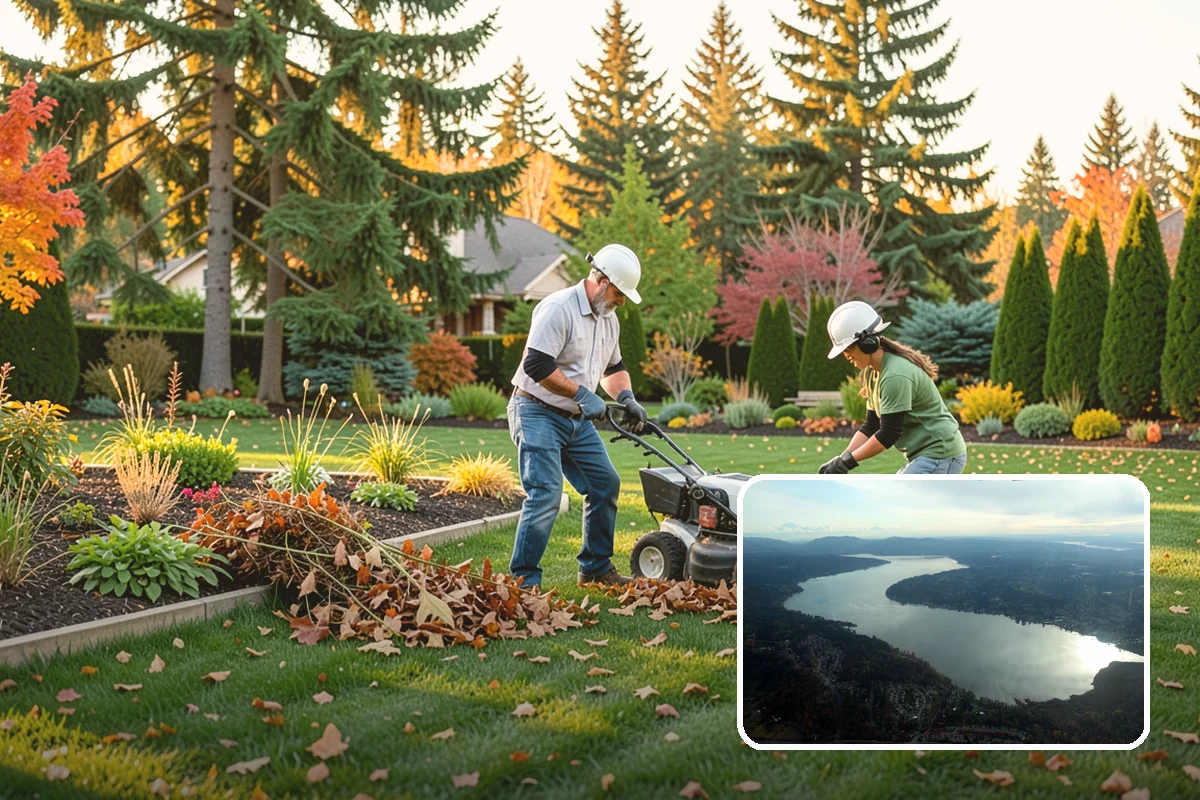
A residential plateau city on the east side of Lake Sammamish.
Benefits
Conifer-appropriate techniques; Deadwood and hazards removed; Canopy raised or thinned for clearance; Candling to control density; Respects the pine’s growth habit

Process
Also serving Sammamish
- View Enhancement Pruning in Sammamishat Washington Tree Services
Get a Free Pine Tree Pruning Estimate in Sammamish
Tell us about your project. We’ll review your needs and provide a customized, no-obligation proposal.
Request a Free Consultation
Complete the form or call our team to discuss your project.
On-Site Assessment
We’ll review your property, discuss your goals, and recommend an appropriate solution.
Receive a Customized Proposal
Receive a detailed estimate outlining the proposed work and pricing.