Shaping Your Outdoors. Surpassing Expectations.

Sammamish Privacy Hedge Planting
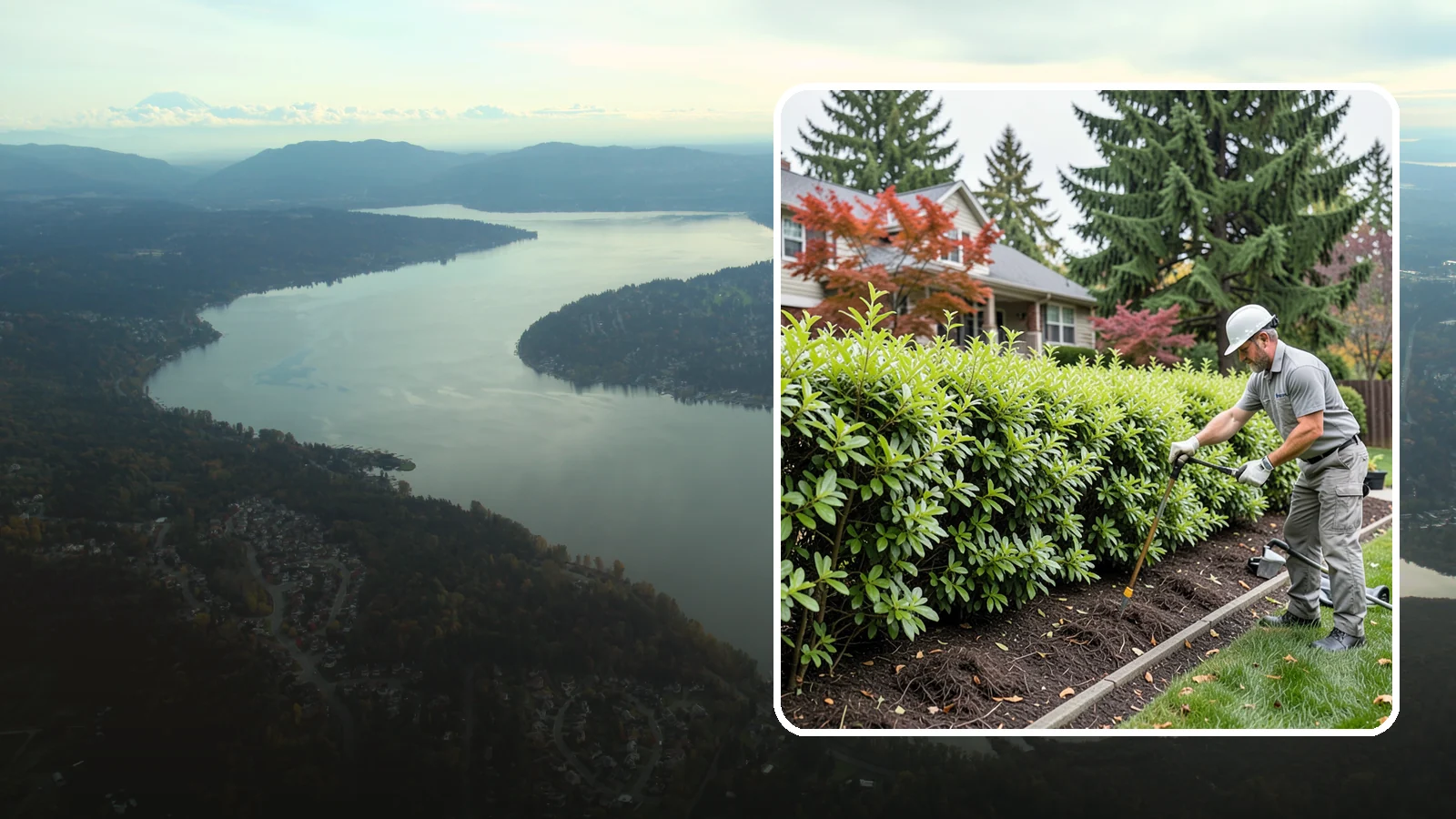
We plant living privacy hedges that create a lush green screen well suited to Northwest yards.
Privacy hedge planting suits Sammamish homeowners whose yards are overlooked by a neighbor's deck, a nearby street, or a back fence line that feels too open. It also fits new construction lots with bare property edges and older yards where a worn-out fence needs a softer, living replacement.
Washington Landscaping, based in Bothell, plants hedges that match your sightline, your space and your soil. Estimates are free. Call or text 425-433-9444 to talk through where a hedge would help most.
Choosing a Privacy Hedge for a Sammamish Yard
Most homeowners choose between a few approaches. Local conditions favor each one differently.
Evergreen screen versus mixed planting
- Single-species evergreen row: gives the most uniform, year-round screening. It suits tight side yards and is the most common choice for blocking a view. The risk is that one disease or pest problem can affect the whole row.
- Mixed evergreen and deciduous planting: looks more natural and spreads that risk. Screening is thinner in winter, so it works better where the view you want to block is seasonal or farther away.
Fast growers versus slow, dense growers
Faster-growing plants fill in sooner but need more pruning to stay in bounds. Slower, denser plants take longer to screen but usually hold a tidier shape. Narrow upright forms suit property lines with little room. Wider shrubs suit larger setbacks.
What local conditions favor
Sammamish is in USDA zone 8b, with parts of the city ranging from 8b to 9a. The average coldest winter night is about 19.8 F. That gives you a wide range of hardy evergreens to choose from, though you should still match each plant to your yard.
Drainage matters just as much. Per the USDA soil survey, about 24% of rated land in Sammamish is well drained, 72% moderately well drained and 4% poorly drained. Most land drains reasonably well, but this describes the city as a whole. Your own yard may differ, especially near low spots or compacted fill. We look at drainage before choosing plants, because a hedge in wet ground can struggle where the same plant would thrive on a slope.
July and August are the dry months here, averaging about 0.71 and 1.21 inches of rain (Daymet, 2005-2025). New hedges have small root systems and need regular watering through their first dry summers. Plan irrigation, whether drip or hand watering, as part of the planting. Fall planting also gives roots time to settle before that first dry stretch.
Free estimates let you compare options on your actual property line. Financing is available subject to credit approval.
Sammamish yard conditions at a glance
| USDA hardiness zone (2023) | 8b (parts 8b to 9a) |
|---|---|
| Last / first frost (median) | Mar 24 / Nov 14 |
| Late last frost (1 year in 10) | on or after Apr 10 |
| Frost-free season | about 231 days |
| Dry months (under 1.25 in) | July and August |
| Soil drainage (rated land) | 24% well, 72% moderately well, 4% poorly drained |
A year in a Sammamish yard
- Late winter
- Dormant pruning for most deciduous trees and shrubs, before buds break.
- Spring
- Last frost is usually around Mar 24; in 1 year in 10 it comes on or after Apr 10. Plant frost-tender annuals and vegetables after that.
- Early summer
- Check sprinklers and drip lines before July, the start of the dry months here.
- Summer
- July and August average 0.7 in and 1.2 in. Water deeply and less often; mulch beds to hold moisture.
- Fall
- Aerate, overseed and plant trees and shrubs while the soil is warm; first frost is usually around Nov 14. Winterize irrigation before then.
- Winter
- About 34 days a year freeze at night and thaw by day: keep drains, paver joints and wall weep holes clear.
Dates are medians for the city from Daymet 2005-2025; your yard and any given year can differ.
How Sammamish’s soils drain
- Well drained24%
- Moderately well72%
- Poorly drained4%
Share of rated land in the USDA SSURGO soil survey; built-over ground is not rated. A soil check on your lot tells you what you have.
Sources: Daymet daily weather (NASA/ORNL), 2023 USDA Plant Hardiness Zone Map data (PRISM, Oregon State University), USDA SSURGO soil survey, USGS 3DEP elevation, USFS/NLCD tree canopy 2025, US Census ACS 2020-2024.
Sammamish Privacy Hedge Planting
Local Service Information
Sammamish
A residential plateau city on the east side of Lake Sammamish.
Benefits
Year-round privacy from a dense evergreen screen; Natural wind, dust, and noise reduction; Species proven to thrive in the maritime Northwest; Correct spacing that prevents disease and thinning; A softer, greener boundary than fencing
Process
Also serving Sammamish
- Native tree planting in Sammamishat Washington Tree Services
Get a Free Privacy Hedge Planting Estimate in Sammamish
Tell us about your project. We’ll review your needs and provide a customized, no-obligation proposal.
Request a Free Consultation
Complete the form or call our team to discuss your project.
On-Site Assessment
We’ll review your property, discuss your goals, and recommend an appropriate solution.
Receive a Customized Proposal
Receive a detailed estimate outlining the proposed work and pricing.