Local Service Information
Seattle
The region’s largest city and the King County seat, set between Puget Sound and Lake Washington on hilly terrain.
County: King County
ZIP Codes Served: 98101, 98103, 98105, 98115, 98118, 98122, 98133
Neighborhoods: Ballard, Capitol Hill, Fremont, West Seattle, Queen Anne, Rainier Valley, University District
Nearby Communities: Shoreline, Burien, Tukwila, Mercer Island, Bellevue
Common Property Types: Predominantly single-family homes along with townhomes, condominiums, and multifamily housing; commercial property includes retail, office, and mixed-use buildings.
Local Tree & Landscape Notes: Common regional trees include Douglas fir, western red cedar, western hemlock, bigleaf maple, and red alder, alongside many ornamental species. Wet soils and dense canopy are common considerations for access and scheduling.
Permit Considerations: Permit requirements vary depending on tree size, species, protected areas, shoreline regulations, critical areas, and local municipal code. Always verify current requirements with the local jurisdiction before beginning work.
Climate: Marine west coast climate typical of the Puget Sound region: mild, wet winters and warm, relatively dry summers, with most rainfall from fall through spring. Occasional wind, snow, and ice events and seasonal soil saturation influence tree health and the timing of tree work.
Landscaping across Seattle spans an enormous range of settings, from the steep, view-oriented lots of Queen Anne and West Seattle to the dense residential streets of Ballard, Fremont, and Capitol Hill. Taking cues from green spaces like Discovery Park and the Washington Park Arboretum, city gardeners often favor lush, layered plantings that celebrate the region’s rainy, temperate character while working within tight urban footprints.
In neighborhoods like Rainier Valley and the University District, landscaping typically means maximizing small, sloping lots with terraced beds, container gardens, and hardworking evergreen structure. Many Seattle homeowners approach their yards as year-round living space, blending edible gardens, native plantings, and low-maintenance ground covers.
Site Conditions: Seattle’s hilly terrain brings frequent slopes, variable sun, and the moist, well-worked soils typical of the Puget Sound lowlands. Backyards shaded by mature Douglas firs stay cool and damp, while south-facing Capitol Hill and Queen Anne lots can bake in summer, so drainage and grading deserve attention on the city’s many inclines.
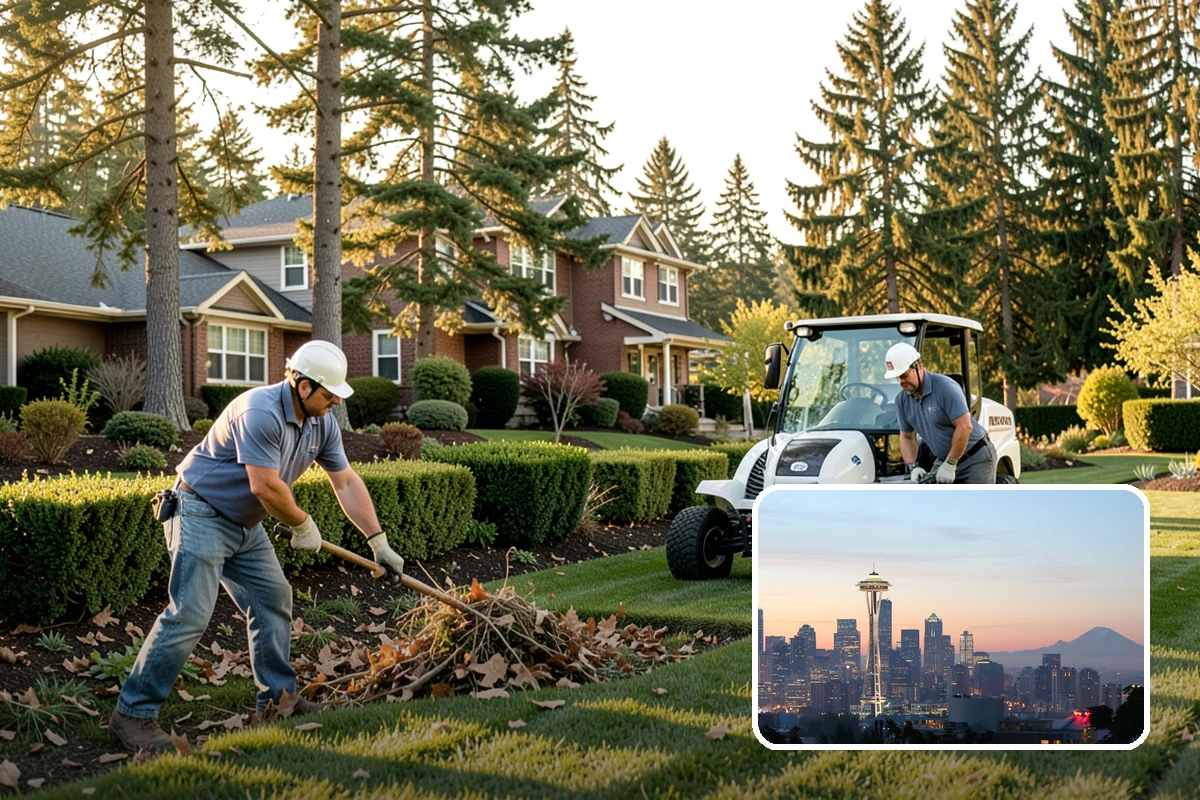
Seasonal Considerations: Seattle’s growing year starts early with spring pruning, mulching, and moss control on lawns after the wet winter. Summer’s reliable dry spell makes irrigation and container watering essential, especially on exposed slopes, while autumn is ideal for planting and managing the heavy leaf fall from neighborhood maples and chestnuts. Winter focuses on structural pruning and protecting beds.
Common Project Types: Common Seattle projects include hillside terracing, retaining walls, and stair-and-path systems for sloped lots, alongside native and pollinator garden installs inspired by the Arboretum. Compact patios, rain gardens, edible beds, and privacy screening for closely built Ballard and Fremont homes round out frequent requests.
Property Styles: Seattle properties range from narrow craftsman lots in Ballard and Fremont to larger view parcels on Queen Anne, plus townhomes and condominium grounds throughout Capitol Hill and the University District. Slopes, tight setbacks, and shared boundaries strongly shape what fits in each yard.
Local Materials & Plants: Seattle gardens thrive with Pacific Northwest natives like sword fern, salal, red-flowering currant, and vine maple, paired with rhododendrons, hydrangeas, and hardy grasses. Basalt stone, permeable gravel, and cedar are popular local materials, all well suited to the temperate, rainy zone 8b conditions.
Planning Your Project: Planning a Seattle project often means navigating narrow access, street parking, and slope stability across the city’s varied neighborhoods. Sequencing hardscape before planting, considering stormwater on hilly lots, and checking general local requirements ahead of significant grading or tree removal all help projects near areas like West Seattle go smoothly.
Whether your home sits in Ballard, on a Queen Anne slope, or near the Rainier Valley, we would welcome the chance to discuss your landscaping ideas and help craft a plan suited to your Seattle lot.