Local Service Information
Skykomish
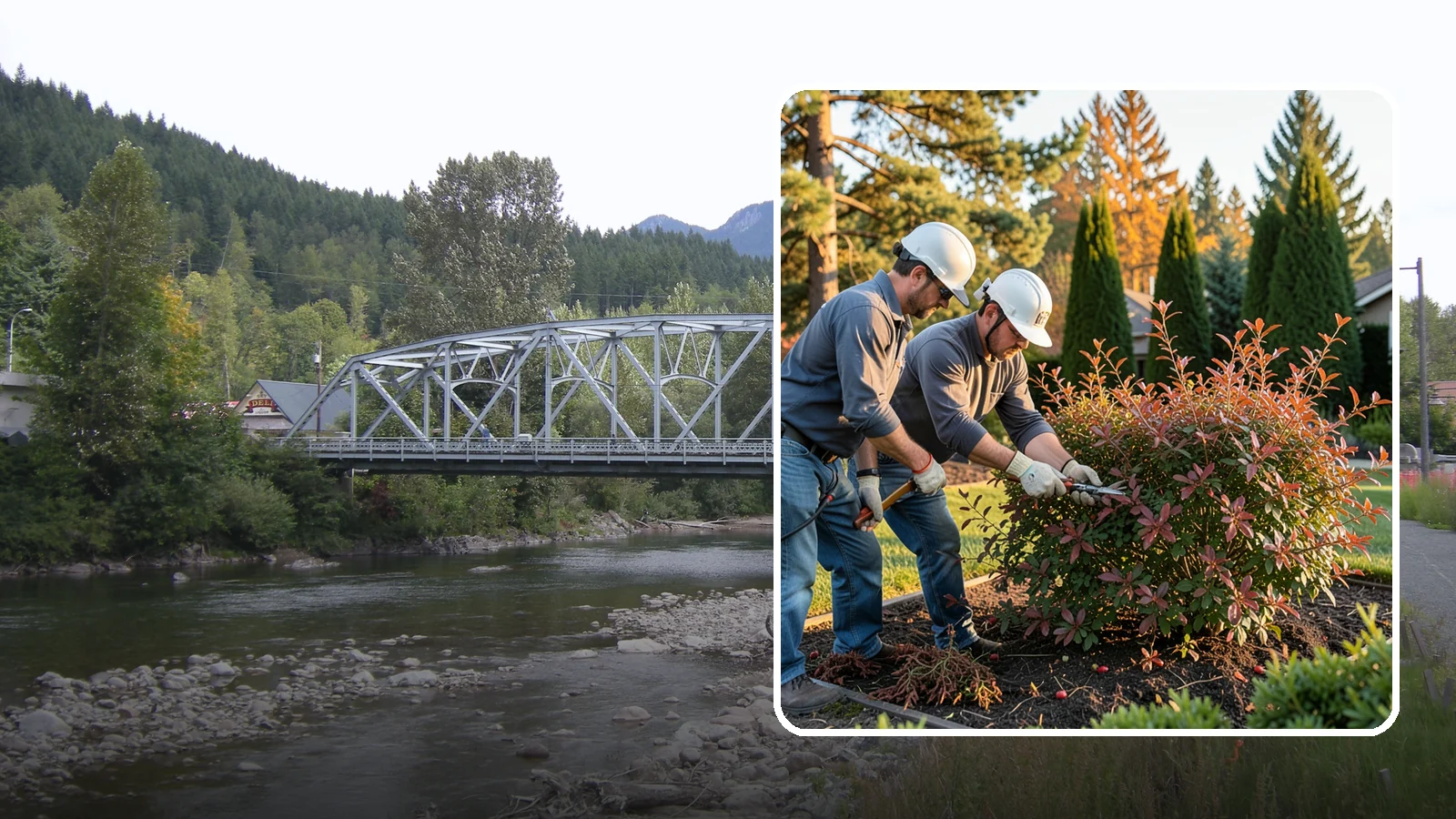
A very small mountain town along the Skykomish River and US-2 in the Cascade foothills.
County: King County
ZIP Codes Served: 98288
Neighborhoods: The small historic railroad-town core along the Skykomish River
Nearby Communities: Index, Gold Bar, Baring
Common Property Types: Predominantly single-family homes on larger and rural lots, with some farm and acreage properties; commercial property is limited to small retail and civic buildings.
Local Tree & Landscape Notes: Mountain and heavily forested setting with large conifers including Douglas fir, western hemlock, and western red cedar. Steep terrain, limited access, and large trees are key considerations for planning and rigging.
Permit Considerations: Permit requirements vary depending on tree size, species, protected areas, shoreline regulations, critical areas, and local municipal code. Always verify current requirements with the local jurisdiction before beginning work.
Climate: Marine west coast climate typical of the Puget Sound region: mild, wet winters and warm, relatively dry summers, with most rainfall from fall through spring. Occasional wind, snow, and ice events and seasonal soil saturation influence tree health and the timing of tree work.
Landscaping in Skykomish takes its cues from a small mountain railroad town tucked along the Skykomish River in the Cascade foothills. With larger and more rural lots than the lowland cities, and colder, snowier winters at this elevation, homeowners here tend toward hardy, low-fuss landscapes that blend with the surrounding forest. Naturalistic plantings, gravel, and durable structure suit the rugged setting near the historic railroad depot.
Because Skykomish properties often include acreage and forest edges, landscaping usually emphasizes clearing, defensible open space, hardy plantings, and practical access rather than manicured formality. Residents near the river and depot typically plan for a climate that runs colder and receives more snow than the Puget Sound lowlands.
Site Conditions: Skykomish sits at higher elevation along the river, where soils can be rocky and fast-draining in places and damp near the water. Terrain includes forested slopes and riverside flats, with significant shade from conifers and winters cold enough to bring lasting snow, all of which shape hardy plant choices and layout.
Seasonal Considerations: The Skykomish season starts later than the lowlands, so spring planting waits for the ground to thaw and dry. Summers are the prime window for building, planting, and establishing hardy stock, while fall means preparing for early cold. Winters bring real snow and freezing, so plantings must tolerate the cold and structures should handle snow load.
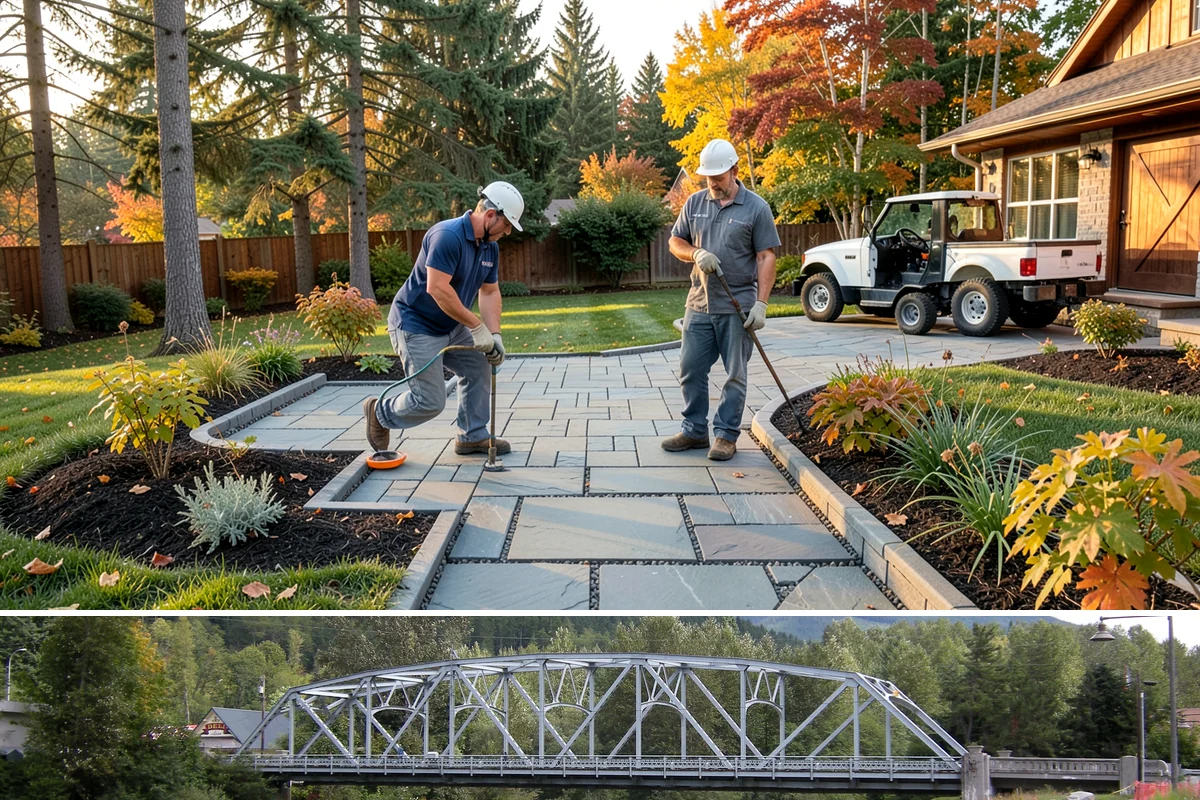
Common Project Types: Typical Skykomish projects include naturalistic plantings, gravel drives and paths, hardy shrub borders, and clearing or brush management on larger and forested lots. Riverside plantings, firewise spacing, and durable stone or timber features fit the rural, mountain character better than delicate ornamental designs.
Property Styles: Properties in Skykomish are largely single-family homes on larger, rural, and forested lots, with some farm and acreage parcels near the river. Wooded edges, slopes, and generous space define the setting, favoring landscapes that transition gracefully into the surrounding natural forest.
Local Materials & Plants: Cold-hardy, mountain-friendly plants suit Skykomish’s zone 7a-7b climate, including conifers, native ferns, salal, huckleberry, and tough perennials that handle snow and shade. Local gravel, river-influenced stone, and cedar or timber are natural, durable choices for paths, borders, and features in this forested setting.
Planning Your Project: Planning in Skykomish means accounting for a shorter frost-free season, snow, and access on rural lots and forest roads. Scheduling major work for the drier summer months, planning for drainage and snow load, and confirming general local requirements before clearing or grading near the river help keep mountain projects realistic.
If you are shaping a yard or acreage near Skykomish and the river, we would enjoy talking through your ideas and helping plan a hardy, natural landscape that suits this mountain setting and its colder seasons.