Local Service Information
Snoqualmie
A city on the Snoqualmie River near Snoqualmie Falls in the upper valley of east King County.
County: King County
ZIP Codes Served: 98065
Neighborhoods: Downtown, Snoqualmie Ridge
Nearby Communities: North Bend, Issaquah, Carnation
Common Property Types: Predominantly single-family homes, with some townhomes and multifamily housing; commercial property includes small retail, civic, and light commercial buildings.
Local Tree & Landscape Notes: Forested foothill setting with conifers such as Douglas fir, western hemlock, and western red cedar, plus bigleaf maple and alder. Slopes, wet soils, and larger trees are common considerations for access and rigging.
Permit Considerations: Permit requirements vary depending on tree size, species, protected areas, shoreline regulations, critical areas, and local municipal code. Always verify current requirements with the local jurisdiction before beginning work.
Climate: Marine west coast climate typical of the Puget Sound region: mild, wet winters and warm, relatively dry summers, with most rainfall from fall through spring. Occasional wind, snow, and ice events and seasonal soil saturation influence tree health and the timing of tree work.
Landscaping in Snoqualmie fits a foothills community famous for Snoqualmie Falls and its blend of historic downtown and the newer Snoqualmie Ridge neighborhoods. With a setting slightly cooler than the open lowlands, homeowners often want polished, resilient yards that hold up to wet winters and complement the dramatic mountain backdrop. Clean lawns, structured beds, and hardy plantings are common throughout the area.
Between the planned streets of Snoqualmie Ridge and the older lots near downtown, landscaping here tends to emphasize crisp, well-maintained yards, community-standard plantings, and durable features suited to a cooler foothills climate. Many residents approach their landscapes with a focus on curb appeal and reliable seasonal care.
Site Conditions: Snoqualmie’s valley-and-foothills setting brings moist soils, some elevation influence, and terrain that ranges from flat valley lots near the river to gently sloped parcels on the Ridge. Winters run a touch cooler than the lowlands, and drainage matters on damp ground, so plant placement and grading deserve attention.
Seasonal Considerations: Spring in Snoqualmie means lawn recovery, mulching, and planting once the cooler ground warms. Summers are comfortable but call for steady irrigation of lawns and new plantings, and fall is a strong window for establishing shrubs and trees before the rains. Winters trend slightly colder here, so dormant pruning and protecting tender plants are worthwhile.
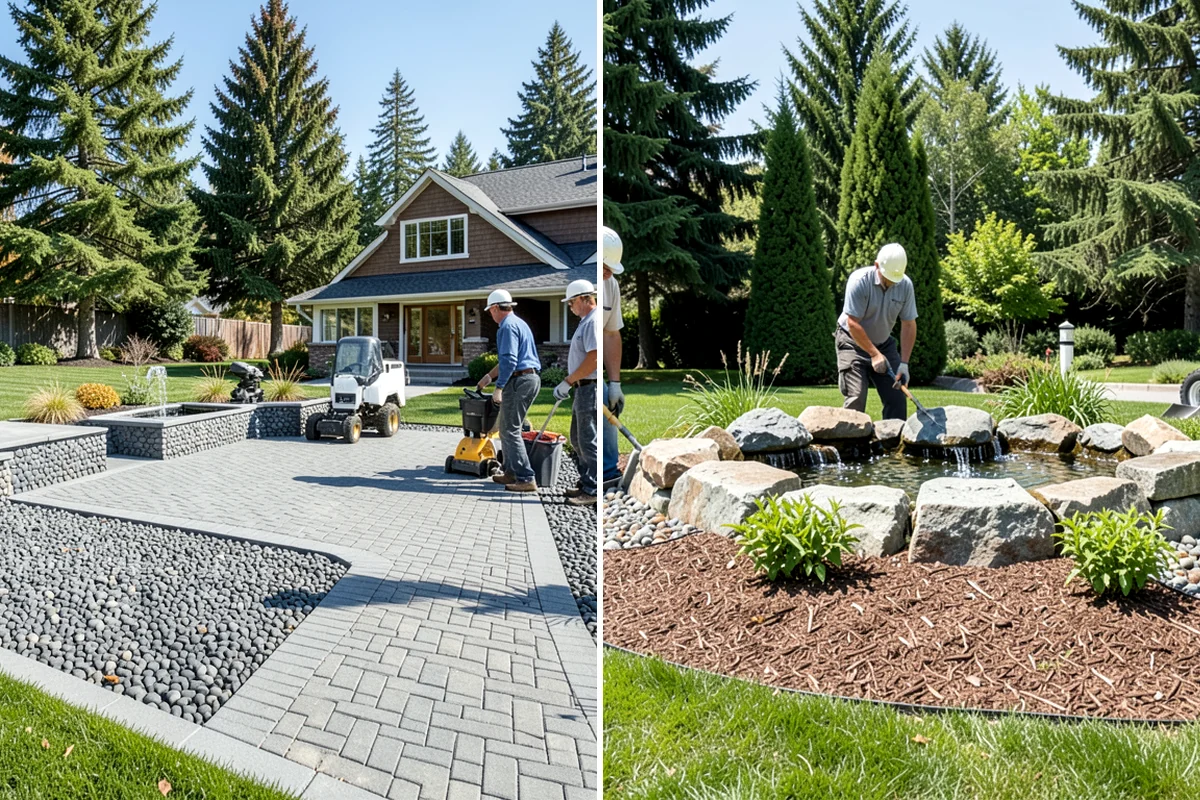
Common Project Types: Common Snoqualmie projects include lawn installation and renovation, tidy foundation and border plantings, and patios or walkways suited to Snoqualmie Ridge and downtown homes. Privacy hedging, raised beds, and low retaining walls on gently sloped lots are also frequent, along with plantings that frame mountain views.
Property Styles: Snoqualmie properties range from established single-family homes near downtown to newer houses and townhomes on Snoqualmie Ridge. Lots often have defined yards and community landscaping expectations, favoring neat, well-structured designs that complement the surrounding foothills.
Local Materials & Plants: Snoqualmie yards do well with hardy, cool-tolerant plants like Japanese maple, spirea, dogwood, and evergreen shrubs, plus rhododendrons, ferns, and durable perennials. Bark mulch, natural stone, and gravel suit the moist, slightly cooler zone 8a-8b conditions for beds, borders, and pathways.
Planning Your Project: Planning a Snoqualmie project generally means timing plantings around cooler, wetter shoulder seasons and allowing establishment before winter. Considering drainage on valley lots, coordinating with any community landscaping standards on the Ridge, and confirming general local requirements before larger grading or tree work help projects proceed smoothly.
If you are ready to enhance a yard in Snoqualmie, whether near downtown or on Snoqualmie Ridge, we would welcome the chance to talk through your ideas and help shape a landscape suited to your lot and the foothills climate.