Local Service Information
Sumner
A city at the confluence of the Puyallup and White rivers in Pierce County.
County: Pierce County
ZIP Codes Served: 98390
Neighborhoods: Downtown, East Sumner
Nearby Communities: Puyallup, Bonney Lake, Orting, Pacific
Common Property Types: Predominantly single-family homes, with some townhomes and multifamily housing; commercial property includes small retail, civic, and light commercial buildings.
Local Tree & Landscape Notes: Common regional trees include Douglas fir, western red cedar, western hemlock, bigleaf maple, and red alder, alongside many ornamental species. Wet soils and dense canopy are common considerations for access and scheduling.
Permit Considerations: Permit requirements vary depending on tree size, species, protected areas, shoreline regulations, critical areas, and local municipal code. Always verify current requirements with the local jurisdiction before beginning work.
Climate: Marine west coast climate typical of the Puget Sound region: mild, wet winters and warm, relatively dry summers, with most rainfall from fall through spring. Occasional wind, snow, and ice events and seasonal soil saturation influence tree health and the timing of tree work.
Landscaping in Sumner blends the town’s small-city, agricultural roots with the tidy residential streets that spread out from its historic Main Street. Yards here sit on the valley floor between the Puyallup and White rivers, so homeowners tend to balance productive garden space with the polished front-lawn look common around Downtown and East Sumner. Properties range from compact in-town lots to slightly larger parcels closer to the surrounding farmland, and that mix shapes the kind of landscaping local residents ask for.
Because Sumner sits on rich river-valley bottomland shared with Puyallup and Orting, landscaping here often works around seasonal moisture and a growing season prized by gardeners. Many residents want low-fuss lawns, raised beds, and planting plans that hold up to the damp valley air rather than fight it.
Site Conditions: Much of Sumner rests on flat, river-deposited valley soil that can stay heavy and slow to drain after wet stretches, especially on lots nearer the Puyallup and White rivers. Sun exposure is generally open on these level lots, though mature street trees create pockets of afternoon shade in older Downtown blocks.
Seasonal Considerations: Spring in Sumner is the moment to lift compacted valley turf, top-dress beds, and get ahead of weeds before the growing season takes off. Summers stay mild enough that established plantings need only steady watering, while fall is ideal for dividing perennials and clearing leaves ahead of the rains. Winter work leans toward pruning and protecting beds from standing water.
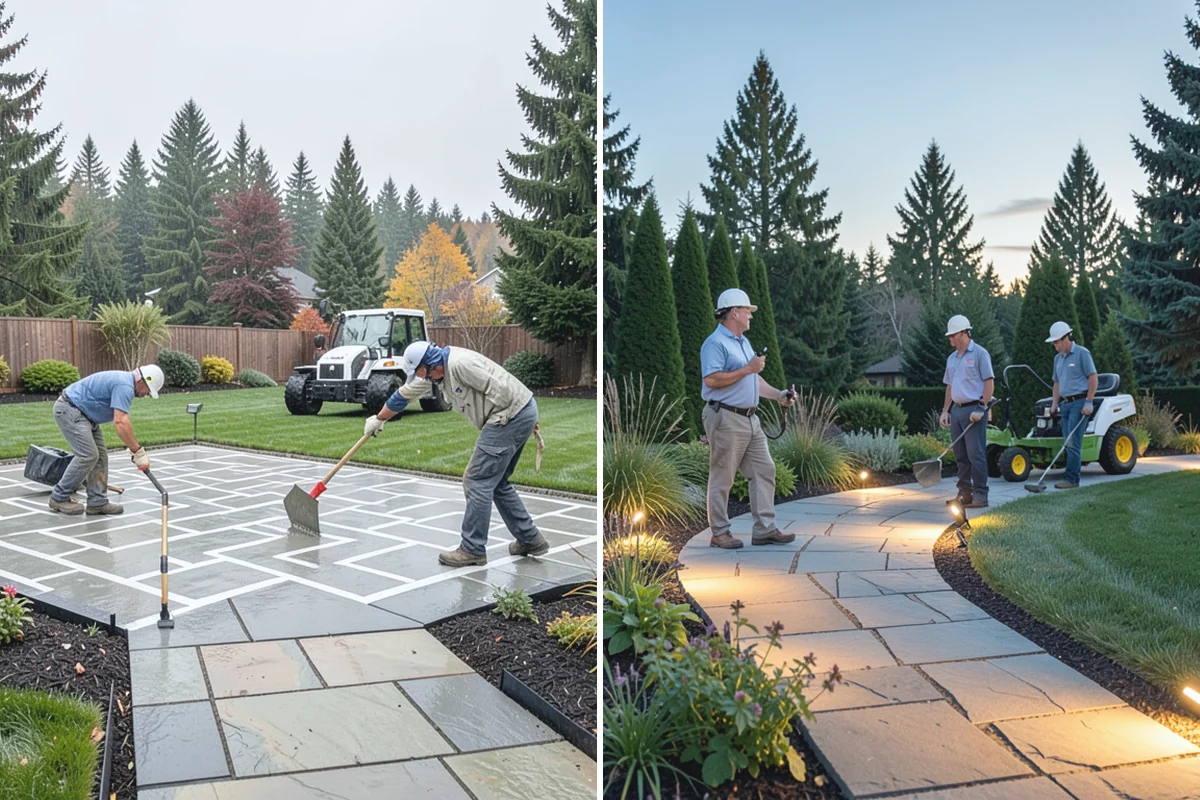
Common Project Types: Around East Sumner and the in-town neighborhoods, common requests include front-yard refreshes, patio and walkway installs, raised vegetable beds, and drainage-minded regrading for lots that pond after storms. Fence-line plantings and low-maintenance lawn conversions are also frequent on the smaller residential parcels.
Property Styles: Sumner’s housing is mostly single-family with a scattering of townhomes and multifamily buildings, so lots tend to be modest and rectangular near Downtown while opening up toward the valley edges. That compact footprint rewards tidy, well-defined plantings over sprawling layouts.
Local Materials & Plants: Plant choices that thrive in this valley setting include moisture-tolerant natives like red-twig dogwood and sword fern alongside hardy shrubs such as hydrangea and dwarf conifers. Bark mulch, locally sourced gravel, and permeable pavers all suit a lowland lot that needs help shedding winter wet.
Planning Your Project: Planning a Sumner project usually starts with sorting out drainage and access on a valley lot before any planting begins, since standing moisture can dictate the whole layout. Scheduling larger installs for the drier late-spring and summer window tends to give the cleanest results, and confirming any local requirements early keeps the timeline smooth.
If you’re weighing a yard update anywhere from Downtown Sumner to the quieter East Sumner streets, reach out to talk through ideas suited to your valley lot and the look you’re after.