Shaping Your Outdoors. Surpassing Expectations.

Tukwila Landscape Masonry
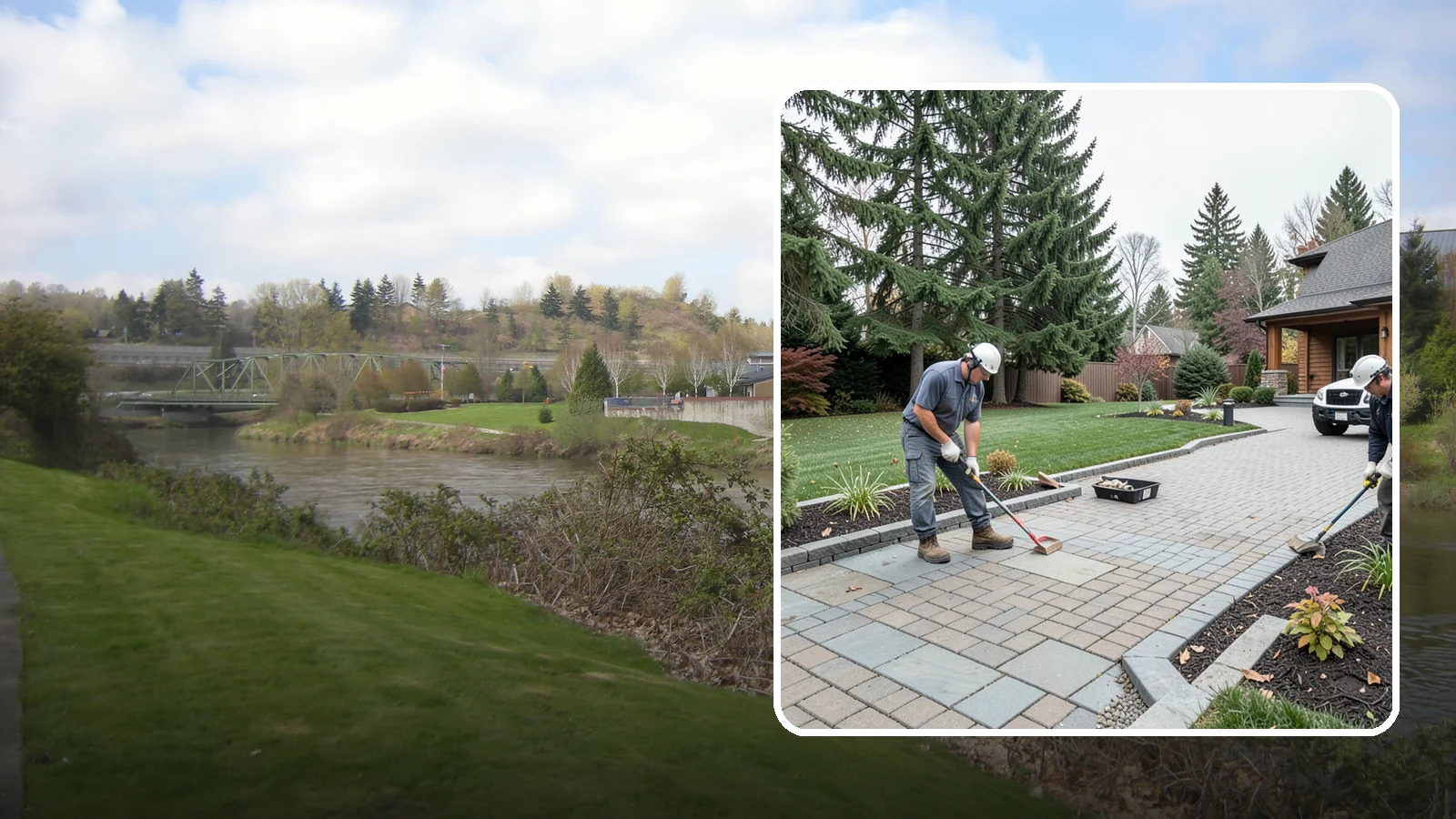
Skilled masonry work – stone, brick, and block – that brings craftsmanship and permanence to your landscape.
You may have noticed a stone step that rocks underfoot, a retaining wall that leans, or a paver patio with joints opening up and edges that have settled. Mortar crumbles, caps loosen and water finds its way behind the stone. These are usually signs of a base or drainage problem, not just worn surfaces.
Landscape masonry covers stone and brick walls, steps, columns, patios and walkways. Washington Landscaping has been in business since 2004 and offers free estimates. This page explains what affects masonry in Tukwila and how the work is done.
How Tukwila Weather and Housing Age Affect Landscape Masonry
Most masonry problems start below the surface. Stone, brick and block are heavy and durable. What fails is the ground under them, or the water moving through and behind them. A weak base settles unevenly. Trapped water pushes on walls and softens the soil under steps.
Tukwila gets about 104 days a year with 0.1 inch or more of rain, per Daymet data for 2005-2025. That is a lot of wet days. Water that has nowhere to go will undermine a patio base or build pressure behind a wall. For this reason, drainage is part of masonry work here. A wall usually needs compacted gravel behind it and a way for water to leave. Patios and walks need a firmly compacted base and a slight slope away from the house.
Freeze and thaw matters too, though less than the rain. Daymet shows about 26 days a year when Tukwila freezes at night and thaws by day. Water that gets into joints or cracks expands as it freezes and can widen them over time. Good base prep and proper joint fill help limit that. Those numbers describe the city overall, and your own yard may be wetter or drier than average.
Older homes and existing masonry
About 48% of Tukwila housing units were built before 1980, per the Census ACS for 2020-2024. That figure includes apartments, so it does not tell you about any one house. Still, if your home is older, existing steps, walls or walkways may have been built with little base or drainage. Repair often means more than patching. We look at why the piece moved before deciding whether to repoint, reset or rebuild it.
How the work goes
We start with a free estimate and look at the site, the slope and where water travels. For walls, grading and structures, permit needs are checked with the city before work starts. The work then follows a set order: excavate, build and compact the base, set the stone or brick, and finish the joints. Our hardscaping work carries a 1-year workmanship warranty. We are licensed, bonded and insured, and financing is available subject to credit approval. To talk through your project, call or text 425-433-9444.
Tukwila yard conditions at a glance
| Days that freeze at night and thaw by day | 26 a year |
|---|---|
| Land sloping 15% or more | 19% (40% or more: 2.8%) |
| Days with 0.1 in or more of rain | 104 a year |
| Soil drainage (rated land) | 35% well, 49% moderately well, 16% poorly drained |
| Elevation range | 5 to 403 ft |
A year in a Tukwila yard
- Late winter
- Dormant pruning for most deciduous trees and shrubs, before buds break.
- Spring
- Last frost is usually around Mar 11; in 1 year in 10 it comes on or after Mar 27. Plant frost-tender annuals and vegetables after that.
- Early summer
- Check sprinklers and drip lines before July, the start of the dry months here.
- Summer
- July and August average 0.5 in and 0.8 in. Water deeply and less often; mulch beds to hold moisture.
- Fall
- Aerate, overseed and plant trees and shrubs while the soil is warm; first frost is usually around Nov 17. Winterize irrigation before then.
- Winter
- About 26 days a year freeze at night and thaw by day: keep drains, paver joints and wall weep holes clear.
Dates are medians for the city from Daymet 2005-2025; your yard and any given year can differ.
How Tukwila’s soils drain
- Well drained35%
- Moderately well49%
- Poorly drained16%
Share of rated land in the USDA SSURGO soil survey; built-over ground is not rated. A soil check on your lot tells you what you have.
Sources: Daymet daily weather (NASA/ORNL), 2023 USDA Plant Hardiness Zone Map data (PRISM, Oregon State University), USDA SSURGO soil survey, USGS 3DEP elevation, USFS/NLCD tree canopy 2025, US Census ACS 2020-2024.
Tukwila Landscape Masonry

Local Service Information
Tukwila
A city in the Green/Duwamish river valley of south King County, a major retail and commercial hub.
Benefits
Craftsmanship that lasts generations; Stone, brick, and block expertise; Structurally sound and beautiful; Custom features and details; Adds permanence and value
Process

Also serving Tukwila
- Asphalt Driveway Installation in Tukwilaat Washington Construction
- Driveway Paint Removal in Tukwilaat Washington Pressure Washing
Get a Free Landscape Masonry Estimate in Tukwila
Tell us about your project. We’ll review your needs and provide a customized, no-obligation proposal.
Request a Free Consultation
Complete the form or call our team to discuss your project.
On-Site Assessment
We’ll review your property, discuss your goals, and recommend an appropriate solution.
Receive a Customized Proposal
Receive a detailed estimate outlining the proposed work and pricing.