Option 1
Lawn Aeration
A starting point for: An established lawn with useful grass coverage and signs of surface compaction
Recommended scope: Core aeration in suitable, accessible areas, plus aftercare guidance

Washington Landscaping · Lawn care, thoughtfully planned
A healthier lawn starts with understanding your yard
Thin grass, stubborn moss, bare patches, or hard soil? Washington Landscaping helps you understand what your lawn needs and build a practical plan for improving it.
Our lawn aeration and restoration services are tailored to your property, its growing conditions, and how you use your outdoor space.
We start with a free on-site evaluation. We’ll walk the lawn with you, discuss your concerns, and recommend the work that makes sense before scheduling a crew.
Request My Free On-Site Evaluation
Tell us about your lawn. We’ll contact you to arrange a visit, review your options, and prepare a personalized estimate.
Primarily serving King and Snohomish counties. Contact us to confirm availability for your property.
01 / Understand your lawn
An evaluation is a good place to start if you notice:
These symptoms can have different causes. Aeration may help compacted soil, while other lawns need overseeding, surface preparation, or attention to drainage and growing conditions.
We’ll help you understand the difference.
02 / Before the crew
Your lawn is more than its square footage. Shade, soil moisture, access, existing grass, drainage, and watering availability all influence the right approach.
During your free on-site evaluation, we’ll:
You’ll have an opportunity to ask questions and approve the scope before we schedule the crew.
03 / A conditional approach
Every lawn does not need every treatment. We select the appropriate steps after evaluating your property and explain what is included in your estimate.
We meet with you on site to assess the lawn, discuss your priorities, and identify likely limitations.
If we find persistent standing water, deep shade, significant soil problems, or extensive lawn failure, we’ll discuss those concerns before recommending routine restoration. Additional investigation or a different landscape approach may be more useful.
Work begins after you approve the recommended scope and we coordinate a suitable service date.
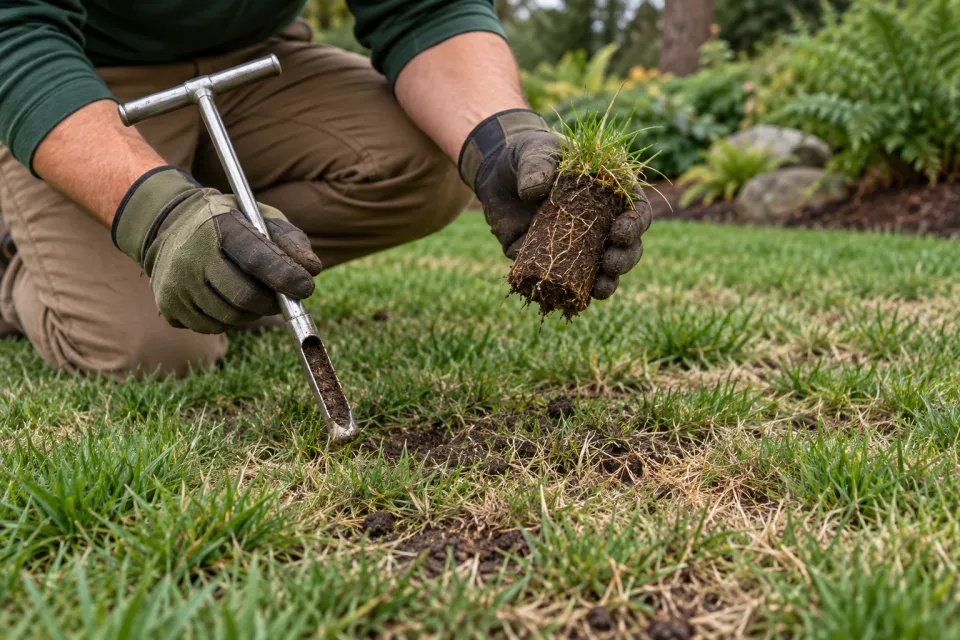
We prepare the agreed work area so the selected treatments can reach the lawn and soil effectively.
If needed, preparation may include mowing, collecting clippings, removing loose debris, or addressing areas that would interfere with equipment. Your estimate will explain which preparation tasks we handle and which we ask you to complete.
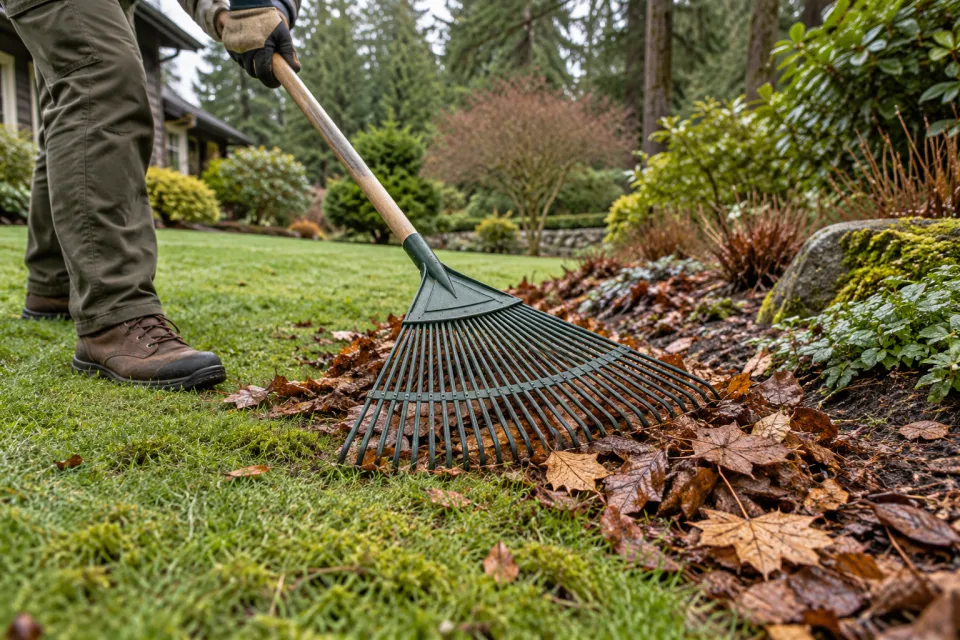
We assess whether surface buildup is restricting recovery or preventing good seed-to-soil contact.
If excessive thatch or moss warrants removal, the plan may include using a commercial powered dethatcher or power rake and collecting the loosened material. A lawn with little buildup may skip this step.
Removing moss does not remove the conditions that encouraged it. We’ll also discuss shade, moisture, and other contributing factors.
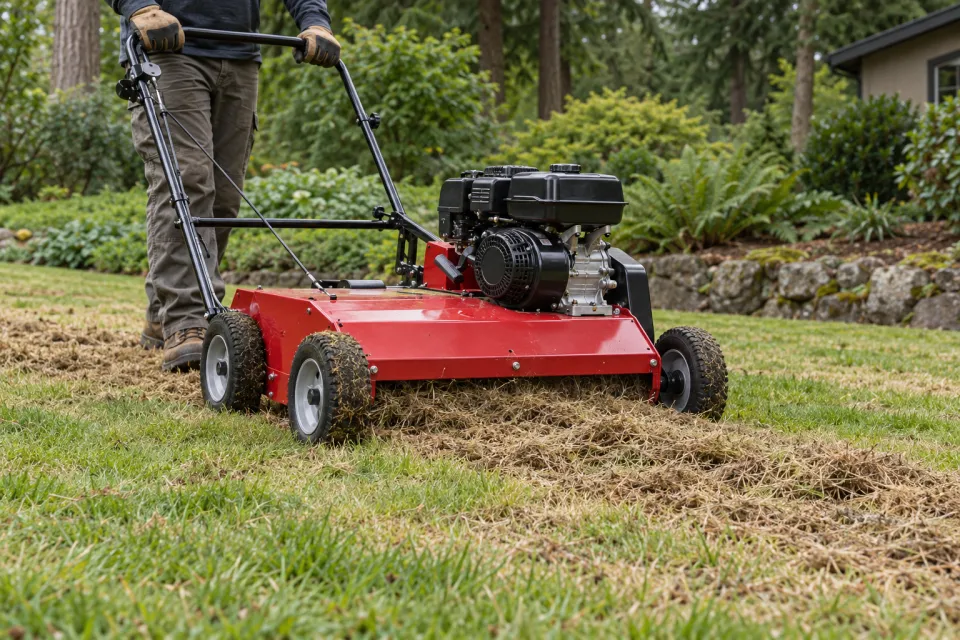
We use a commercial core aerator to remove small plugs of soil, creating openings through the lawn’s surface.
Where appropriate, this helps relieve surface compaction and allows air and water to move into the root zone. We work when soil moisture is suitable and may postpone if the ground is saturated, frozen, or too dry.
Aeration is not a substitute for correcting a drainage or grading problem.
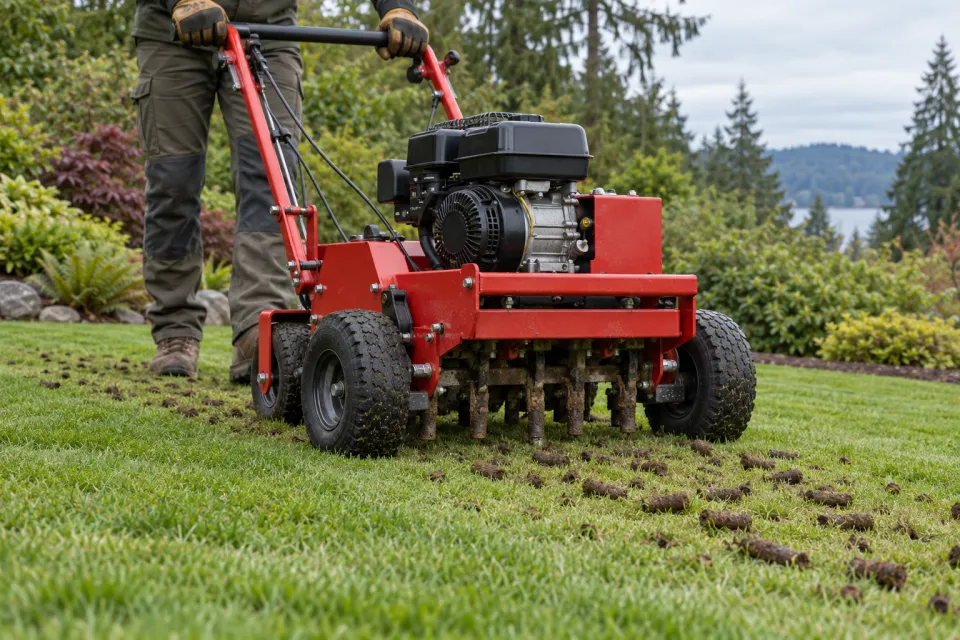
If the lawn needs more grass coverage, we select a seed mix suited to the site’s light, use, and growing conditions, then prepare for good seed-to-soil contact.
Some lawns benefit from overseeding throughout the treatment area. Others need attention only in selected patches. Areas with insufficient light may need an alternative to grass.
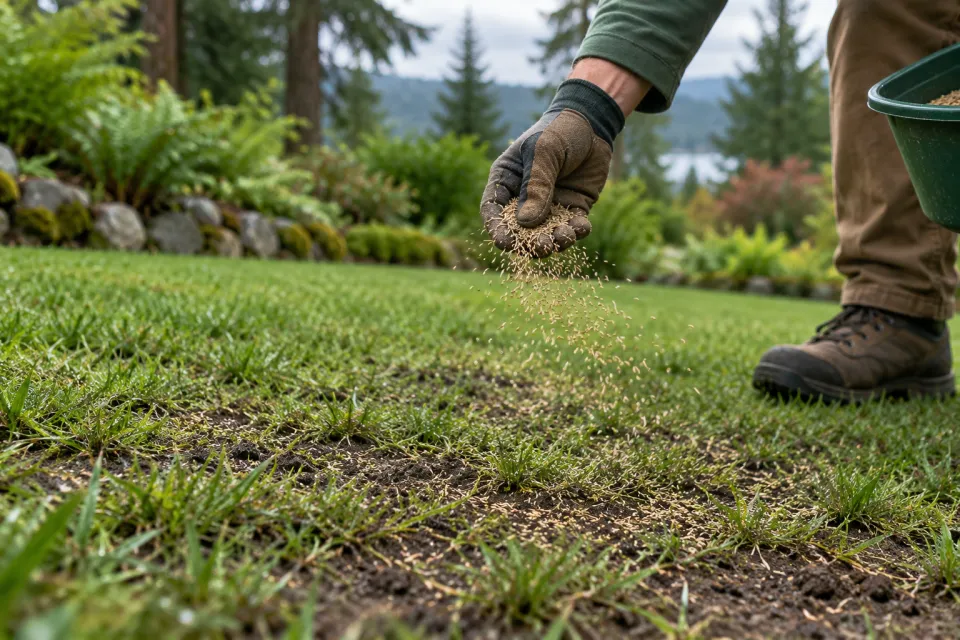
If the evaluation supports it, the plan may include a suitable compost topdressing, fertilizer, or another targeted soil amendment.
These treatments are selected for a purpose. Lime is not an automatic moss treatment; soil testing may be recommended to guide pH or nutrient decisions. Topdressing is not a replacement for major leveling or drainage work.
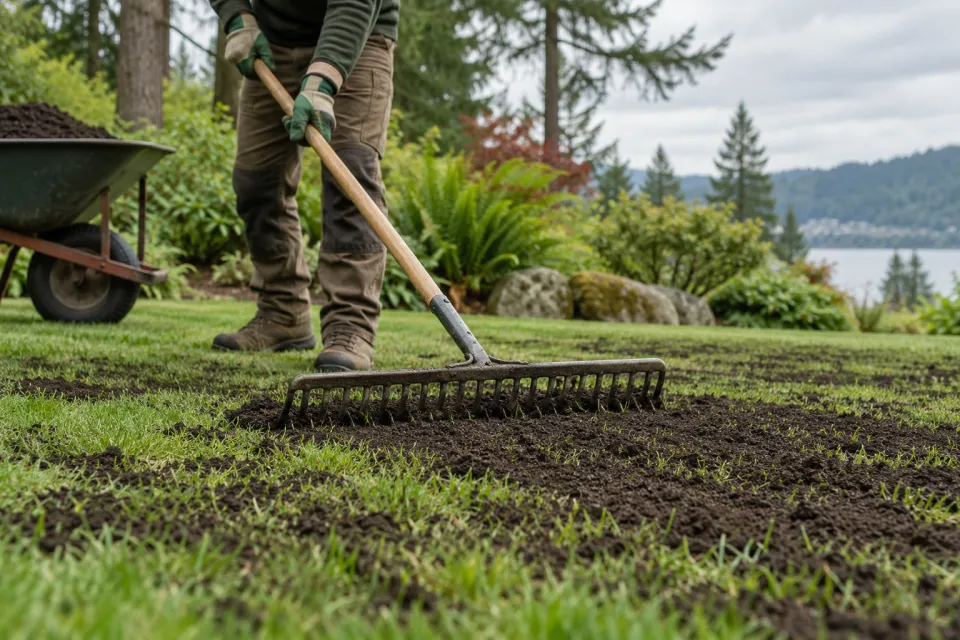
We collect agreed renovation debris and leave you with instructions for watering, mowing, and protecting the treated lawn.
Aeration plugs are generally left to break down naturally. Your aftercare instructions will reflect the work completed, the weather, and the needs of any new seed.
04 / Compare your options
These options provide a starting point for discussion. We’ll confirm suitability, treatment areas, and the exact scope during your evaluation.
Option 1
A starting point for: An established lawn with useful grass coverage and signs of surface compaction
Recommended scope: Core aeration in suitable, accessible areas, plus aftercare guidance
Option 2
A starting point for: A thin or worn lawn that needs additional grass coverage
Recommended scope: Core aeration, site-appropriate overseeding, and an establishment care plan
Option 3
A starting point for: A lawn with several issues, such as thinning, bare patches, moss, or excess thatch
Recommended scope: A tailored combination of surface preparation, thatch or moss removal, aeration, overseeding, and appropriate topdressing or soil support
Not sure which option fits? That’s what the site visit is for.
Your personalized estimate will identify the treatments, preparation responsibilities, and any separately recommended work. Drainage changes, major grading, irrigation repairs, and full lawn replacement require separate assessment and scope.
05 / Local growing conditions
Rain does not always mean the soil is ready for equipment. We consider ground conditions before starting and may adjust timing to protect soft or saturated areas.
Trees, buildings, and long periods of damp weather can make some areas difficult for grass. Moss removal can improve the surface, but lasting improvement depends on the growing conditions too.
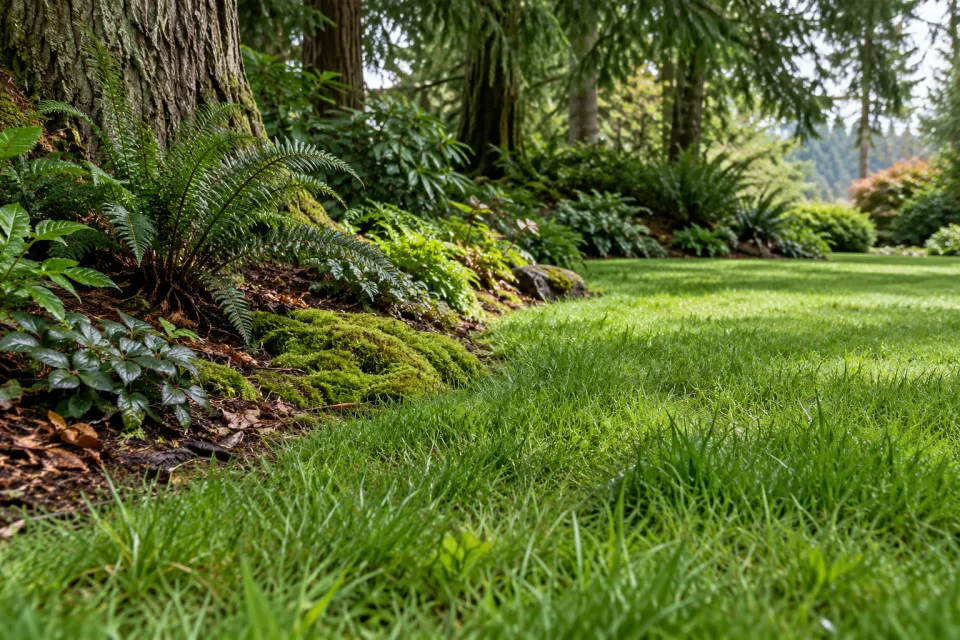
Spring and early fall can provide useful restoration opportunities. The right timing depends on soil temperature, moisture, weather, and enough growing time for new grass to establish. A calendar date alone does not determine readiness.
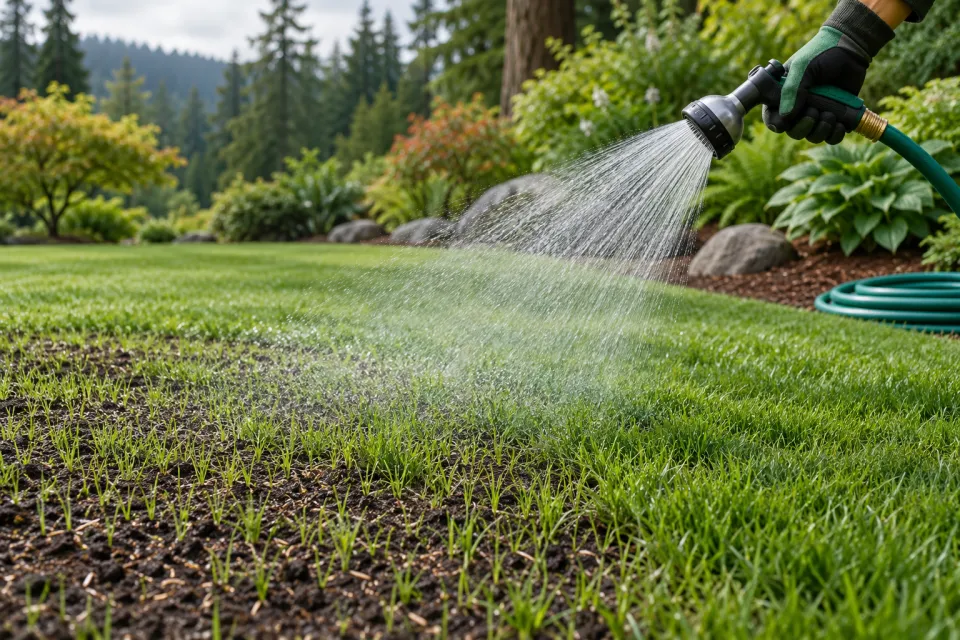
New seed needs dependable moisture, including during dry weather. We’ll discuss watering access and your ability to maintain the lawn before recommending seeding.
The sunny front lawn and shaded backyard may need different seed choices, treatments, or expectations. We assess the areas individually.
06 / Before we arrive
Before the evaluation:
After approving the work, before the crew arrives:
Please do not dethatch, apply weed control, fertilize, or add lime in preparation unless we have discussed it. Recent products or additional treatments can affect the restoration plan.
07 / Support the recovery
We’ll provide instructions specific to your service. These general guidelines explain what to expect.
Leave soil plugs to break down naturally unless we advise otherwise. Continue the agreed mowing and watering routine, and avoid heavy traffic while the ground is soft.
Keep the seedbed consistently moist without creating puddles or runoff. Check conditions regularly and adjust watering for rainfall, sun, wind, and soil moisture.
As the grass establishes, gradually transition toward deeper, less frequent watering following your care instructions and applicable watering restrictions.
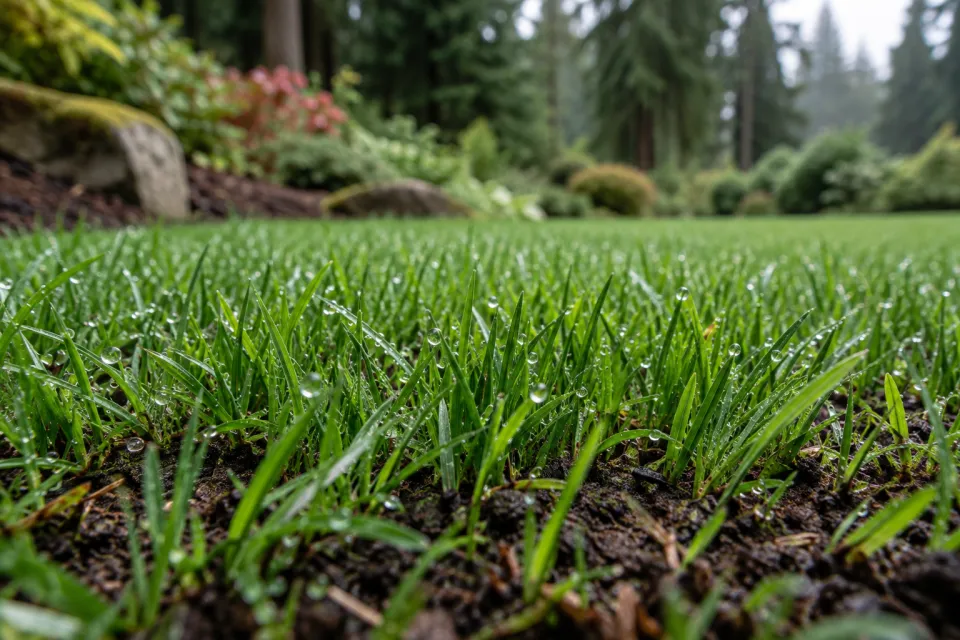
Limit foot traffic, play, and pet activity until the new grass is sufficiently established. Avoid dragging hoses or equipment across tender seedlings.
Wait until the new grass is rooted and ready for its first cut. Use a sharp blade, mow when the ground is firm enough, and follow the recommended height. Avoid removing more than one-third of the grass blade at a time.
Do not apply weed killers or other lawn products without checking their suitability for newly seeded grass. Follow product labels and the timing in your care plan.
Germination and recovery vary with seed, temperature, moisture, and existing conditions. Coverage develops over time, and some lawns may need further attention. Contact us if you notice washouts, persistent puddles, or areas that are not progressing as expected.
08 / Your questions
We’ll review your information and contact you to discuss your lawn and arrange a free on-site evaluation. Submitting the form requests a conversation and visit; it does not reserve a service date.
Yes. We begin with a free on-site evaluation so we can understand your lawn and recommend an appropriate scope.
No. We first meet with you, explain the recommendations, and prepare a personalized estimate. We schedule the crew after you approve the work and we coordinate the service date.
No. An approximate size is helpful if you know it, but it is optional. We can assess the treatment area during the site visit.
Photos of the overall lawn, bare patches, moss, or wet areas can help us prepare for the evaluation. They are optional and do not replace the site visit. Our team can explain how to share them during follow-up; this form does not accept photo uploads.
No. We recommend dethatching or power raking only when the lawn’s condition justifies it. Unnecessary aggressive treatment can damage healthy grass.
Aeration may help where surface compaction contributes to poor infiltration. Persistent standing water can involve grading, underlying soil, drainage, or another issue that needs separate attention.
Moss can return if the conditions that favor it remain. We’ll discuss the role of shade, moisture, lawn density, and soil conditions rather than treating removal as a permanent cure.
No. Amendments depend on the lawn’s needs. Soil testing may be recommended before choosing a treatment, particularly where pH or nutrient concerns are suspected.
We recommend timing based on the proposed work and actual growing conditions. Spring or early fall may be suitable; saturated soil, summer heat, or limited establishment time can change the recommendation.
Tell us the product name and application date if available. Some products affect seed germination or young grass, so we may need to adjust the schedule.
That depends on the work performed and the growing conditions. Seeded lawns improve gradually as grass germinates, roots, and fills in. We’ll explain realistic expectations for your property during the evaluation.
We’ll assess it first. Some lawns need more extensive preparation or correction of underlying problems. In areas where grass is unlikely to thrive, we can discuss a more suitable landscape approach.
09 / Start the conversation
You don’t need to diagnose the problem or choose a package first.
Tell Washington Landscaping what you’re seeing. We’ll arrange a free on-site evaluation, walk the property with you, and recommend the next steps.
Request your free on-site evaluation below.
We’ll contact you to arrange the visit. You’ll receive a personalized estimate before any crew is scheduled.
Submitting this form requests an evaluation. We’ll contact you to arrange a visit; your submission does not confirm an appointment or authorize work.
Photos are optional. Our team can explain how to share them during follow-up. Please avoid including people or sensitive information.
Read our Privacy Policy. Prefer to call? 425-433-9444.