Local Service Information
Bellevue
A major Eastside city on the east shore of Lake Washington with a dense urban core and established neighborhoods.
County: King County
ZIP Codes Served: 98004, 98005, 98006, 98007, 98008
Neighborhoods: Downtown, Crossroads, Factoria, Somerset, West Bellevue
Nearby Communities: Redmond, Kirkland, Mercer Island, Newcastle, Issaquah
Common Property Types: Predominantly single-family homes along with townhomes, condominiums, and multifamily housing; commercial property includes retail, office, and mixed-use buildings.
Local Tree & Landscape Notes: Common regional trees include Douglas fir, western red cedar, western hemlock, bigleaf maple, and red alder, alongside many ornamental species. Wet soils and dense canopy are common considerations for access and scheduling.
Permit Considerations: Permit requirements vary depending on tree size, species, protected areas, shoreline regulations, critical areas, and local municipal code. Always verify current requirements with the local jurisdiction before beginning work.
Climate: Marine west coast climate typical of the Puget Sound region: mild, wet winters and warm, relatively dry summers, with most rainfall from fall through spring. Occasional wind, snow, and ice events and seasonal soil saturation influence tree health and the timing of tree work.
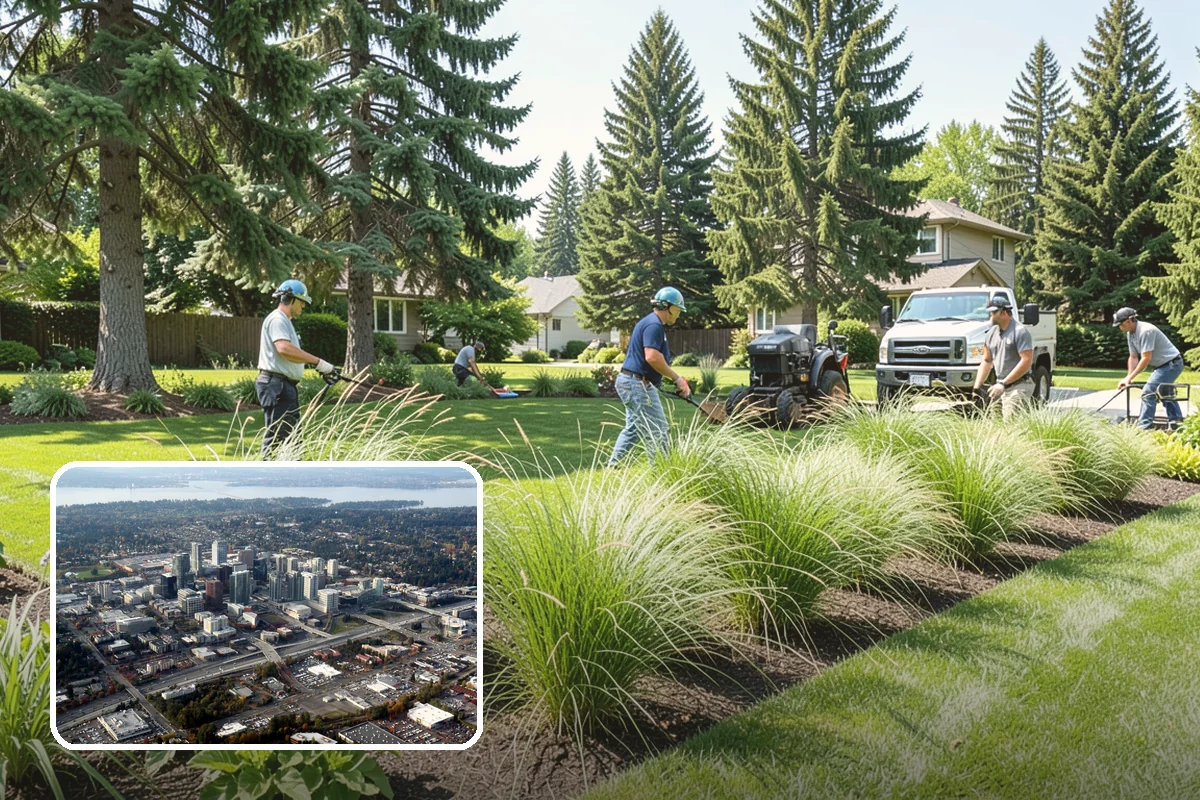
Bellevue combines polished urban districts with leafy residential neighborhoods, and its landscaping reflects that blend from Downtown to Somerset and West Bellevue. With the Bellevue Botanical Garden and Mercer Slough nearby, residents often set a high bar for garden design and healthy, well-kept grounds. Both hillside view homes and flatter lots keep demand strong for refined, low-maintenance outdoor spaces.
Landscaping across Bellevue ranges from compact townhome and condominium grounds to larger single-family lots on wooded slopes. Services commonly emphasize designed plantings, healthy lawns, and hillside solutions like terracing, reflecting the city’s mix of urban living and established view neighborhoods.
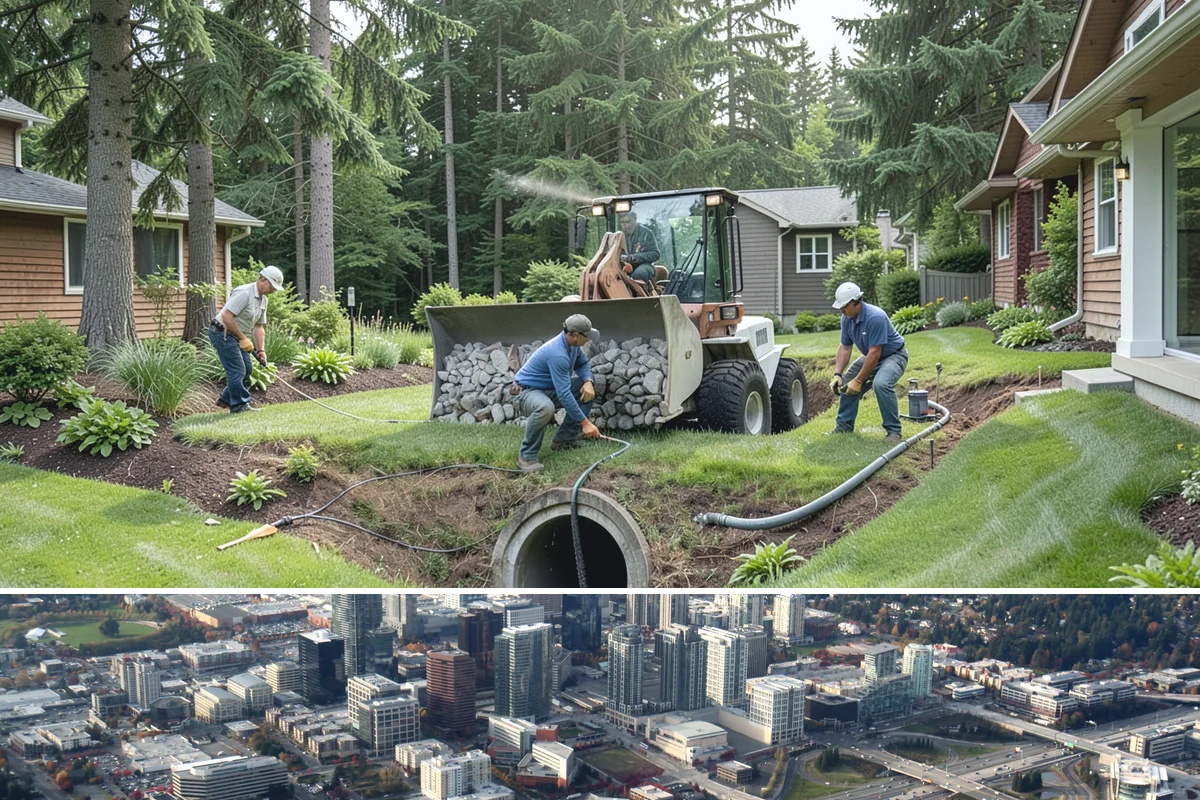
Site Conditions: In keeping with a zone 8b lowland climate, Bellevue soils are generally fertile, with hillside lots draining quickly and lower areas near Mercer Slough holding more moisture. Sun exposure varies widely with slope and mature tree cover, and slope stability is a factor on the steeper view properties.
Seasonal Considerations: Bellevue’s spring drives rapid growth and a busy season of pruning, mulching, and bed design, while summer calls for smart irrigation on sun-exposed slopes. Fall centers on aeration, overseeding, and leaf cleanup under the tree canopy, and winter suits dormant pruning and structural garden work.
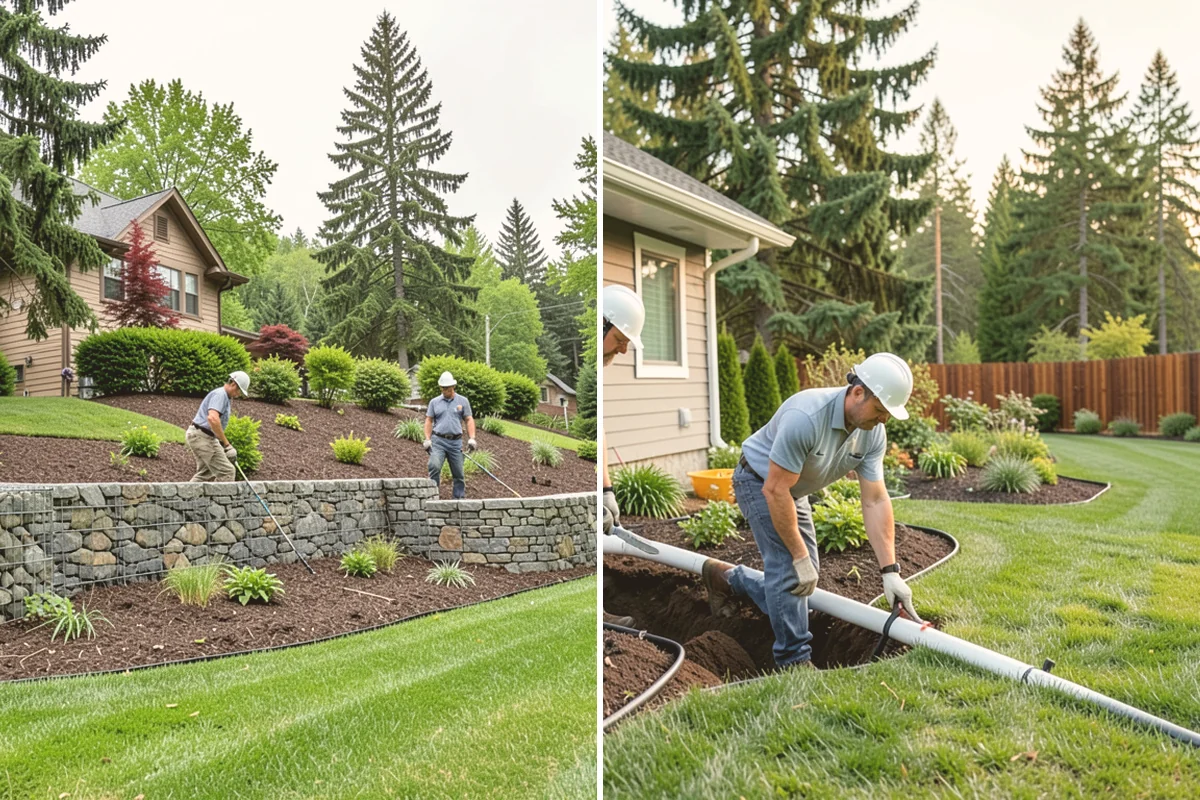
Common Project Types: Typical Bellevue projects include designed garden beds, hillside terracing and retaining walls, patios and outdoor living spaces, and refined foundation plantings. Townhome and condominium grounds often need tidy, cohesive plantings, while view homes focus on framing sightlines.
Property Styles: Bellevue properties span urban townhomes and condominiums to spacious single-family homes on wooded, often sloped lots. Grade, tree cover, and view lines shape many designs, especially in neighborhoods like Somerset and West Bellevue.
Local Materials & Plants: Well-suited selections include Japanese maples, rhododendrons, evergreen shrubs, and Northwest natives that thrive in the mild lowland climate. Natural stone, retaining-wall block, and quality mulch support both slope work and the polished garden look many Bellevue properties favor.
Planning Your Project: With Bellevue’s blend of slopes and mature landscapes, grading and retaining projects are best timed for drier months and planned to protect established trees. On view lots, confirming general slope and drainage considerations early helps larger installs proceed smoothly.
Whether you own a Bellevue view home or a townhome near Crossroads, reach out to plan garden and landscape ideas that match the city’s high standard for well-kept outdoor space.