Local Service Information
Burlington
A city in the Skagit River valley known as a regional retail center.
County: Skagit County
ZIP Codes Served: 98233
Neighborhoods: Downtown Burlington and the Cascade Mall retail district
Nearby Communities: Mount Vernon, Sedro-Woolley, Anacortes
Common Property Types: Predominantly single-family homes, with some townhomes and multifamily housing; commercial property includes small retail, civic, and light commercial buildings.
Local Tree & Landscape Notes: Common regional trees include Douglas fir, western red cedar, western hemlock, bigleaf maple, and red alder, alongside many ornamental species. Wet soils and dense canopy are common considerations for access and scheduling.
Permit Considerations: Permit requirements vary depending on tree size, species, protected areas, shoreline regulations, critical areas, and local municipal code. Always verify current requirements with the local jurisdiction before beginning work.
Climate: Marine west coast climate typical of the Puget Sound region: mild, wet winters and warm, relatively dry summers, with most rainfall from fall through spring. Occasional wind, snow, and ice events and seasonal soil saturation influence tree health and the timing of tree work.
Burlington sits on the flat, fertile Skagit valley floor, and its landscaping carries the practical, open feel of that farmland setting. With the Skagit River nearby and the Cascade Mall retail district anchoring commerce, the town mixes residential blocks with light commercial frontage that both benefit from clean, resilient plantings. Homes here, close to Mount Vernon and Sedro-Woolley, often sit on level lots where drainage and durable turf matter as much as ornamental appeal, giving Burlington yards a straightforward, valley-town character.
Landscaping in Burlington often centers on managing flat, sometimes wet valley ground and keeping level lots well drained and usable. Residents request lawn care, bed edging, and grading that copes with the Skagit floodplain’s tendency to hold water, while commercial sites around the Cascade Mall district look for tidy, low-upkeep frontages. Work is timed around the valley’s damp stretches.
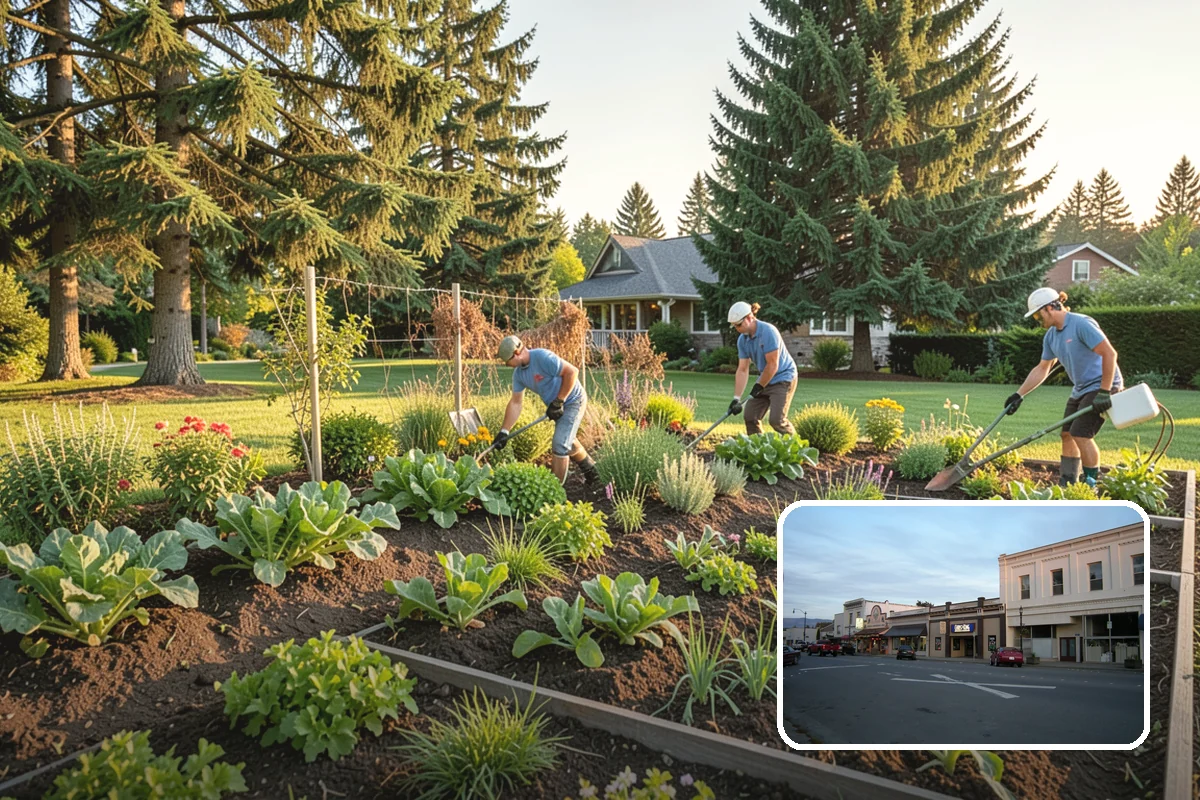
Site Conditions: The Skagit valley floor gives Burlington deep but often poorly draining soil that stays saturated through winter, so raised beds and grading help. Terrain is largely flat with full sun on open lots, which favors sun-loving plantings but demands attention to standing water and the river-influenced high water table.
Seasonal Considerations: Spring can arrive muddy on Burlington’s valley soil, so planting waits until the ground firms and drains. Summer sun on open lots supports strong growth with steady watering, and fall focuses on aeration, drainage checks, and leaf cleanup before the wet season. Winter work is minimal, aimed at pruning and keeping runoff moving off level ground.
Common Project Types: Burlington projects frequently involve lawn establishment on flat lots, drainage improvements and regrading for water-prone yards, and durable plantings around single-family homes. Commercial frontages near the Cascade Mall area call for low-maintenance beds and clean edging, while fencing lines and windbreak plantings suit the open valley exposure.
Property Styles: Most Burlington properties are single-family homes on level valley lots, with some townhomes and multifamily housing among them. Open, flat parcels with generous sun give room for lawns and gardens, though the same openness invites wind and standing water, shaping practical, well-drained layouts.
Local Materials & Plants: Plants that shrug off Burlington’s wet valley soil include red-osier dogwood, Pacific willow, rushes, and moisture-tolerant perennials, balanced with sun-loving shrubs on the driest, most open lots. Gravel bases, bark mulch, and raised planting beds counter poor drainage, and hardy cool-season grasses keep lawns viable through the Skagit valley’s soggy months.
Planning Your Project: Timing in Burlington leans heavily on soil moisture, so major planting and grading are scheduled once valley ground dries in late spring and summer. Coordinating material delivery across the flat, open site is simple, but planners confirm general local approvals when work alters drainage patterns near the river-influenced water table.
From homes near the Skagit River to commercial frontage by the Cascade Mall district, we are happy to walk your Burlington property and help plan landscaping that stands up to valley soil and weather.