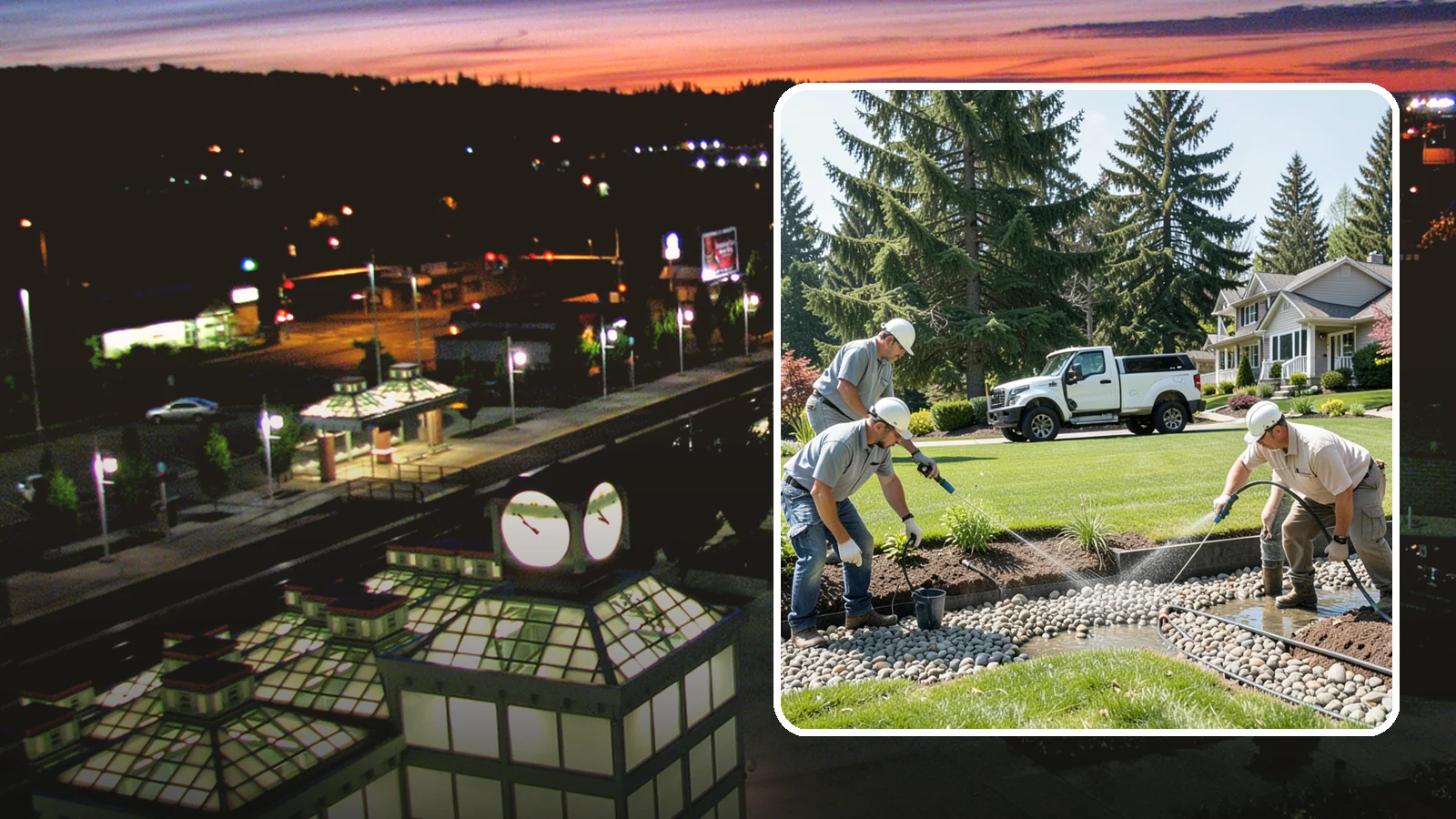
Local Service Information
Auburn
A city in the Green River valley of south King County, extending slightly into Pierce County.
County: King County (with a small portion in Pierce County)
ZIP Codes Served: 98001, 98002, 98092
Neighborhoods: Lea Hill, Lakeland Hills, West Hill, Downtown
Nearby Communities: Kent, Federal Way, Pacific, Algona
Common Property Types: Predominantly single-family homes with townhomes and some condominiums and multifamily housing; commercial property includes retail, office, and small mixed-use buildings.
Local Tree & Landscape Notes: Common regional trees include Douglas fir, western red cedar, western hemlock, bigleaf maple, and red alder, alongside many ornamental species. Wet soils and dense canopy are common considerations for access and scheduling.
Permit Considerations: Permit requirements vary depending on tree size, species, protected areas, shoreline regulations, critical areas, and local municipal code. Always verify current requirements with the local jurisdiction before beginning work.
Climate: Marine west coast climate typical of the Puget Sound region: mild, wet winters and warm, relatively dry summers, with most rainfall from fall through spring. Occasional wind, snow, and ice events and seasonal soil saturation influence tree health and the timing of tree work.
Auburn spreads across the Green River valley and the surrounding hills, giving its landscaping a wide range of settings from flat valley lots to sloped homes in Lea Hill and Lakeland Hills. With parks like Game Farm Park and the White River nearby, residents often want yards that feel green and connected to the area’s outdoor character. Both established neighborhoods and newer developments keep landscaping demand steady across the city.
Landscaping in Auburn ranges from valley-floor lots with rich but sometimes poorly drained soils to hillside properties in West Hill and Lakeland Hills that call for grading and erosion control. Services commonly include lawn care, retaining and terracing on slopes, and plantings suited to both the valley and the higher ground.
Site Conditions: Consistent with a zone 8b lowland climate, Auburn’s valley soils near the Green and White Rivers tend to be moist and fertile, while hillside lots have firmer ground and steeper drainage. Sun exposure varies with slope and aspect, and low areas can hold water through the wet season.
Seasonal Considerations: Auburn’s spring pushes fast lawn growth and a rush of cleanup and mulching, and summer’s dry weather makes efficient irrigation important, especially on sun-exposed hillsides. Fall calls for aeration, overseeding, and leaf management, while winter suits dormant pruning and slope protection against runoff.
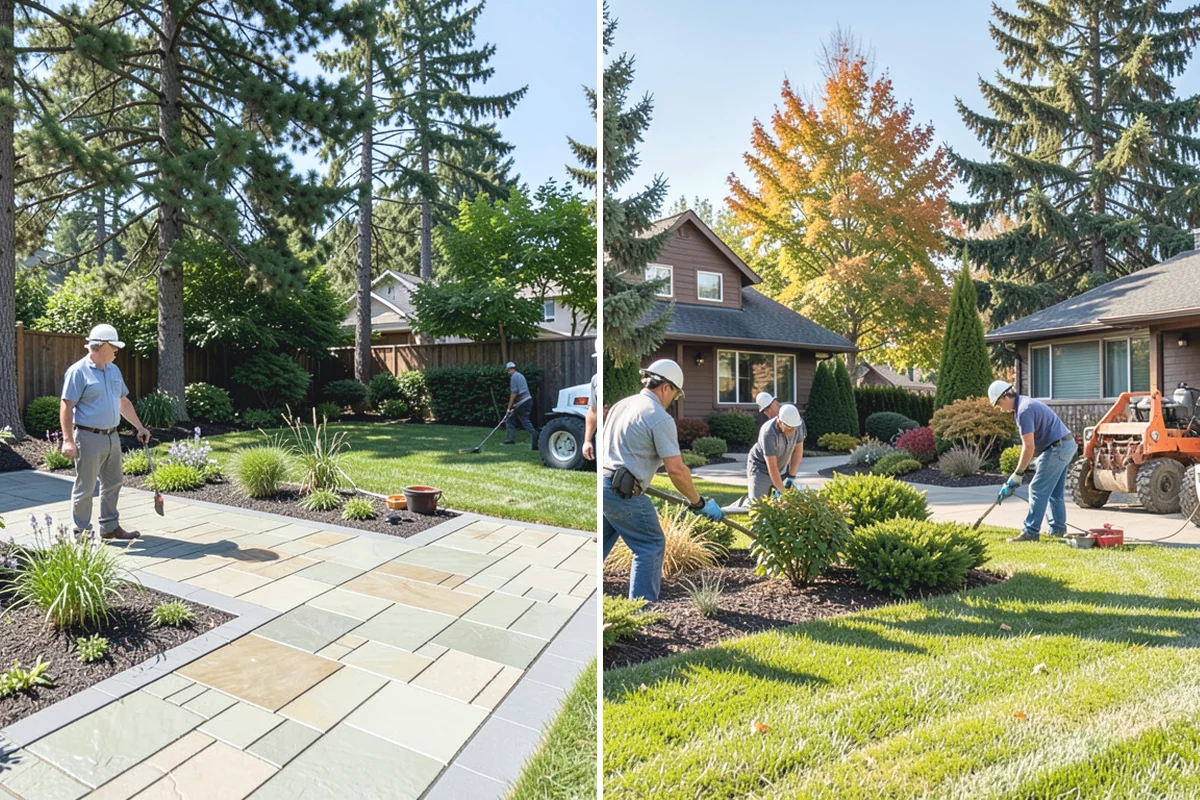
Common Project Types: Typical Auburn projects include lawn renovation, hillside retaining walls and terraced beds, patios and walkways, and mixed plantings for both compact and larger lots. Newer developments in Lakeland Hills often need full landscape installs, while valley homes focus on drainage-friendly beds.
Property Styles: Auburn properties include flat valley lots, sloped hillside homes, and a mix of single-family houses, townhomes, and condominiums. Slope and grade are defining features on the hills, shaping how yards are laid out and planted.
Local Materials & Plants: Reliable choices include evergreen shrubs, hardy perennials, and Northwest natives like vine maple and sword fern that handle valley moisture and hillside conditions. Retaining-wall block, gravel, and bark mulch are common materials for managing slopes and beds across the city.
Planning Your Project: Given Auburn’s mix of valley and hillside lots, grading and retaining work is best scheduled for drier months, with drainage carefully planned on low ground near the rivers. For slope projects, confirming general grading and erosion considerations up front helps larger installs go smoothly.
From valley-floor lawns to hillside gardens in Lea Hill or Lakeland Hills, reach out to talk through landscaping ideas shaped for your Auburn property and the Green River valley setting.