Local Service Information
Black Diamond
A former coal-mining town in southeast King County set among foothills and forest.
County: King County
ZIP Codes Served: 98010
Neighborhoods: Historic Downtown, Ten Trails, Lake Sawyer
Nearby Communities: Maple Valley, Enumclaw, Covington
Common Property Types: Predominantly single-family homes, with some townhomes and multifamily housing; commercial property includes small retail, civic, and light commercial buildings.
Local Tree & Landscape Notes: Forested foothill setting with conifers such as Douglas fir, western hemlock, and western red cedar, plus bigleaf maple and alder. Slopes, wet soils, and larger trees are common considerations for access and rigging.
Permit Considerations: Permit requirements vary depending on tree size, species, protected areas, shoreline regulations, critical areas, and local municipal code. Always verify current requirements with the local jurisdiction before beginning work.
Climate: Marine west coast climate typical of the Puget Sound region: mild, wet winters and warm, relatively dry summers, with most rainfall from fall through spring. Occasional wind, snow, and ice events and seasonal soil saturation influence tree health and the timing of tree work.
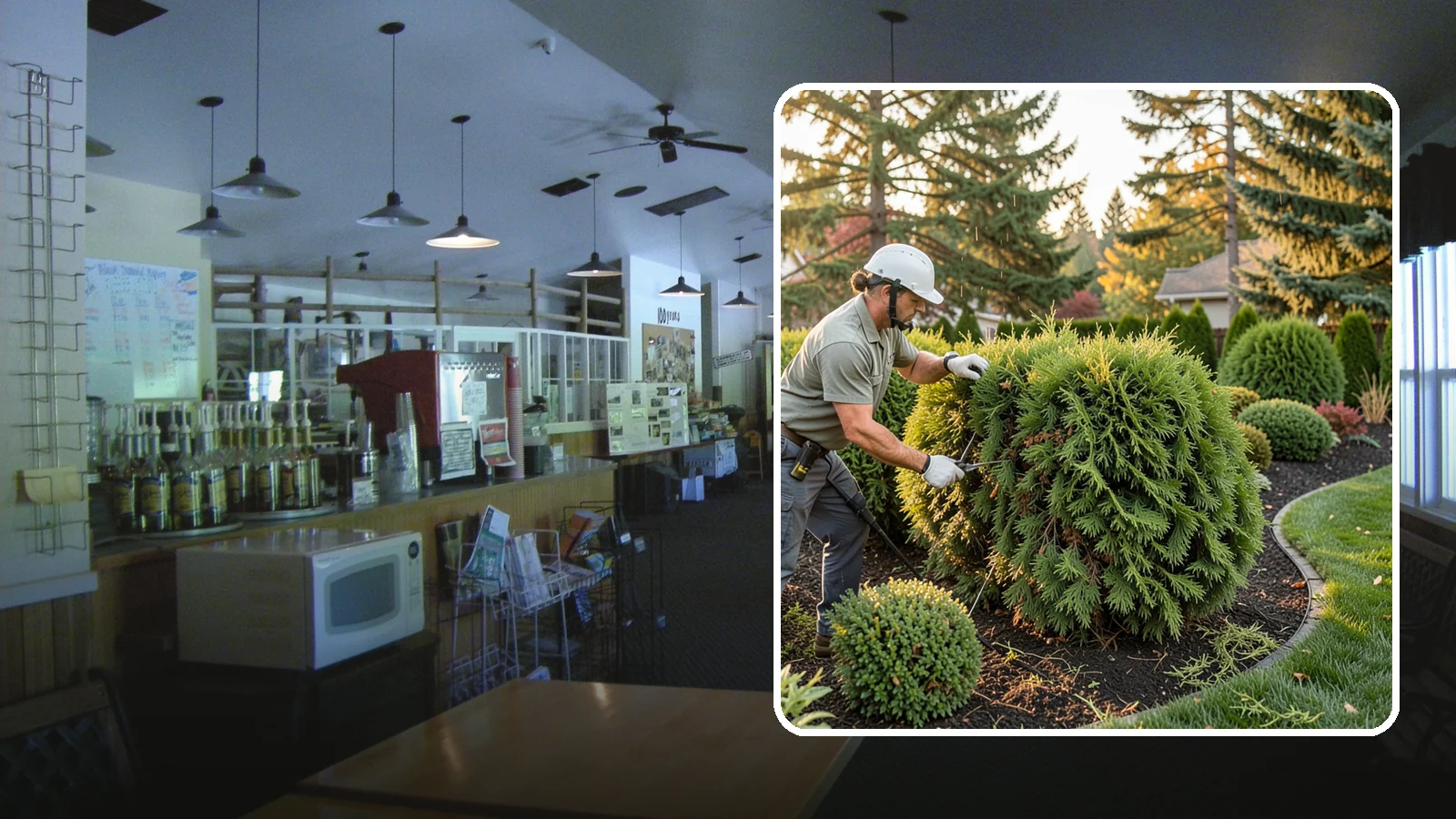
Black Diamond carries its coal-mining heritage into a landscape of forested hills, historic downtown blocks, and newer neighborhoods like Ten Trails. With Lake Sawyer and wooded surroundings shaping the setting, residents often want yards that blend into the natural, semi-rural feel. Landscaping here ranges from tidy historic-home gardens to full installs on freshly built lots.
Set on higher, cooler ground than the valley lowlands, Black Diamond landscaping often works with forested lots, rolling terrain, and newer developments needing complete landscapes. Services commonly include lawn establishment, native and woodland plantings, and hardscape that suits the town’s rustic, tree-lined character.
Site Conditions: Matching a zone 8a to 8b range that runs slightly cooler with elevation, Black Diamond lots often have firm upland soils, wooded shade, and rolling grades near Lake Sawyer. Drainage follows the terrain, sun exposure is mixed under the trees, and cooler nights are common at the higher elevation.
Seasonal Considerations: Because Black Diamond sits a bit cooler, spring planting and lawn feeding start slightly later, while summer supports active growth and garden projects. Fall is ideal for planting trees and shrubs and clearing heavy leaf and needle drop, and winter suits dormant pruning and protecting beds from cold, wet spells.
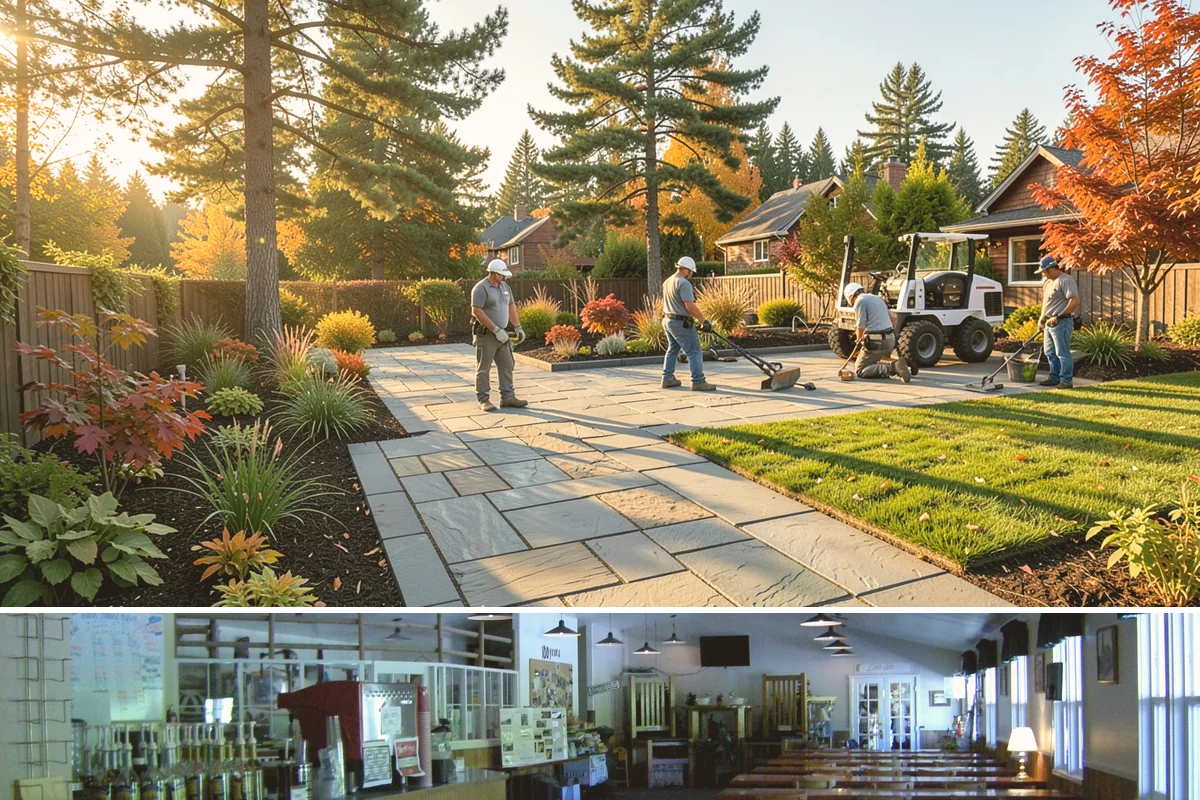
Common Project Types: Common projects include full landscape installs in Ten Trails and other new areas, woodland and native plantings, lawns cut into forested lots, and hardscape like patios, paths, and gathering spaces. Historic-home gardens often get careful refreshes.
Property Styles: Properties in Black Diamond range from older homes near the historic core to newer houses on wooded, rolling lots around Ten Trails and Lake Sawyer. Trees and grade are defining features, shaping how yards are cleared and planted.
Local Materials & Plants: Hardy, cool-tolerant natives like salal, Oregon grape, and sword fern suit the wooded setting, along with rhododendrons and shade perennials. Bark mulch, native stone, and gravel work well for paths and beds among the trees.
Planning Your Project: For Black Diamond lots, clearing, grading, and planting are best planned for drier months, with attention to tree roots and slope on wooded parcels. On new-construction sites, confirming general drainage and tree-retention considerations early keeps larger installs on track.
If your Black Diamond property, whether historic or newly built, is ready for landscaping that fits its wooded setting, reach out to plan a design suited to this Lake Sawyer community.