Local Service Information
Carnation
A small city in the Snoqualmie River valley of rural east King County, historically a farming community.
County: King County
ZIP Codes Served: 98014
Neighborhoods: Downtown Carnation; residential areas in the Snoqualmie and Tolt River valley
Nearby Communities: Duvall, Snoqualmie, Redmond
Common Property Types: Predominantly single-family homes on larger and rural lots, with some farm and acreage properties; commercial property is limited to small retail and civic buildings.
Local Tree & Landscape Notes: Common regional trees include Douglas fir, western red cedar, western hemlock, bigleaf maple, and red alder, alongside many ornamental species. Wet soils and dense canopy are common considerations for access and scheduling.
Permit Considerations: Permit requirements vary depending on tree size, species, protected areas, shoreline regulations, critical areas, and local municipal code. Always verify current requirements with the local jurisdiction before beginning work.
Climate: Marine west coast climate typical of the Puget Sound region: mild, wet winters and warm, relatively dry summers, with most rainfall from fall through spring. Occasional wind, snow, and ice events and seasonal soil saturation influence tree health and the timing of tree work.
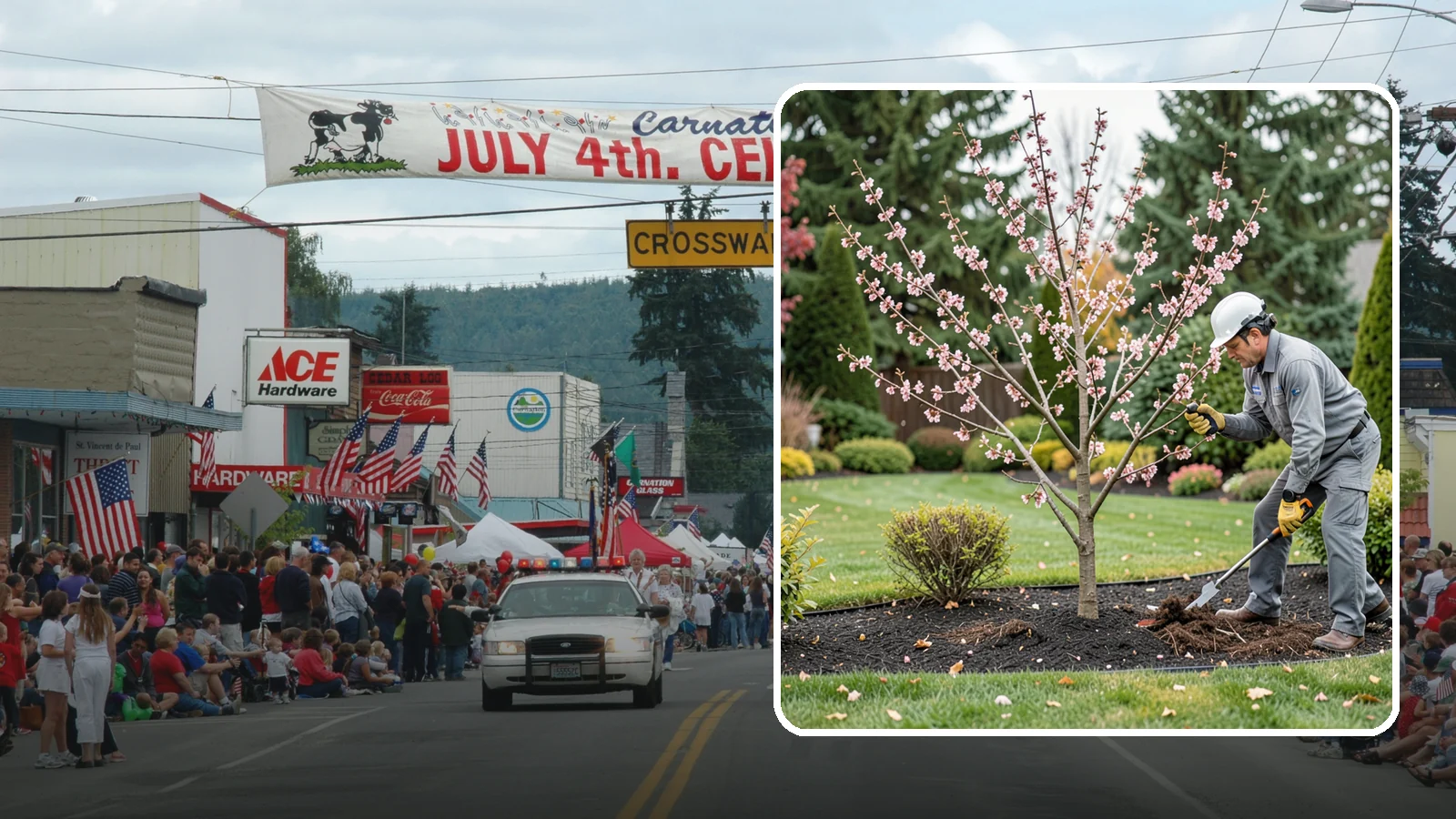
Carnation sits in the broad Snoqualmie and Tolt River valley, a rural King County community where farmland, riverfront, and wooded acreage shape everyday landscaping. Near Tolt-MacDonald Park and downtown Carnation, properties often stretch across larger lots that mix lawn, garden, pasture, and native growth. With Duvall and Snoqualmie sharing the same fertile valley, landscaping here leans agricultural and naturalistic, working with rich but frequently wet river-valley soil to create spaces that feel at home in the countryside.
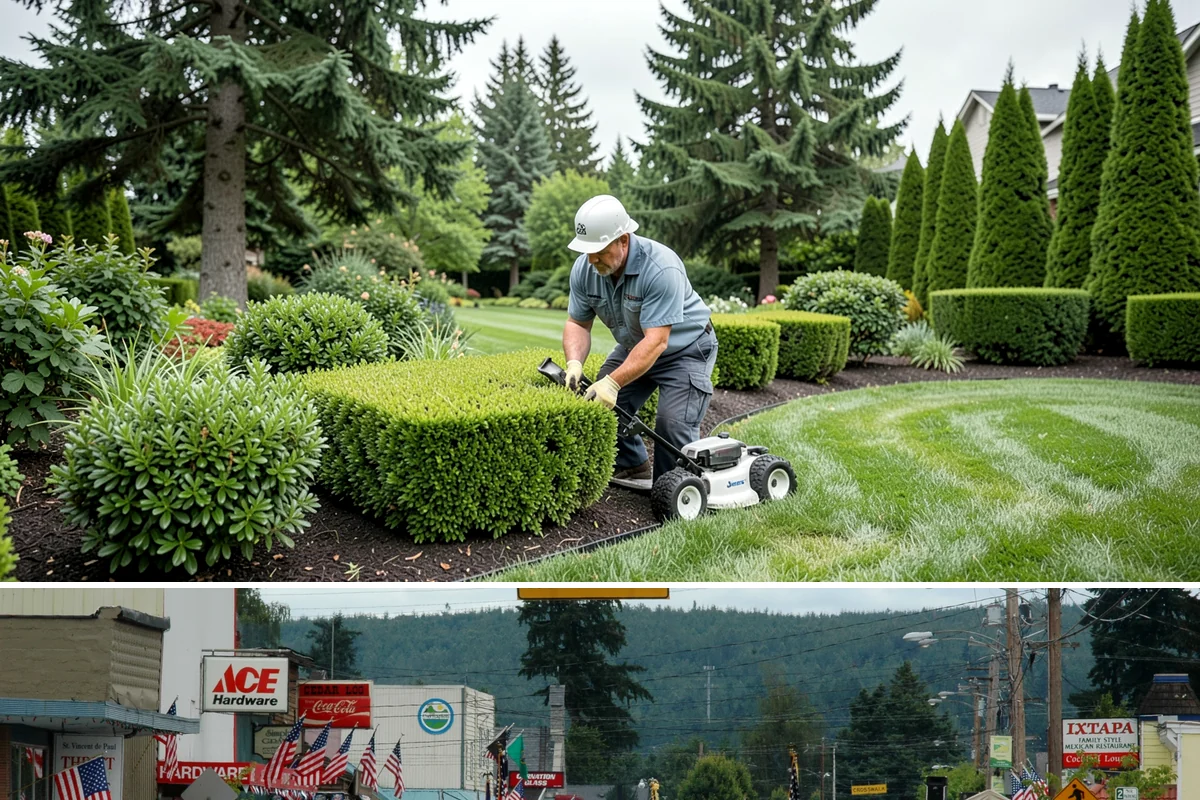
In Carnation, landscaping commonly serves rural and acreage properties where owners balance ornamental yard space with pasture, gardens, and river-valley drainage. Requests range from lawn and bed care to clearing, fencing, and managing the wet ground typical of the Tolt and Snoqualmie floodplain. Work follows the valley’s soil moisture closely, since saturated ground limits early-season projects.
Site Conditions: Fertile but slow-draining ground defines Carnation, where the Snoqualmie and Tolt floodplain holds water through the wet season and pushes owners toward grading and raised beds. Much of the land lies flat and sun-drenched on cleared acreage, yet parcels near Tolt-MacDonald Park stay damp and shaded under the valley’s riverside tree lines.
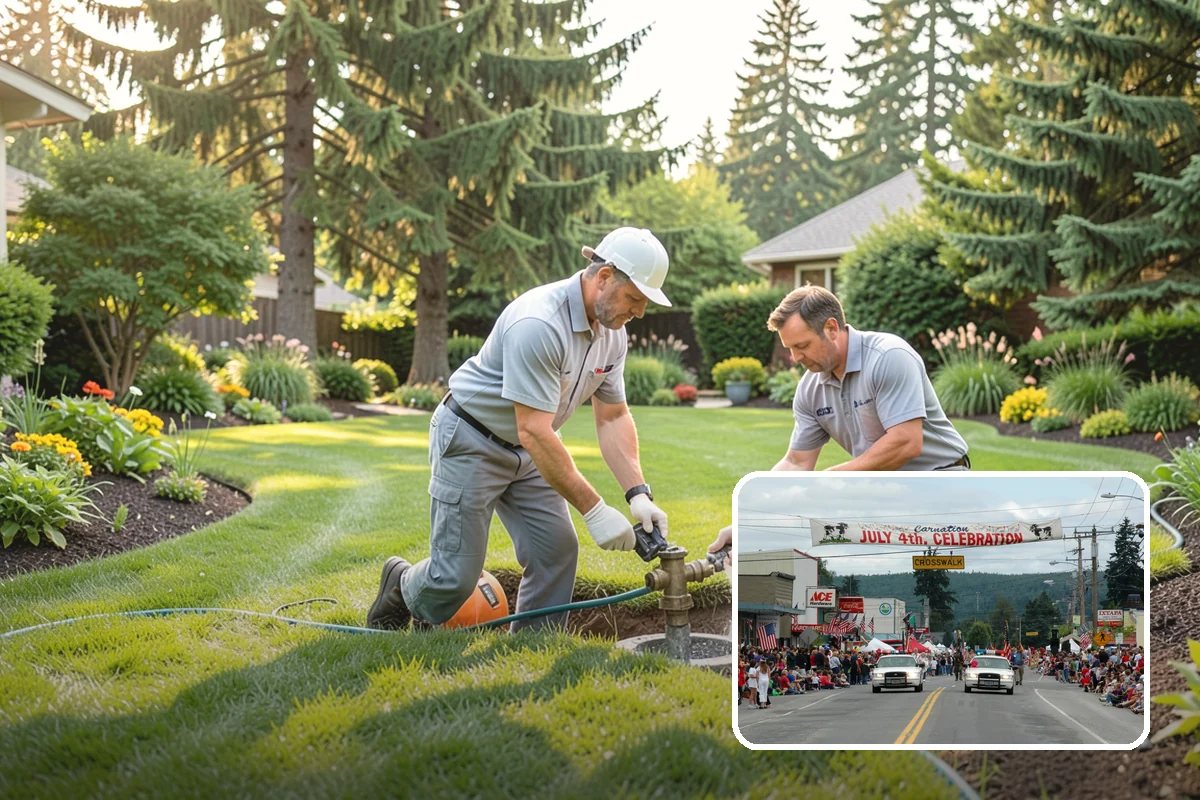
Seasonal Considerations: Planting in Carnation holds off through a muddy valley spring until the floodplain finally sheds its water. Once summer settles in, warm sun over the open acreage drives fast growth that regular irrigation keeps in check, autumn shifts attention to core aeration and clearing fallen leaves, and the winter high-water months limit crews to pruning and readying beds for the year ahead.
Common Project Types: Carnation projects often include pasture and lawn establishment on acreage, drainage and grading for flood-prone valley lots, and naturalized plantings that suit riverside ground. Owners request fencing, garden beds, and orchard or windbreak plantings, while smaller downtown lots call for tidy beds and low-maintenance landscaping.
Property Styles: Carnation properties skew rural, with single-family homes on larger and acreage lots and working farm parcels throughout the valley. Open, flat land offers room for lawns, gardens, and pasture, but the same low valley ground invites standing water, so layouts prioritize drainage and durable, country-scale planting.
Local Materials & Plants: Species suited to Carnation’s rich but soggy valley ground include Oregon ash, hardhack spirea, camas, and moisture-loving perennials, alongside sun-hardy shrubs where the land drains. Coarse gravel, bark mulch, and mounded beds lift roots above the water table, and valley-adapted shade trees provide windbreaks and habitat across the larger rural lots near the Snoqualmie.
Planning Your Project: Because Carnation’s low valley ground stays wet, crews aim the heaviest installs and grading at the drier summer months once the floodplain firms up. Moving materials across open acreage is easy enough, though staging and any general local approvals are settled ahead of time whenever a project sits near the river or changes how floodwater travels a property.
Whether your Carnation land borders the Snoqualmie valley near Tolt-MacDonald Park or sits closer to downtown, we are glad to discuss plantings, drainage, and a landscaping plan matched to rural valley living.