Local Service Information
Concrete
A small town on the upper Skagit River in the eastern foothills of Skagit County.
County: Skagit County
ZIP Codes Served: 98237
Neighborhoods: The small upper-Skagit town core along the Skagit River
Nearby Communities: Sedro-Woolley, Hamilton, Lyman
Common Property Types: Predominantly single-family homes on larger and rural lots, with some farm and acreage properties; commercial property is limited to small retail and civic buildings.
Local Tree & Landscape Notes: Mountain and heavily forested setting with large conifers including Douglas fir, western hemlock, and western red cedar. Steep terrain, limited access, and large trees are key considerations for planning and rigging.
Permit Considerations: Permit requirements vary depending on tree size, species, protected areas, shoreline regulations, critical areas, and local municipal code. Always verify current requirements with the local jurisdiction before beginning work.
Climate: Marine west coast climate typical of the Puget Sound region: mild, wet winters and warm, relatively dry summers, with most rainfall from fall through spring. Occasional wind, snow, and ice events and seasonal soil saturation influence tree health and the timing of tree work.
Concrete sits along the upper Skagit River deep in Skagit County, a small former industrial town where the river canyon and North Cascades foothills define the landscape. Lots here tend to be large or acreage-scale, mixing forest, riverbank, and open clearings, and the town’s higher, colder, snow-prone climate dictates practical plant and project choices. Close to the historic Henry Thompson Bridge and with Sedro-Woolley and Hamilton down-valley, Concrete landscaping is built around cold-hardy plantings and real preparation for mountain winters.
The typical Concrete job means taming rural, wooded ground where yard, riverbank, and timber all meet. Snowmelt drainage, gravel access, clearing, and freeze-proof plantings dominate the request list, and the colder upper-Skagit climate compresses the workable season into a short, deliberately scheduled stretch. Toughness outranks ornament in most local plans.
Site Conditions: The canyon ground near the upper Skagit tends to run rocky and wet, and Concrete’s elevation delivers harder freezes, deeper snow, and a slower melt than lowland towns downstream. Slopes climb quickly into shaded forest broken by sunnier openings, so cold- and wet-tolerant plants are essential, and every drainage plan has to route snowmelt safely off higher ground.
Seasonal Considerations: Winter’s grip lingers in Concrete, so spring planting holds off until the snowpack clears and the canyon soil settles. The dependable working stretch is summer, mild enough to ease watering; autumn turns to clearing heavy forest litter before the cold returns, and the deep-winter months confine work to dormant pruning and guarding plants against hard freeze and snow load.
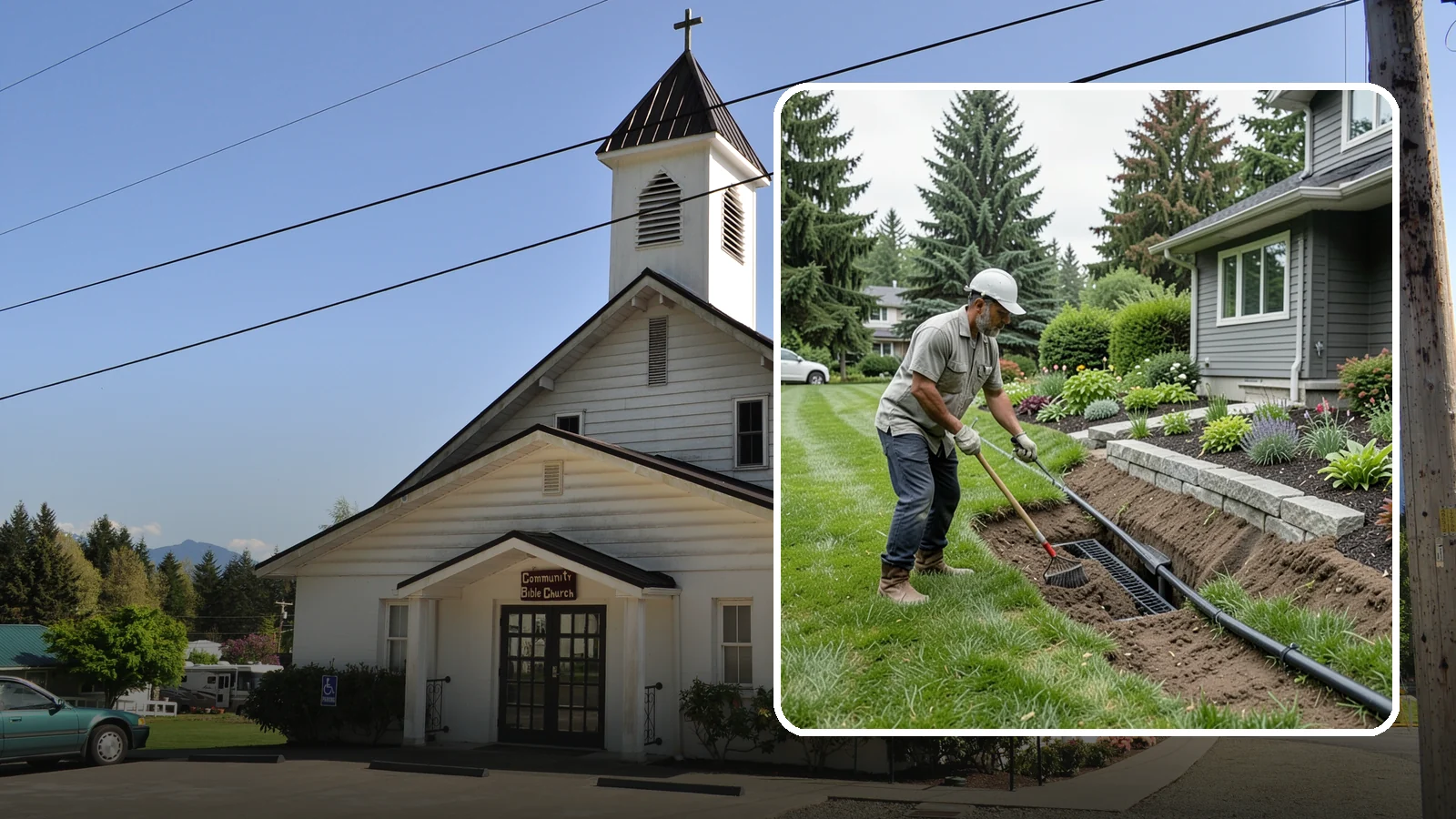
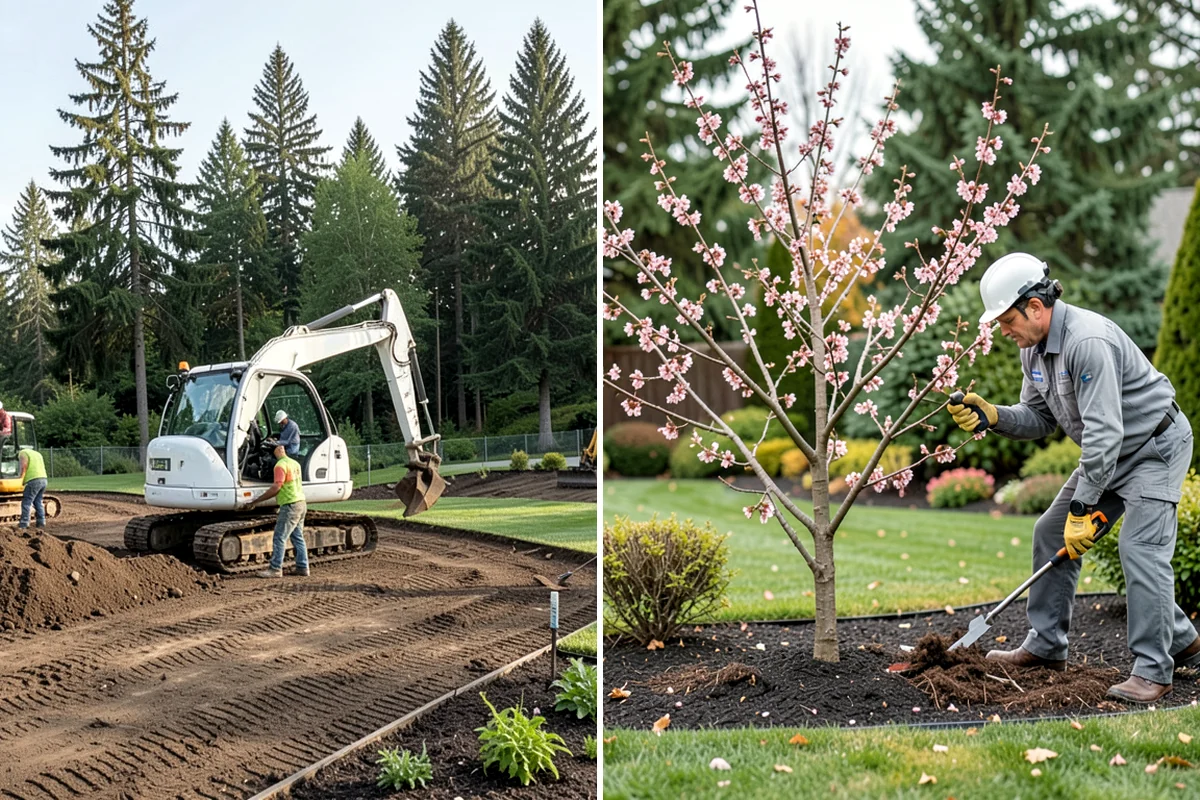
Common Project Types: Concrete work orders skew toward clearing overgrowth, laying gravel drives and footpaths, and setting cold-proof plantings that endure a mountain winter. On the acreage and farm lots, fencing, snowmelt channels, and forest-margin management lead the way, while the riverside town core takes on smaller planting beds and seasonal cleanups.
Property Styles: Concrete’s parcels are chiefly rural, many at acreage scale, with working farms sprinkled through and only a slim commercial core beside the river. Houses tuck into forest and canyon ground on broken terrain, so the landscaped portion is essentially reclaimed clearing, and every layout answers first to hardiness, reach, and life alongside the rugged upper Skagit.
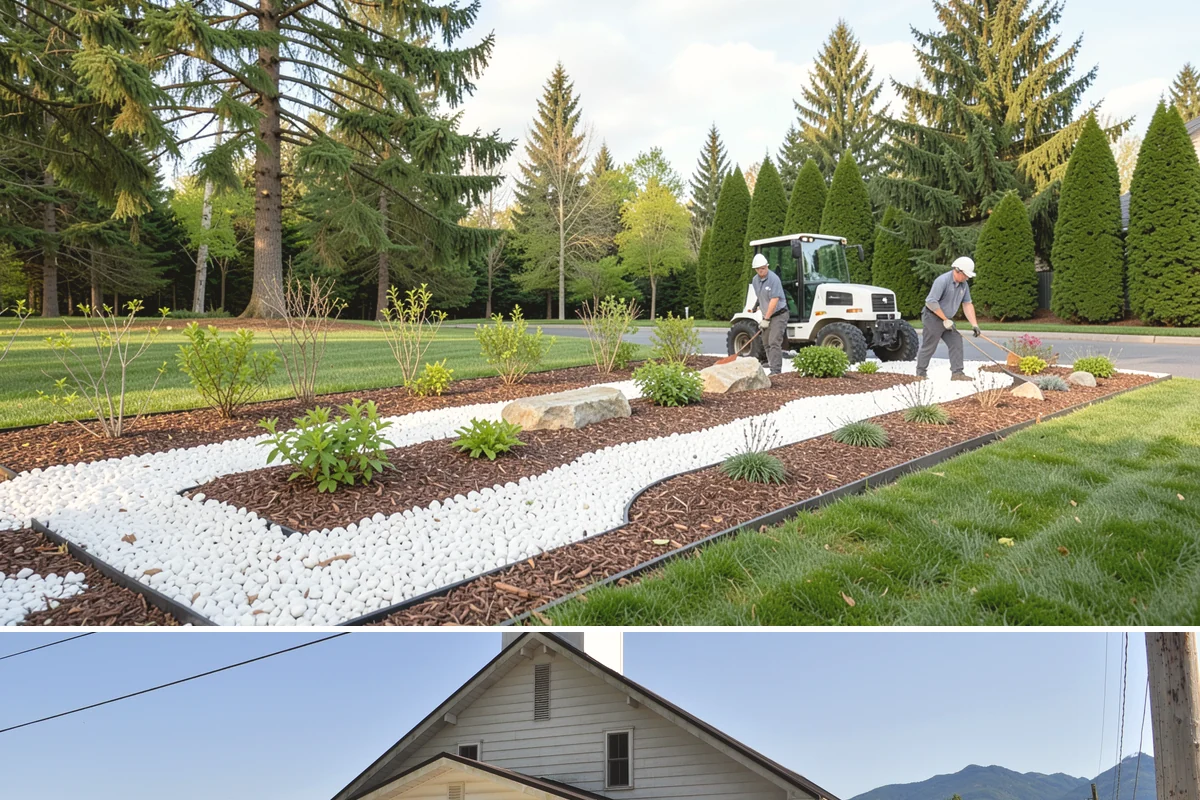
Local Materials & Plants: For the snowy canyon around Concrete, the safe bets are cold-tough natives: Douglas fir and other resilient conifers, western red cedar, Oregon grape, and shrubs that take freeze and saturation in stride. Crushed rock, quarried stone, and bark fit the rocky rural ground, and frost-proof perennials with mat-forming groundcovers pin down slopes that shed seasonal snowmelt.
Planning Your Project: Concrete planning bows to a brief, cold-shortened window, concentrating serious clearing and installation in the snow-free summer months. Material has to travel farther to reach an upper-valley town, and general local approvals for anything near the river or on steep, meltwater-fed slopes are lined up well before the first shovel.
If your Concrete property follows the upper Skagit near the Henry Thompson Bridge, we would welcome a conversation about clearing, hardy plantings, and a landscaping plan suited to this colder canyon country.