Local Service Information
Duvall
A small city in the Snoqualmie River valley of rural northeast King County.
County: King County
ZIP Codes Served: 98019
Neighborhoods: Downtown Duvall (Main Street); residential areas above the Snoqualmie River valley
Nearby Communities: Carnation, Monroe, Redmond
Common Property Types: Predominantly single-family homes, with some townhomes and multifamily housing; commercial property includes small retail, civic, and light commercial buildings.
Local Tree & Landscape Notes: Common regional trees include Douglas fir, western red cedar, western hemlock, bigleaf maple, and red alder, alongside many ornamental species. Wet soils and dense canopy are common considerations for access and scheduling.
Permit Considerations: Permit requirements vary depending on tree size, species, protected areas, shoreline regulations, critical areas, and local municipal code. Always verify current requirements with the local jurisdiction before beginning work.
Climate: Marine west coast climate typical of the Puget Sound region: mild, wet winters and warm, relatively dry summers, with most rainfall from fall through spring. Occasional wind, snow, and ice events and seasonal soil saturation influence tree health and the timing of tree work.
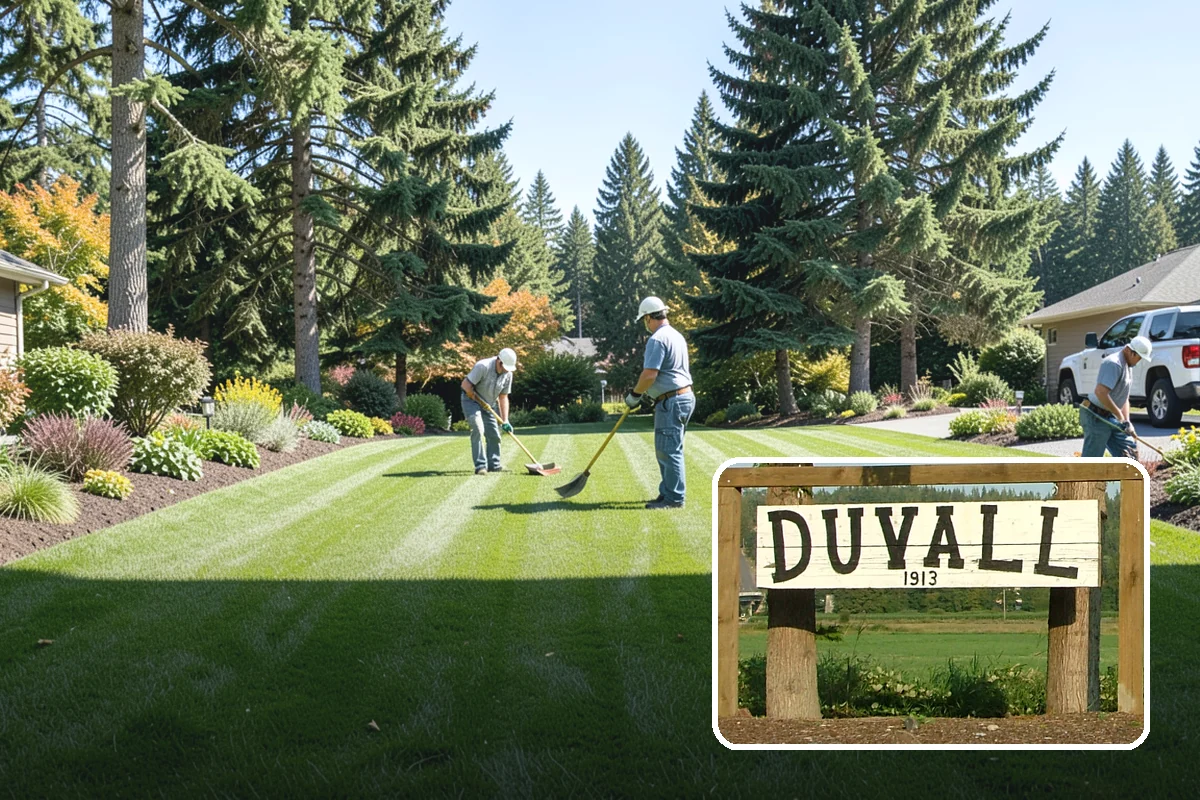
Duvall blends small-town charm with a rural, river-valley setting, and its landscaping reflects that easygoing character. Perched above the Snoqualmie River valley, many properties enjoy long views over farmland and the wooded slopes that frame this King County town. Homes along the residential streets above Main Street often sit on generous lots, giving room for expansive lawns, orchard-style plantings, and gardens that lean toward a country aesthetic. With the Snoqualmie Valley Trail drawing walkers and cyclists through town, outdoor spaces here are meant to be lived in and enjoyed. The mild Puget Sound lowland climate supports a wide palette of plants, so Duvall landscapes can be as lush or as naturalized as a homeowner prefers.
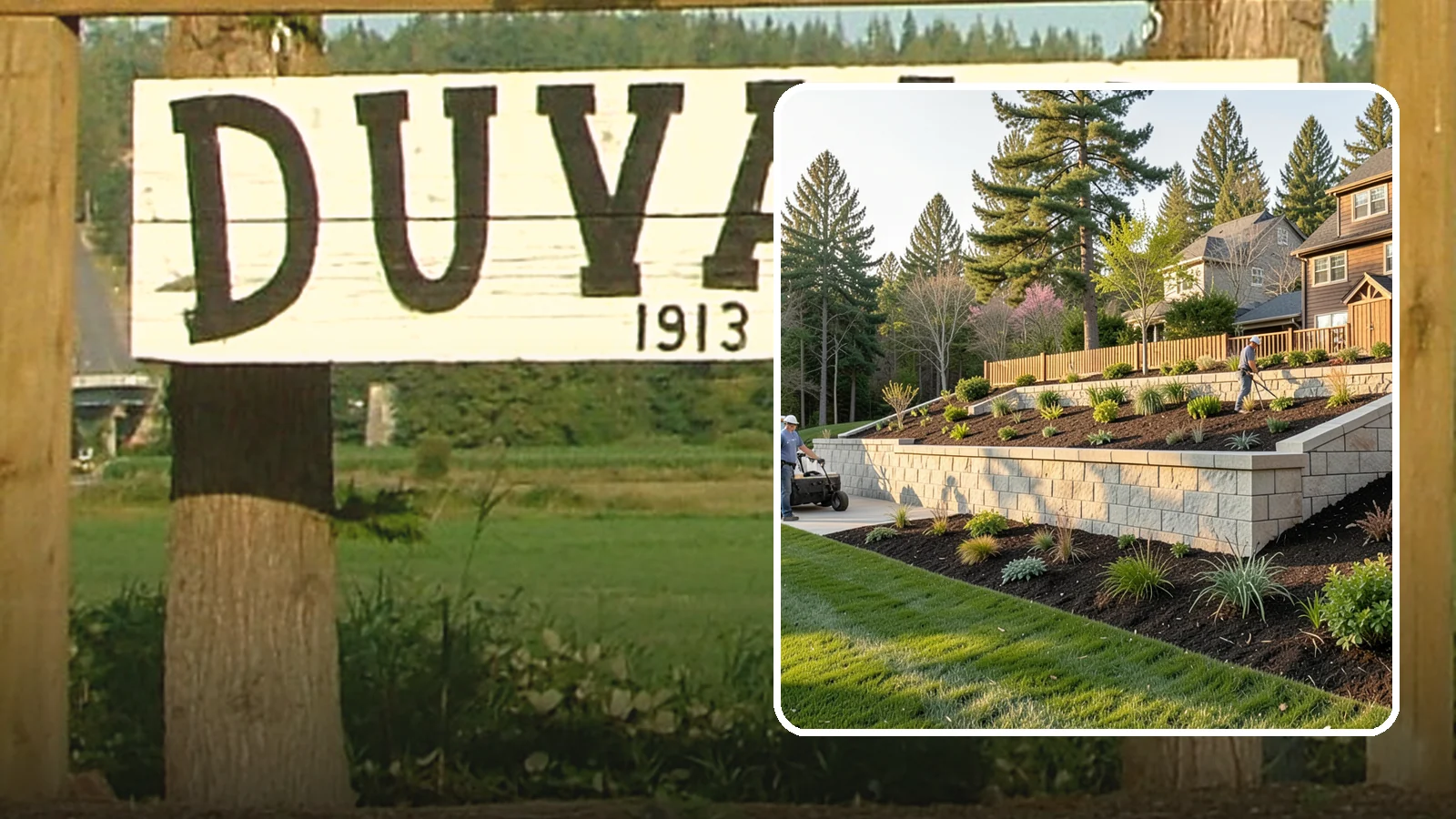
Landscaping in Duvall frequently embraces the valley’s rural feel, with homeowners favoring roomy lawns, informal cottage plantings, and productive gardens over highly manicured designs. Hillside lots above the river need attention to grading and runoff, while lower parcels near the valley floor call for drainage-savvy layouts.
Site Conditions: Duvall’s terrain shifts from richer valley-bottom soils near the Snoqualmie River to firmer glacial slopes on the residential hillsides above town. Low areas can hold moisture and stay damp through winter, while the mild lowland climate keeps growing seasons long and the ground rarely hard-frozen.
Seasonal Considerations: Spring runoff from the surrounding slopes makes early-season drainage checks worthwhile before Duvall gardeners dig in. Summers are comfortable and productive for vegetable beds and lawns, fall is ideal for establishing trees and native shrubs, and the wet valley winters focus attention on pruning, mulching, and keeping low spots from pooling near the house.
Common Project Types: Popular Duvall projects include large-lawn care, raised vegetable beds and small orchards, naturalized borders that blend into the valley backdrop, and slope plantings that stabilize hillside yards. Homeowners near Main Street sometimes request tidier street-facing beds that complement the town’s walkable core.
Property Styles: Properties in Duvall tend toward single-family homes on larger lots, some with acreage edging into rural land near the valley. That extra space invites sweeping lawns, mixed borders, and room for functional features like garden plots, sheds, and gathering areas set against the wooded surroundings.
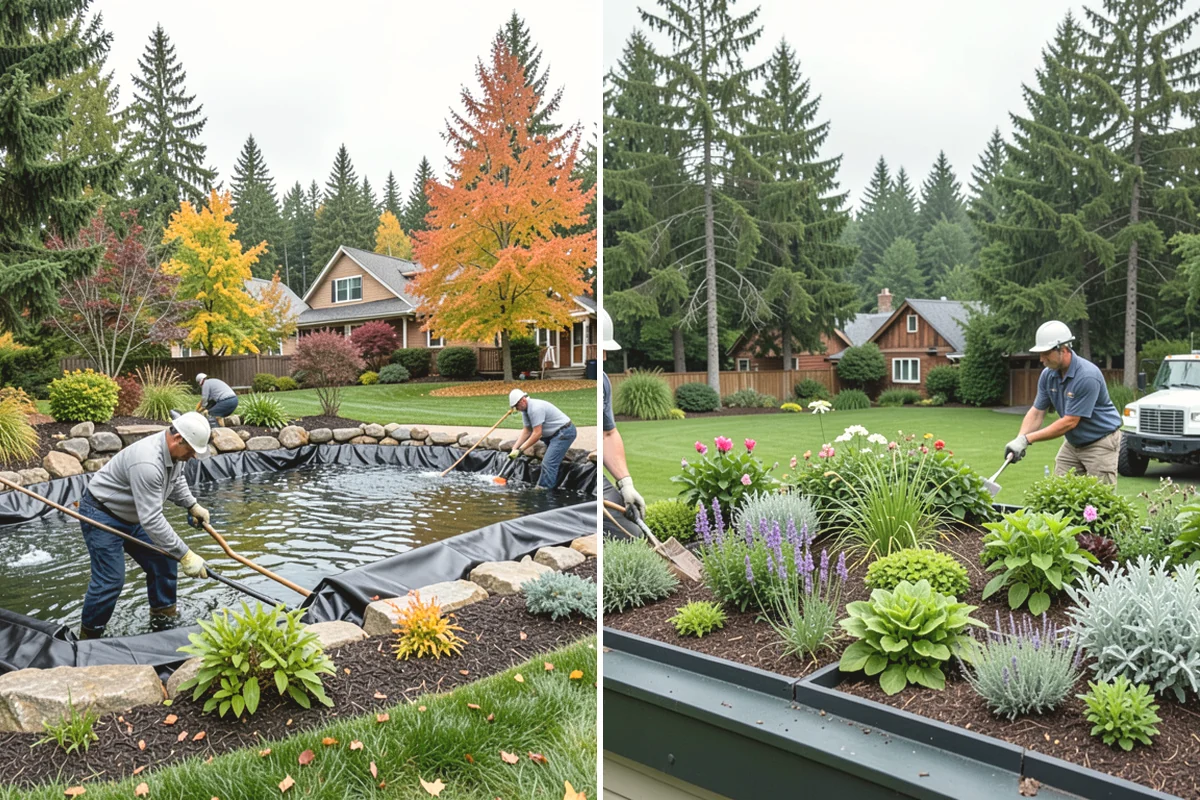
Local Materials & Plants: Plants that suit Duvall’s valley setting include native red-twig dogwood, ninebark, ferns, and moisture-loving perennials for damp low ground, along with fruit trees that thrive in the mild lowland climate. Split-rail fencing, bark mulch, and locally suited river rock reinforce the country look homeowners favor here.
Planning Your Project: Planning in Duvall should weigh slope and drainage, since hillside lots shed water toward valley-bottom parcels below. Timing bigger plantings for fall lets stock settle before summer, and staging access for larger rural properties keeps equipment and material deliveries smooth.
From the hillside streets above Main Street to the roomy lots near the valley floor, we can help you shape landscaping that fits Duvall’s relaxed, rural character. Contact us to start planning your outdoor project.