Local Service Information
Fircrest
A small residential city surrounded by Tacoma and University Place.
County: Pierce County
ZIP Codes Served: 98466
Neighborhoods: A compact residential community centered on Fircrest Park
Nearby Communities: Tacoma, University Place, Lakewood
Common Property Types: Predominantly single-family homes with townhomes and some condominiums and multifamily housing; commercial property includes retail, office, and small mixed-use buildings.
Local Tree & Landscape Notes: Common regional trees include Douglas fir, western red cedar, western hemlock, bigleaf maple, and red alder, alongside many ornamental species. Wet soils and dense canopy are common considerations for access and scheduling.
Permit Considerations: Permit requirements vary depending on tree size, species, protected areas, shoreline regulations, critical areas, and local municipal code. Always verify current requirements with the local jurisdiction before beginning work.
Climate: Marine west coast climate typical of the Puget Sound region: mild, wet winters and warm, relatively dry summers, with most rainfall from fall through spring. Occasional wind, snow, and ice events and seasonal soil saturation influence tree health and the timing of tree work.
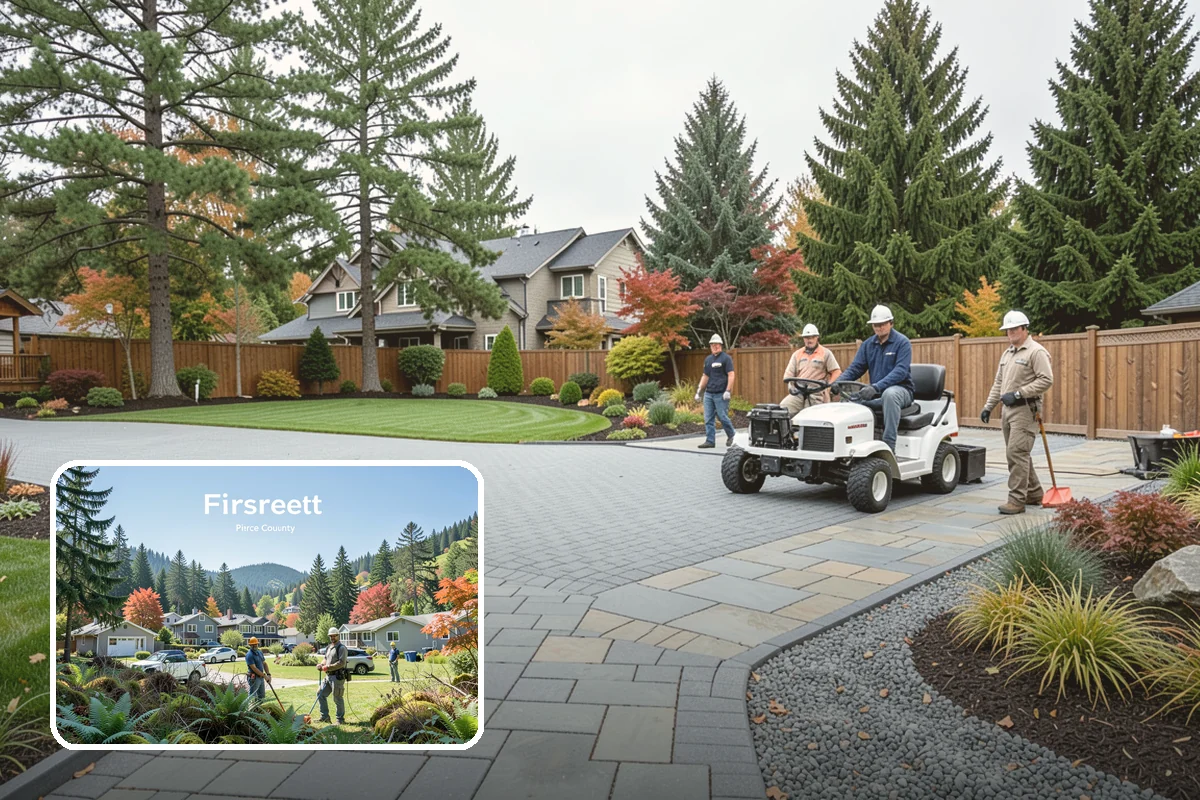
Fircrest is a compact, established residential city tucked between Tacoma, University Place, and Lakewood in Pierce County, and landscaping here tends to match its tidy, close-knit character. Yards are generally modest in size and well-kept, so much of the work centers on maintaining mature plantings, refreshing lawns, and making the most of smaller front and back spaces. With the community built around Fircrest Park, homeowners often take pride in curb appeal and coordinated, neighborly street frontages.
Because lots in Fircrest are largely built out, landscaping is usually about renovation and upkeep rather than clearing raw ground. Property owners here commonly lean on routine mowing, hedge shaping, seasonal color, and thoughtful redesigns that maximize compact yards near Tacoma and University Place.
Site Conditions: Set on the Puget Sound lowlands in USDA zone 8b, Fircrest yards typically see the region’s glacial-influenced soils that can hold moisture in winter and firm up in the drier summer months. Sun exposure varies lot to lot, with mature trees casting shade across many established properties.
Seasonal Considerations: Spring in Fircrest is the busy stretch for lawn revival, bed cleanup, and fresh mulch, while summer shifts toward efficient irrigation and steady mowing. Autumn brings heavy leaf drop from the neighborhood’s mature canopy, making cleanup and gutter-adjacent bed care a priority, and the mild, wet winters are well suited to pruning dormant trees and planning next season’s beds.
Common Project Types: Typical projects include lawn renovation, hedge and privacy screen planting, patio and walkway refreshes, and garden bed redesigns scaled to the city’s single-family homes and townhomes. Foundation plantings and low-maintenance front-yard updates are also popular across Fircrest’s compact lots.
Property Styles: Fircrest’s properties are mostly single-family homes with a mix of townhomes and some condominium and multifamily housing, generally on trim, uniform lots. The setting around Fircrest Park encourages coordinated, street-facing landscaping that fits the neighborhood’s orderly feel.
Local Materials & Plants: Reliable choices for Fircrest include evergreen shrubs like boxwood and laurel for structure, along with rhododendrons, hydrangeas, and hardy perennials that thrive in the mild zone 8b climate. Bark mulch and locally common gravel work well for beds and paths, and drought-tolerant groundcovers suit the drier summer stretches.
Planning Your Project: Planning in Fircrest usually accounts for tight access on smaller lots and coordinating deliveries where street frontage is limited. Scheduling larger installs for the drier late-spring through early-fall window helps, and it’s worth confirming any general local requirements before major grading or tree work near Tacoma and University Place.
If you’re ready to refresh a yard in Fircrest or make the most of a compact lot near Fircrest Park, reach out to talk through your goals and map out a landscaping plan built around your property.