Shaping Your Outdoors. Surpassing Expectations.
Lake Stevens Arborvitae Trimming
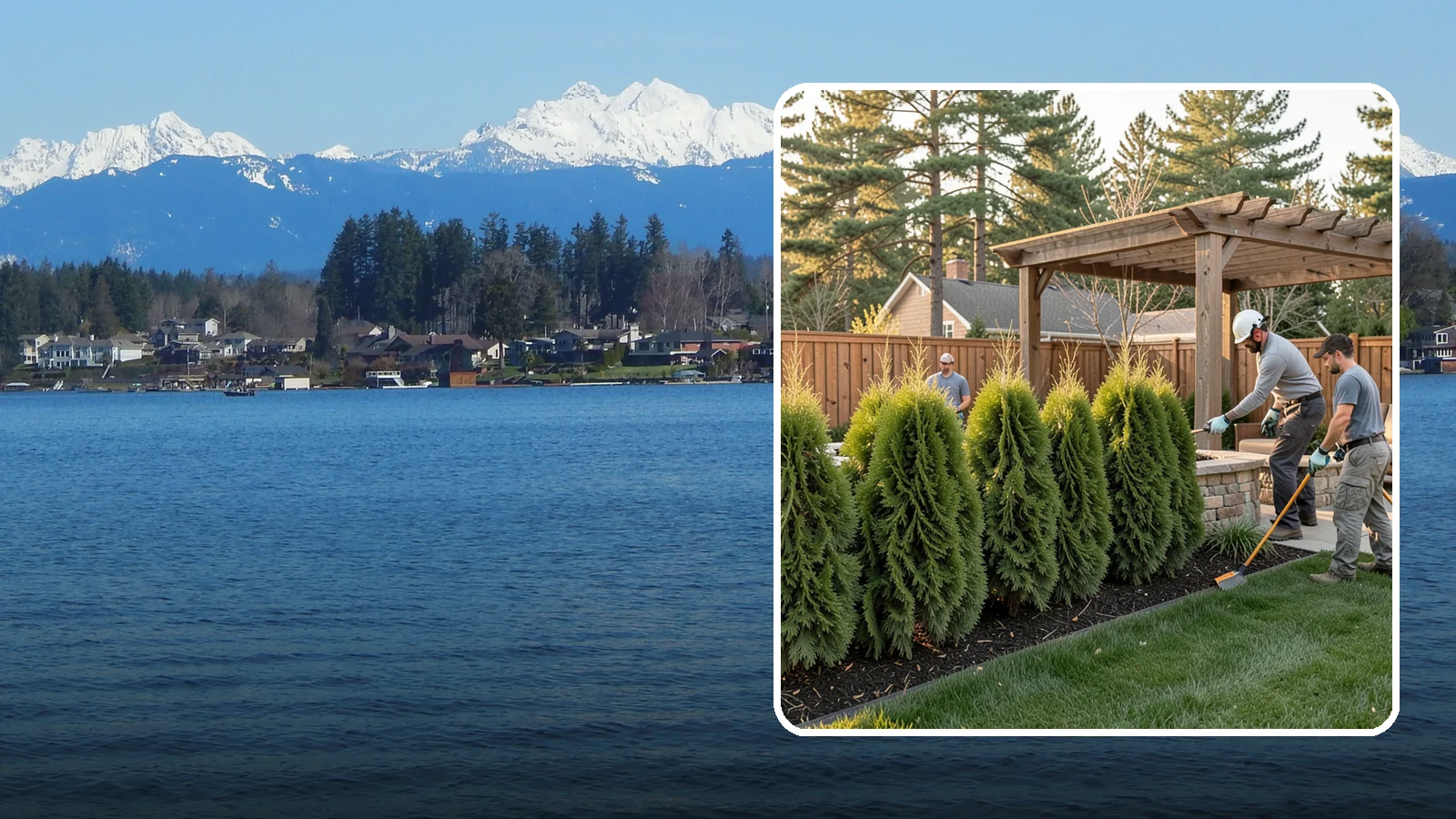
Professional arborvitae trimming that keeps your privacy screen dense, upright, and healthy through Western Washington’s wet, moss-prone winters.
Lake Stevens has a frost-free growing season of about 225 days, from about Mar 24 to Nov 10 (median, Daymet 2005-2025). For arborvitae, that is a long window for new growth, and it shapes when and how much to trim. Frost can come earlier or later in a given year.
Washington Landscaping trims arborvitae hedges and screens for Lake Stevens homeowners. We have an ISA Certified Arborist on staff, and estimates are free. Call or text 425-433-9444 to talk about your trees.
How We Trim Arborvitae in Lake Stevens
Arborvitae looks simple to trim, but one mistake lasts for years. Most of these shrubs will not regrow from bare, brown wood. So the work is careful and mostly light.
The basic steps
- Look at the plant first. We check shape, density, dead interior foliage and any browning or damage.
- Trim only the green outer growth. We avoid cutting back into old wood with no foliage.
- Keep the base slightly wider than the top. This lets light reach the lower branches so they stay full.
- Remove dead or broken branches and clean up the clippings.
Timing in Lake Stevens
The frost-free season runs about 225 days, from about Mar 24 to Nov 10 (median, Daymet 2005-2025). Growth happens across much of that stretch, so shaping is usually done in the growing season, after the main flush of new growth. These are medians. A late or early frost can shift the timing in any year, and fresh cuts are best not exposed to a hard freeze.
July is the dry month here, with about 0.74 in of rain on average (Daymet, 2005-2025). Heavy trimming in dry weather adds stress to a plant that is already short on water. If your hedge is young or the summer is hot, plan to water deeply after trimming and keep cuts light.
Cold hardiness
Lake Stevens is in USDA zone 8b, with an average coldest winter night of about 16.8 F (2023 USDA map, PRISM data). Most common arborvitae varieties handle that range. Still, a shrub weakened by over-trimming recovers more slowly, which is another reason to cut conservatively.
When a tree is too big
Tall, overgrown arborvitae near a house, fence or power line may need more than a trim. Our ISA Certified Arborist can look at the situation and advise on what is safe. Estimates are free, and financing is available subject to credit approval.
Lake Stevens yard conditions at a glance
| USDA hardiness zone (2023) | 8b |
|---|---|
| Last / first frost (median) | Mar 24 / Nov 10 |
| Tree canopy | 31.4% of the city |
| Share of rain October to April | 78% |
| Dry months (under 1.25 in) | July |
A year in a Lake Stevens yard
- Late winter
- Dormant pruning for most deciduous trees and shrubs, before buds break.
- Spring
- Last frost is usually around Mar 24; in 1 year in 10 it comes on or after Apr 12. Plant frost-tender annuals and vegetables after that.
- Early summer
- Check sprinklers and drip lines before July, the start of the dry months here.
- Summer
- July average 0.7 in. Water deeply and less often; mulch beds to hold moisture.
- Fall
- Aerate, overseed and plant trees and shrubs while the soil is warm; first frost is usually around Nov 10. Winterize irrigation before then.
- Winter
- About 40 days a year freeze at night and thaw by day: keep drains, paver joints and wall weep holes clear.
Dates are medians for the city from Daymet 2005-2025; your yard and any given year can differ.
Sources: Daymet daily weather (NASA/ORNL), 2023 USDA Plant Hardiness Zone Map data (PRISM, Oregon State University), USDA SSURGO soil survey, USGS 3DEP elevation, USFS/NLCD tree canopy 2025, US Census ACS 2020-2024.
Lake Stevens Arborvitae Trimming

Local Service Information
Lake Stevens
A city surrounding the lake of the same name in central Snohomish County.
Benefits
Maintains a dense, uninterrupted privacy screen; Prevents irreversible brown gaps by cutting only into green growth; Corrects snow-splayed and flopping leaders common in PNW winters; Improves airflow to reduce moss and needle blight; Keeps growth off fences, gutters, and property lines
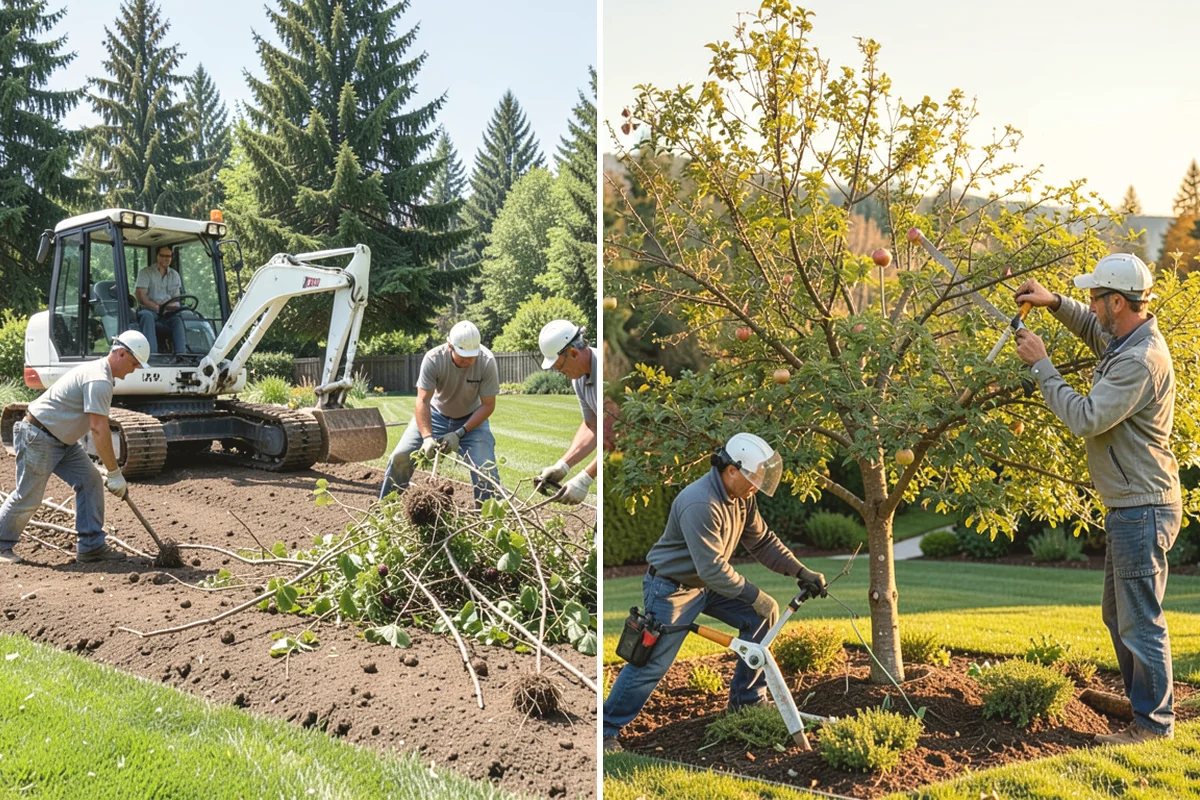
Process
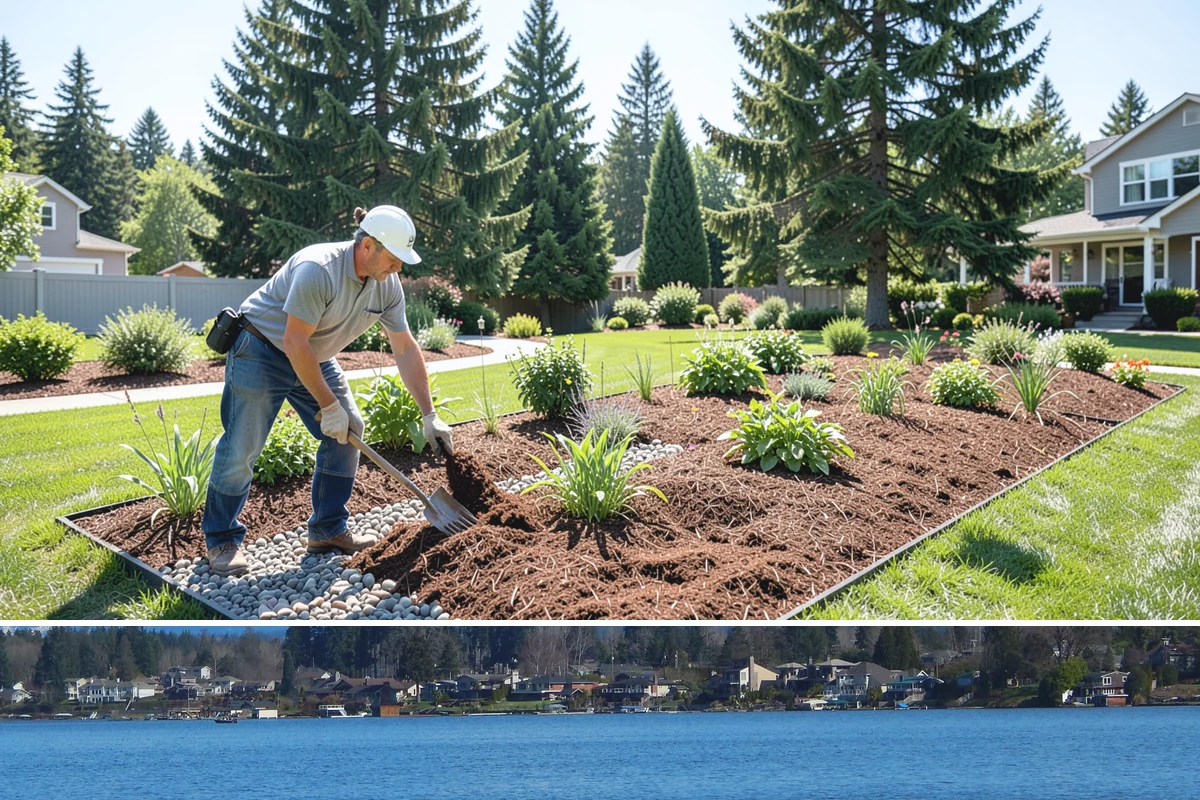
Arborvitae Trimming in nearby areas
Also serving Lake Stevens
- View Enhancement Pruning in Lake Stevensat Washington Tree Services
Get a Free Arborvitae Trimming Estimate in Lake Stevens
Tell us about your project. We’ll review your needs and provide a customized, no-obligation proposal.
Request a Free Consultation
Complete the form or call our team to discuss your project.
On-Site Assessment
We’ll review your property, discuss your goals, and recommend an appropriate solution.
Receive a Customized Proposal
Receive a detailed estimate outlining the proposed work and pricing.