Shaping Your Outdoors. Surpassing Expectations.

Lake Stevens Artificial Turf Cleaning & Maintenance
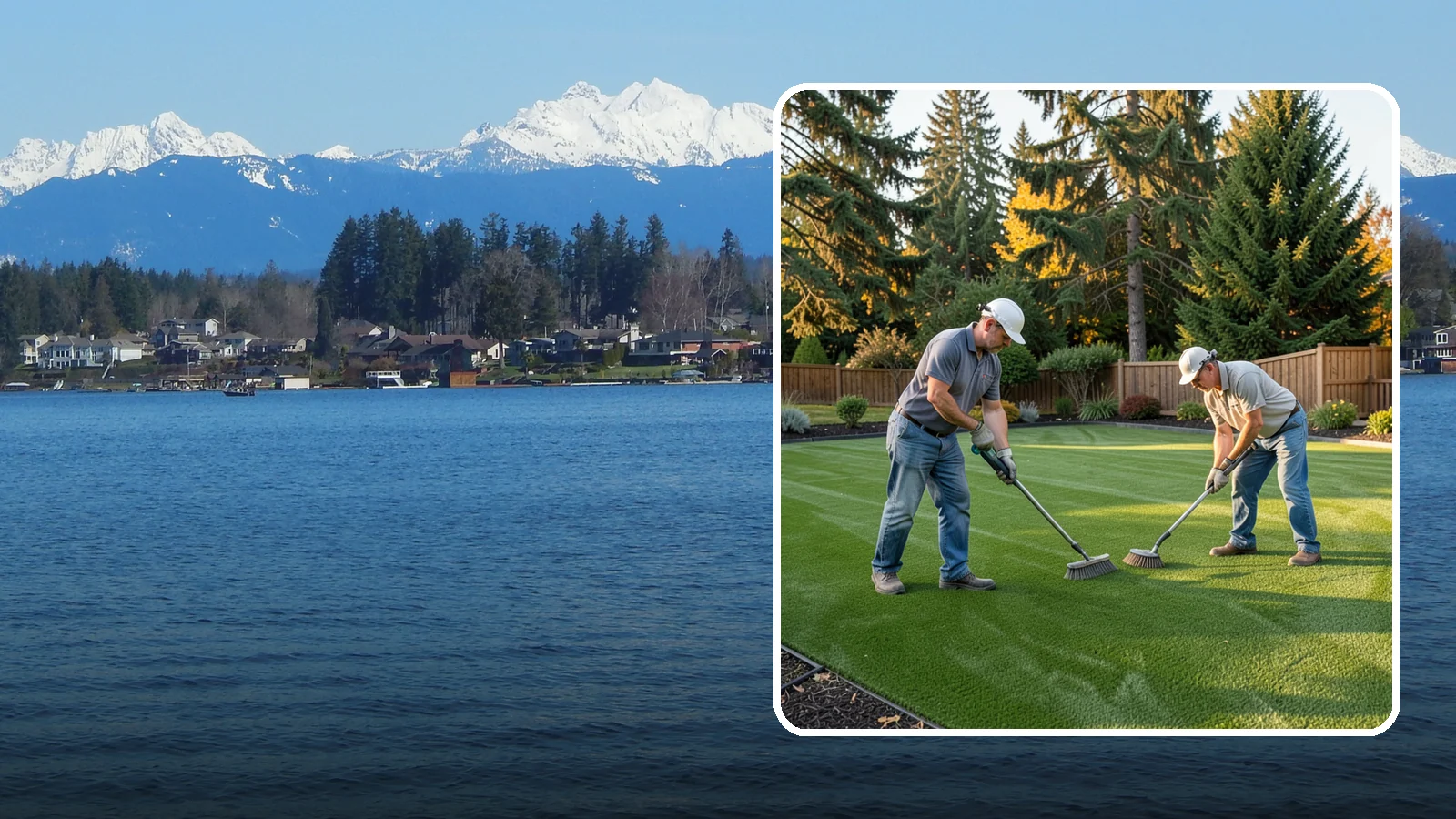
Professional turf grooming and cleaning that keeps synthetic lawns fresh, upright, and sanitary.
The best time for artificial turf cleaning in Lake Stevens is usually late spring through summer. The frost-free growing season runs about 225 days, from roughly Mar 24 to Nov 10 (a median, so frost can come earlier or later in a given year). Moss, algae and debris build up over the wet months, and drier weather lets us brush and rinse the turf and let it dry.
July averages about 0.74 in of rain, per Daymet data for 2005-2025. Washington Landscaping, based in Bothell, offers turf cleaning and maintenance with free estimates. Call or text 425-433-9444 to start planning.
Planning Turf Care in Lake Stevens, WA
Start by looking at how your turf is used and what falls on it. Pet areas, play areas and shaded corners each need different care. Tell us what you see: matted blades, odors, green film or standing water after rain.
What affects the scope
Tree cover is the biggest factor we can point to here. Per USFS/NLCD 2025 data, tree canopy covers about 31.4% of Lake Stevens. That figure describes the city as a whole, and your yard may have more or less shade. Under or near trees, turf collects needles, leaves, seeds and pollen. Shade also keeps surfaces damp longer, which favors moss and algae. A yard with heavy canopy will likely need more frequent debris removal and a closer look at drainage through the turf.
Other things that change the work include turf age, infill type and level, how much pet use the area gets, and how long buildup has been left. Compacted infill and flattened fibers take more effort than a light surface clean.
What to expect
A typical visit involves removing loose debris, brushing the fibers upright, and rinsing the surface. We check that water drains freely, look at seams and edges for lifting, and note where infill has shifted. Where it makes sense, we cover spot treatment for odors or growth. We describe the work plainly and do not promise a specific outcome, since worn or older turf may not look like new afterward.
We are licensed, bonded and insured ($2M), and estimates are free. If a larger repair is needed, financing is available subject to credit approval.
One practical tip
Schedule your main cleaning for a dry stretch, and think about July, the driest month on average. Then clear leaves and debris from the turf by hand or with a soft brush through fall so the wet season starts with a clean surface.
Lake Stevens yard conditions at a glance
| Dry months (under 1.25 in) | July |
|---|---|
| Days with 0.1 in or more of rain | 136 a year |
| Soil drainage (rated land) | 4% well, 88% moderately well, 8% poorly drained |
| Tree canopy | 31.4% of the city |
A year in a Lake Stevens yard
- Late winter
- Dormant pruning for most deciduous trees and shrubs, before buds break.
- Spring
- Last frost is usually around Mar 24; in 1 year in 10 it comes on or after Apr 12. Plant frost-tender annuals and vegetables after that.
- Early summer
- Check sprinklers and drip lines before July, the start of the dry months here.
- Summer
- July average 0.7 in. Water deeply and less often; mulch beds to hold moisture.
- Fall
- Aerate, overseed and plant trees and shrubs while the soil is warm; first frost is usually around Nov 10. Winterize irrigation before then.
- Winter
- About 40 days a year freeze at night and thaw by day: keep drains, paver joints and wall weep holes clear.
Dates are medians for the city from Daymet 2005-2025; your yard and any given year can differ.
How Lake Stevens’s soils drain
- Well drained4%
- Moderately well88%
- Poorly drained8%
Share of rated land in the USDA SSURGO soil survey; built-over ground is not rated. A soil check on your lot tells you what you have.
Sources: Daymet daily weather (NASA/ORNL), 2023 USDA Plant Hardiness Zone Map data (PRISM, Oregon State University), USDA SSURGO soil survey, USGS 3DEP elevation, USFS/NLCD tree canopy 2025, US Census ACS 2020-2024.
Lake Stevens Artificial Turf Cleaning & Maintenance
Local Service Information
Lake Stevens
A city surrounding the lake of the same name in central Snohomish County.
Benefits
Keeps turf full, upright, and fresh; Removes leaves and debris; Refreshes and redistributes infill; Sanitizes pet areas and controls odor; Protects your turf investment
Process
Artificial Turf Cleaning & Maintenance in nearby areas
Also serving Lake Stevens
- Pool House Construction in Lake Stevensat Washington Construction
Get a Free Artificial Turf Cleaning & Maintenance Estimate in Lake Stevens
Tell us about your project. We’ll review your needs and provide a customized, no-obligation proposal.
Request a Free Consultation
Complete the form or call our team to discuss your project.
On-Site Assessment
We’ll review your property, discuss your goals, and recommend an appropriate solution.
Receive a Customized Proposal
Receive a detailed estimate outlining the proposed work and pricing.