Shaping Your Outdoors. Surpassing Expectations.

Lake Stevens Bamboo Removal
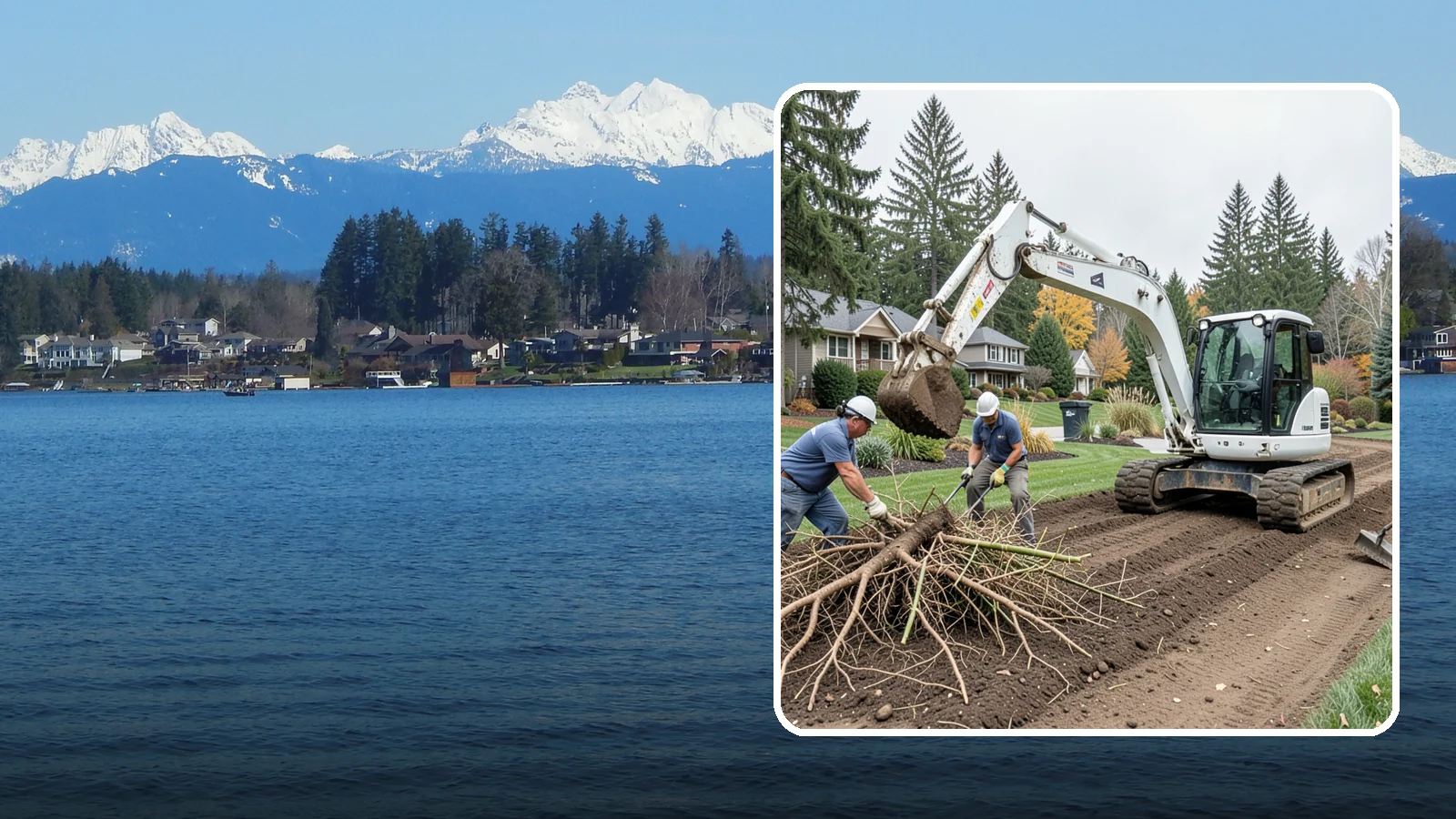
Full removal of invasive running bamboo, including the root and rhizome system, to stop its spread for good.
Bamboo removal is for Lake Stevens homeowners whose bamboo has spread past its original bed. It may be coming up in a lawn, pushing against a fence, or crossing into a neighbor's yard. It also suits people who bought a house with a grove already established and want it gone.
Washington Landscaping, based in Bothell, WA, has been in business since 2004 and has an ISA Certified Arborist on staff. We can look at your bamboo, explain your options, and give you a free estimate. Call or text 425-433-9444.
Bamboo Removal Options for Lake Stevens Yards
There is more than one way to get rid of running bamboo. The right one depends on how far it has spread, what grows around it, and how soon you want the space back.
Digging out the rhizomes
This is the most direct method. Canes are cut down, then the rhizomes, the underground stems, are dug out and hauled away. It works best for smaller or newer stands. Large groves can have a dense mat of rhizomes, and removing it may call for heavy equipment. Any piece left in the ground can send up new shoots.
Repeated cutting
Cutting new shoots to the ground over and over weakens the plant, because it keeps spending stored energy on regrowth. It needs no digging, but it takes patience and steady follow-through. Lake Stevens has a frost-free season of about 225 days, from roughly Mar 24 to Nov 10 (a median, so frost can come earlier or later in a given year). That is a long stretch for bamboo to keep pushing up shoots, so cutting has to continue through much of the year.
Containing instead of removing
If you want to keep some bamboo, a buried barrier can hold it in place. It still needs regular checking along the edge, and it does not help if the rhizomes have already escaped.
What local conditions mean for your choice
Per the USDA soil survey, about 88% of rated land in Lake Stevens is moderately well drained, and about 8% is poorly drained. Your own yard may differ. Bamboo tends to do well in moist soil, so a damp spot may mean faster regrowth and more careful follow-up. The area is USDA zone 8b, with an average coldest night of about 16.8 F. Winter cold is unlikely to kill bamboo for you.
Questions to settle before choosing:
- How far have the rhizomes spread, and do they cross a property line?
- Are there trees, patios, or utility lines close to the stand?
- Do you want the area replanted afterward?
We can walk the site with you and recommend an approach. Estimates are free, and financing is available subject to credit approval.
Lake Stevens yard conditions at a glance
| Tree canopy | 31.4% of the city |
|---|---|
| Land sloping 15% or more | 12% (40% or more: 0.6%) |
| Soil drainage (rated land) | 4% well, 88% moderately well, 8% poorly drained |
| Share of rain October to April | 78% |
A year in a Lake Stevens yard
- Late winter
- Dormant pruning for most deciduous trees and shrubs, before buds break.
- Spring
- Last frost is usually around Mar 24; in 1 year in 10 it comes on or after Apr 12. Plant frost-tender annuals and vegetables after that.
- Early summer
- Check sprinklers and drip lines before July, the start of the dry months here.
- Summer
- July average 0.7 in. Water deeply and less often; mulch beds to hold moisture.
- Fall
- Aerate, overseed and plant trees and shrubs while the soil is warm; first frost is usually around Nov 10. Winterize irrigation before then.
- Winter
- About 40 days a year freeze at night and thaw by day: keep drains, paver joints and wall weep holes clear.
Dates are medians for the city from Daymet 2005-2025; your yard and any given year can differ.
How Lake Stevens’s soils drain
- Well drained4%
- Moderately well88%
- Poorly drained8%
Share of rated land in the USDA SSURGO soil survey; built-over ground is not rated. A soil check on your lot tells you what you have.
Sources: Daymet daily weather (NASA/ORNL), 2023 USDA Plant Hardiness Zone Map data (PRISM, Oregon State University), USDA SSURGO soil survey, USGS 3DEP elevation, USFS/NLCD tree canopy 2025, US Census ACS 2020-2024.
Lake Stevens Bamboo Removal

Local Service Information
Lake Stevens
A city surrounding the lake of the same name in central Snohomish County.
Benefits
Stops aggressive bamboo spread; Rhizomes excavated, not just cut; Protects structures and hardscape; Optional rhizome barrier install; The only lasting solution

Process

Bamboo Removal in nearby areas
Also serving Lake Stevens
- House Demolition in Lake Stevensat Washington Construction
- Blackberry removal in Lake Stevensat Washington Tree Services
Get a Free Bamboo Removal Estimate in Lake Stevens
Tell us about your project. We’ll review your needs and provide a customized, no-obligation proposal.
Request a Free Consultation
Complete the form or call our team to discuss your project.
On-Site Assessment
We’ll review your property, discuss your goals, and recommend an appropriate solution.
Receive a Customized Proposal
Receive a detailed estimate outlining the proposed work and pricing.