Shaping Your Outdoors. Surpassing Expectations.

Lake Stevens Cedar Hedge Trimming
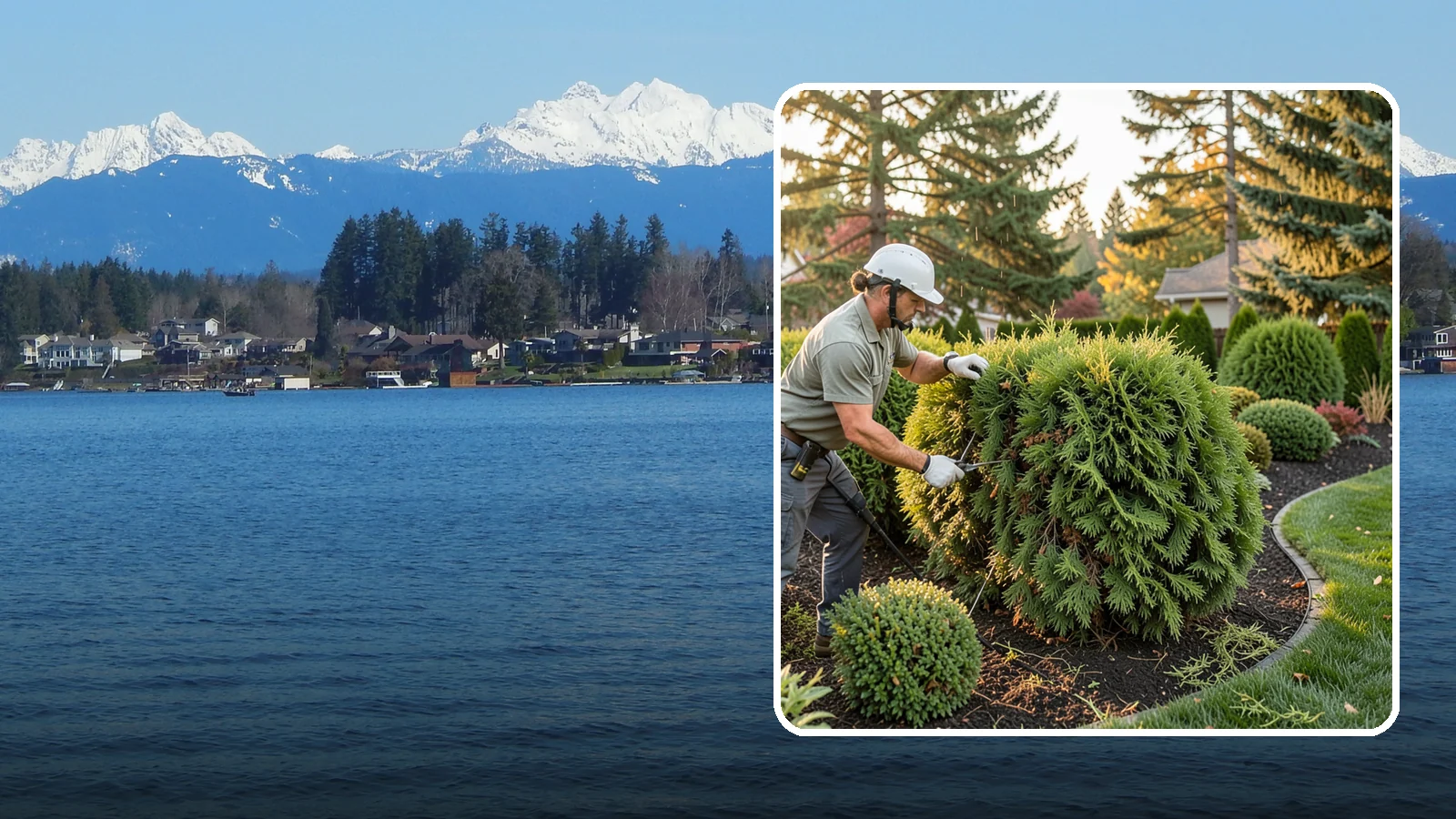
Attentive cedar hedge trimming that keeps this Northwest-native evergreen dense, aromatic, and free of the brown gaps that never recover.
Your cedar hedge was neat in spring. Now it looks shaggy, the top is uneven, and the sides lean into the walkway or the neighbor's yard. Some branches may have browned inside, and you can't tell whether that is normal or a problem.
Washington Landscaping trims cedar hedges in Lake Stevens. We have been in business since 2004, and an ISA Certified Arborist is on staff. This page explains why cedar hedges get unruly, when trimming makes sense here, and how the work is done. Estimates are free.
Cedar hedge trimming in Lake Stevens: timing and technique
Cedar hedges get untidy because they grow from the tips outward. Each year the new green growth pushes the outer edge farther out. Shade then builds inside, and the inner foliage dies back. That is why many cedar hedges look full on the surface and brown and bare underneath.
This matters for how you trim. Most cedar, including arborvitae and the western redcedar used for screens, does not reliably regrow from old bare wood. If a cut goes back into the brown interior, the bare patch can stay bare. A good trim stays in the green growth. It keeps the hedge slightly narrower at the top than at the base, so light reaches the lower branches. A hedge cut wider at the top shades its own bottom and thins out over time.
Timing is the other piece. In Lake Stevens the median last spring frost is March 24 and the median first fall frost is November 10, per Daymet data for 2005-2025. That gives a frost-free growing season of about 225 days. These are medians, so frost can come earlier or later in a given year. Trimming is usually best once new growth has started in spring, or in early summer after the first flush. Heavy cuts late in the season can leave fresh tips exposed to an early frost. Your own yard may also run cooler or warmer than the city as a whole.
On the job, we shape the sides and top to a consistent line, and we keep the cut within live foliage. We also look at the hedge as a whole. Dead interior wood, thinning at the base, or browning along one side can point to drought stress, crowding, or disease. Having an ISA Certified Arborist on staff helps when a hedge looks unhealthy rather than just overgrown. Clippings are a real part of the job, since cedar trimmings pile up fast.
If your hedge is already bare inside, tell us when you call. We can talk through what trimming can and cannot fix. Call or text 425-433-9444 for a free estimate.
Lake Stevens yard conditions at a glance
| USDA hardiness zone (2023) | 8b |
|---|---|
| Last / first frost (median) | Mar 24 / Nov 10 |
| Tree canopy | 31.4% of the city |
| Share of rain October to April | 78% |
| Dry months (under 1.25 in) | July |
A year in a Lake Stevens yard
- Late winter
- Dormant pruning for most deciduous trees and shrubs, before buds break.
- Spring
- Last frost is usually around Mar 24; in 1 year in 10 it comes on or after Apr 12. Plant frost-tender annuals and vegetables after that.
- Early summer
- Check sprinklers and drip lines before July, the start of the dry months here.
- Summer
- July average 0.7 in. Water deeply and less often; mulch beds to hold moisture.
- Fall
- Aerate, overseed and plant trees and shrubs while the soil is warm; first frost is usually around Nov 10. Winterize irrigation before then.
- Winter
- About 40 days a year freeze at night and thaw by day: keep drains, paver joints and wall weep holes clear.
Dates are medians for the city from Daymet 2005-2025; your yard and any given year can differ.
Sources: Daymet daily weather (NASA/ORNL), 2023 USDA Plant Hardiness Zone Map data (PRISM, Oregon State University), USDA SSURGO soil survey, USGS 3DEP elevation, USFS/NLCD tree canopy 2025, US Census ACS 2020-2024.
Lake Stevens Cedar Hedge Trimming

Local Service Information
Lake Stevens
A city surrounding the lake of the same name in central Snohomish County.
Benefits
Keeps native cedar dense, soft, and aromatic; Avoids permanent brown gaps by cutting only green; Corrects wet-snow splay common in PNW winters; Reduces moss and needle blight with light thinning; Maintains a lush, columnar screening shape
Process

Cedar Hedge Trimming in nearby areas
Also serving Lake Stevens
- Crown cleaning in Lake Stevensat Washington Tree Services
Get a Free Cedar Hedge Trimming Estimate in Lake Stevens
Tell us about your project. We’ll review your needs and provide a customized, no-obligation proposal.
Request a Free Consultation
Complete the form or call our team to discuss your project.
On-Site Assessment
We’ll review your property, discuss your goals, and recommend an appropriate solution.
Receive a Customized Proposal
Receive a detailed estimate outlining the proposed work and pricing.