Shaping Your Outdoors. Surpassing Expectations.

Lake Stevens Deck Landscaping

We integrate decks with surrounding plantings, borders, and features to create a seamless outdoor living space.
Deck landscaping in Lake Stevens makes the most sense in spring and early fall. Soil is workable, rain is steady enough to help new roots settle, and plants have time to establish before winter cold or summer dry spells. Planning can start earlier, in late winter, so beds and materials are settled before the ground dries out.
Deck landscaping covers the planting, edging, paths and ground work around and beneath a deck. The goal is a deck that connects to the yard instead of sitting on top of it. Washington Landscaping offers free estimates, so you can talk through options before committing to anything.
Planning Deck Landscaping in Lake Stevens, WA
Start with how you use the deck. A dining deck needs a clear path to the door and the grill. A deck for relaxing may want screening and softer planting along its edges. Decide this first, because it shapes every bed and walkway around it.
What affects scope
Slope is a big factor. Per USGS 3DEP elevation data, about 12% of Lake Stevens land slopes 15% or more. That describes the city as a whole, and your yard may differ. If your deck sits above a slope, expect to deal with erosion control, drainage and possibly steps or retaining elements. Any wall, grading or structure has its permit needs checked with the city before work starts.
Shade matters too. Tree canopy covers about 31.4% of Lake Stevens (USFS/NLCD 2025). If your deck is under or near mature trees, plan on shade-tolerant plants such as ferns, hostas and hydrangeas, and on leaf and needle cleanup around the deck boards and beds.
Plant choice should fit the climate. The USDA hardiness zone here is 8b, with an average coldest winter night of about 16.8 F (2023 USDA map). Frost can still come earlier or later than the median in any given year, so choose plants rated for zone 8 or colder.
What to expect
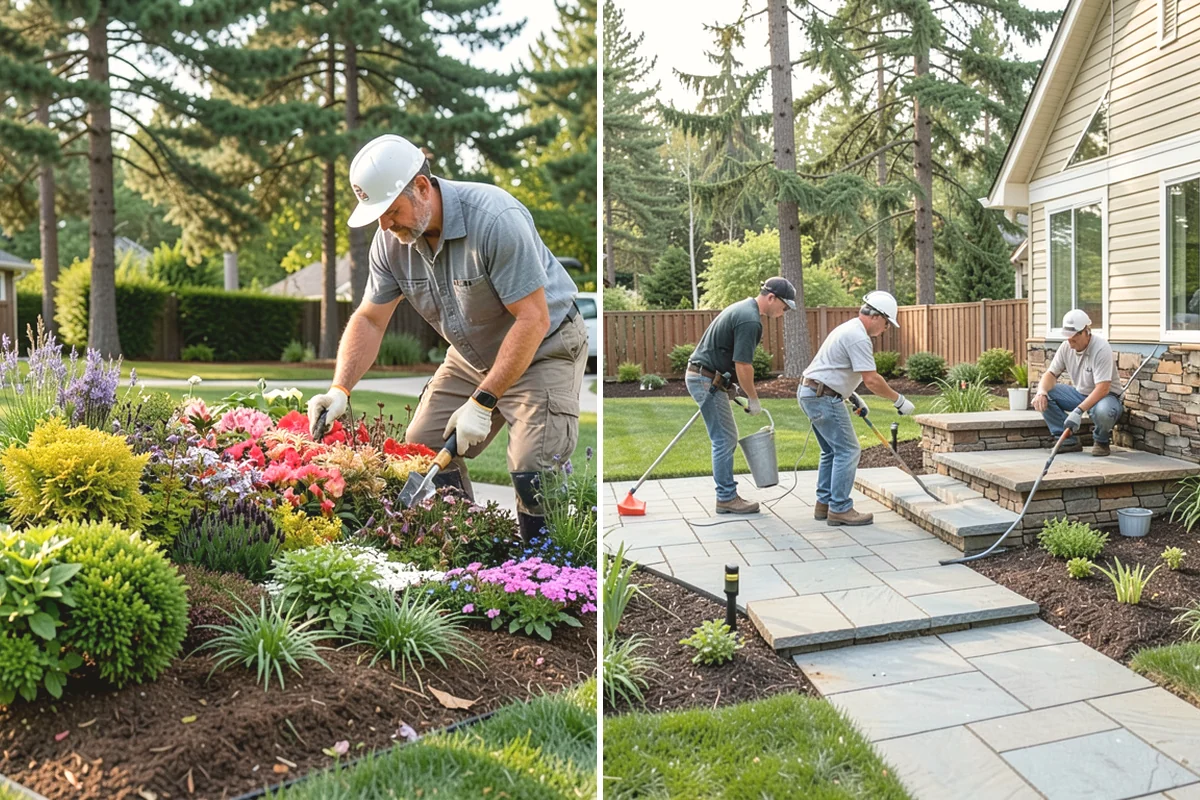
A typical project begins with a site visit and a walk around the deck. From there the work usually moves through clearing and shaping beds, improving soil, setting edging and paths, planting, and mulching. Space under a raised deck is often handled separately with gravel, landscape fabric or lattice screening. Plants need regular watering through their first dry season.
Washington Landscaping has been in business since 2004 and is licensed, bonded and insured. Financing is available subject to credit approval.
Practical tip: leave a few inches of clearance between mulch or soil and the deck framing. Piled-up soil holds moisture against the wood and shortens its life.
Lake Stevens yard conditions at a glance
| USDA hardiness zone (2023) | 8b |
|---|---|
| Land sloping 15% or more | 12% (40% or more: 0.6%) |
| Soil drainage (rated land) | 4% well, 88% moderately well, 8% poorly drained |
| Tree canopy | 31.4% of the city |
| Single-family detached homes | 83% of housing |
A year in a Lake Stevens yard
- Late winter
- Dormant pruning for most deciduous trees and shrubs, before buds break.
- Spring
- Last frost is usually around Mar 24; in 1 year in 10 it comes on or after Apr 12. Plant frost-tender annuals and vegetables after that.
- Early summer
- Check sprinklers and drip lines before July, the start of the dry months here.
- Summer
- July average 0.7 in. Water deeply and less often; mulch beds to hold moisture.
- Fall
- Aerate, overseed and plant trees and shrubs while the soil is warm; first frost is usually around Nov 10. Winterize irrigation before then.
- Winter
- About 40 days a year freeze at night and thaw by day: keep drains, paver joints and wall weep holes clear.
Dates are medians for the city from Daymet 2005-2025; your yard and any given year can differ.
How Lake Stevens’s soils drain
- Well drained4%
- Moderately well88%
- Poorly drained8%
Share of rated land in the USDA SSURGO soil survey; built-over ground is not rated. A soil check on your lot tells you what you have.
Sources: Daymet daily weather (NASA/ORNL), 2023 USDA Plant Hardiness Zone Map data (PRISM, Oregon State University), USDA SSURGO soil survey, USGS 3DEP elevation, USFS/NLCD tree canopy 2025, US Census ACS 2020-2024.
Lake Stevens Deck Landscaping

Local Service Information
Lake Stevens
A city surrounding the lake of the same name in central Snohomish County.
Benefits
Seamless transition between deck and garden; Shade- and moisture-tolerant plantings for Northwest light; Drainage details that prevent muddy deck surrounds; Layered borders and containers for year-round interest; A cohesive outdoor living space that boosts curb appeal
Process
Deck Landscaping in nearby areas
Also serving Lake Stevens
- Built-In BBQ Construction in Lake Stevensat Washington Construction
- Patio Algae Removal in Lake Stevensat Washington Pressure Washing
Get a Free Deck Landscaping Estimate in Lake Stevens
Tell us about your project. We’ll review your needs and provide a customized, no-obligation proposal.
Request a Free Consultation
Complete the form or call our team to discuss your project.
On-Site Assessment
We’ll review your property, discuss your goals, and recommend an appropriate solution.
Receive a Customized Proposal
Receive a detailed estimate outlining the proposed work and pricing.