Shaping Your Outdoors. Surpassing Expectations.

Lake Stevens Dogwood Pruning
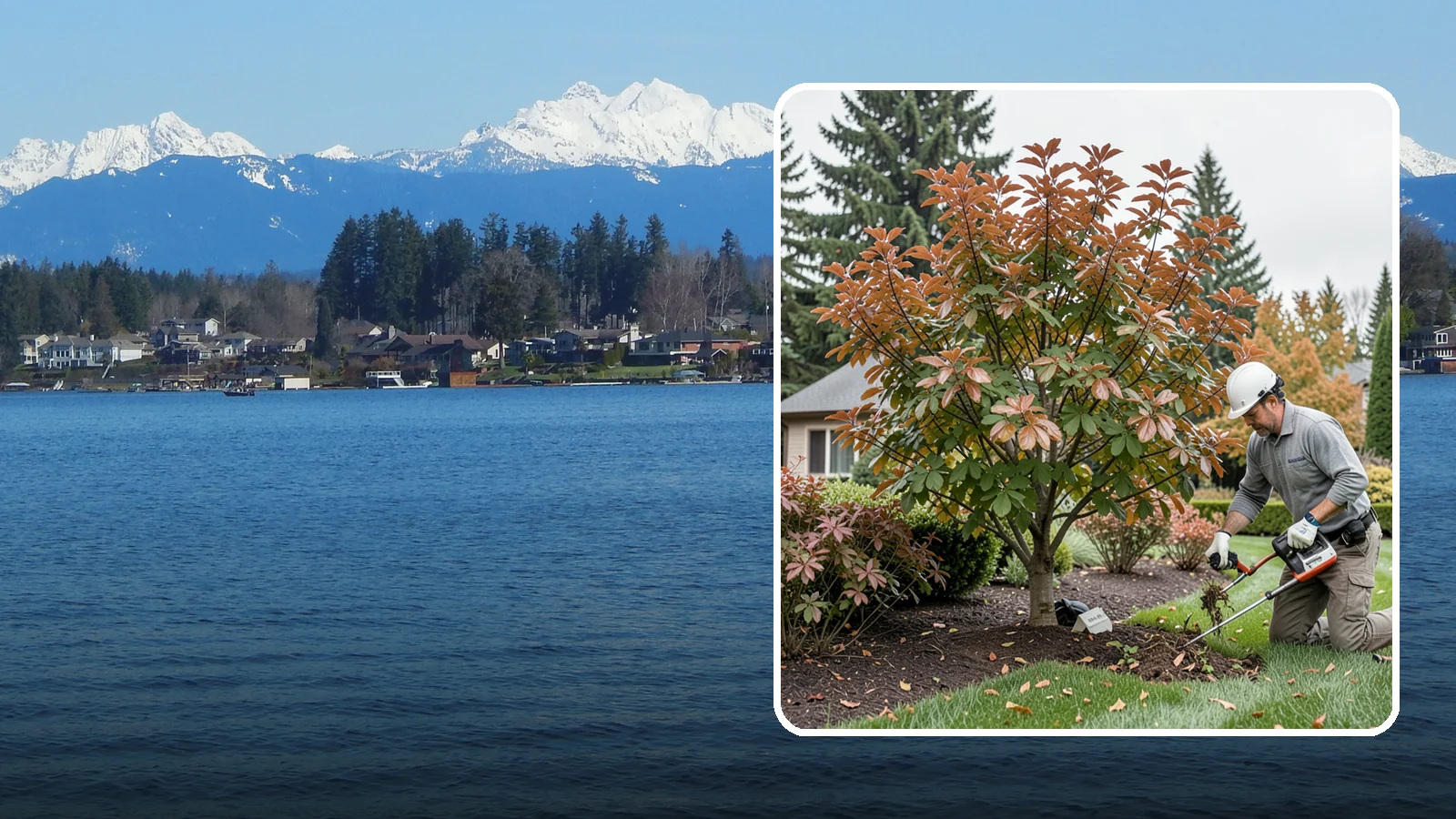
Light, careful pruning for dogwoods that preserves their layered form and spring flowers.
Your dogwood has dead twigs near the top, crossing branches in the center, or leaves that stay spotted well into summer. Or it just looks crowded and flowers less than it used to. Those are common reasons people start looking into pruning.
Washington Landscaping prunes dogwoods in Lake Stevens, WA. An ISA Certified Arborist is on staff, and estimates are free. Call or text 425-433-9444 to talk through what your tree needs.
Why Dogwood Pruning Matters in Lake Stevens
Dogwoods grow best with open, even branching. When branches crowd or cross, air moves poorly through the canopy. Leaves stay wet longer, and rubbing branches leave wounds. Dead and damaged wood also gives fungal problems an easy way in.
Rain makes this more relevant here. Lake Stevens gets about 136 days a year with 0.1 in or more of rain (Daymet, 2005-2025). That is a lot of wet foliage. Dogwoods are prone to leaf spots and other fungal troubles, and a thinner, airier canopy dries faster. Pruning cannot prevent disease, but it removes one of the conditions that favors it.
Tree canopy covers about 31.4% of Lake Stevens (USFS/NLCD 2025). That figure describes the city as a whole, and your yard may differ. If your dogwood sits under larger evergreens, though, it is probably dealing with shade and slower drying. In that case, careful thinning matters more, and so does checking how much light actually reaches the tree.
Timing and what the work looks like
Dead, broken or diseased wood can come out at nearly any time of year. Shaping and thinning cuts are better planned around the tree's growth. The median last spring frost in Lake Stevens is Mar 24 (Daymet, 2005-2025). Frost can come earlier or later in a given year, so we watch the weather rather than the calendar alone.
The work itself is selective. We start by removing dead, damaged and diseased branches. Then we take out crossing or rubbing limbs and thin crowded areas so light and air reach the interior. We cut back to a branch collar or a healthy bud, and we avoid flat-topping or heavy shearing. Those habits ruin the natural layered form of a dogwood and often trigger weak, dense regrowth.
An ISA Certified Arborist on our staff can look at the tree first, including signs of borers, cankers or other problems. Pruning is not always the answer, and we will tell you if something else is going on. Call or text 425-433-9444 to set up a free estimate.
Lake Stevens yard conditions at a glance
| USDA hardiness zone (2023) | 8b |
|---|---|
| Last / first frost (median) | Mar 24 / Nov 10 |
| Tree canopy | 31.4% of the city |
| Share of rain October to April | 78% |
| Dry months (under 1.25 in) | July |
A year in a Lake Stevens yard
- Late winter
- Dormant pruning for most deciduous trees and shrubs, before buds break.
- Spring
- Last frost is usually around Mar 24; in 1 year in 10 it comes on or after Apr 12. Plant frost-tender annuals and vegetables after that.
- Early summer
- Check sprinklers and drip lines before July, the start of the dry months here.
- Summer
- July average 0.7 in. Water deeply and less often; mulch beds to hold moisture.
- Fall
- Aerate, overseed and plant trees and shrubs while the soil is warm; first frost is usually around Nov 10. Winterize irrigation before then.
- Winter
- About 40 days a year freeze at night and thaw by day: keep drains, paver joints and wall weep holes clear.
Dates are medians for the city from Daymet 2005-2025; your yard and any given year can differ.
Sources: Daymet daily weather (NASA/ORNL), 2023 USDA Plant Hardiness Zone Map data (PRISM, Oregon State University), USDA SSURGO soil survey, USGS 3DEP elevation, USFS/NLCD tree canopy 2025, US Census ACS 2020-2024.
Lake Stevens Dogwood Pruning
Local Service Information
Lake Stevens
A city surrounding the lake of the same name in central Snohomish County.
Benefits
Preserves the tiered, layered form; Protects spring flowers; Better air circulation vs anthracnose; Deadwood and disease removed; Restrained, precise cuts

Process
Dogwood Pruning in nearby areas
Also serving Lake Stevens
- Canopy reduction in Lake Stevensat Washington Tree Services
Get a Free Dogwood Pruning Estimate in Lake Stevens
Tell us about your project. We’ll review your needs and provide a customized, no-obligation proposal.
Request a Free Consultation
Complete the form or call our team to discuss your project.
On-Site Assessment
We’ll review your property, discuss your goals, and recommend an appropriate solution.
Receive a Customized Proposal
Receive a detailed estimate outlining the proposed work and pricing.