Shaping Your Outdoors. Surpassing Expectations.

Lake Stevens Evergreen Tree Planting

We plant evergreen trees that keep Northwest landscapes green and screened all year long.
You may be looking at a bare property line, a view you would rather not share with the neighbors, or a yard that feels exposed all winter. Evergreens fix that because they hold their needles when other trees go bare.
Washington Landscaping plants evergreen trees for Lake Stevens homeowners, and an ISA Certified Arborist is on staff. Free estimates are available. Call or text 425-433-9444 to talk through where trees would help and which kinds fit your site.
Planting Evergreen Trees in Lake Stevens: Soil, Climate and Timing
Evergreen trees struggle for a few common reasons. The wrong species goes in the wrong spot. The roots sit in soil that stays wet. Or a young tree goes through its first dry summer without enough water. Most failures trace back to site choice and early care, not the tree itself.
Local conditions shape each of those. Lake Stevens is in USDA hardiness zone 8b, where the average coldest winter night is about 16.8 F. That is mild enough for a wide range of conifers common in Puget Sound landscapes. Hardiness is only a starting point, though. Your yard's exposure to wind and shade matters just as much.
Drainage is the bigger question. Per the USDA soil survey, about 88% of rated land in Lake Stevens is moderately well drained, about 4% is well drained and about 8% is poorly drained. That describes the city as a whole, and your own yard may differ. Even so, it tells us to check the planting spot before choosing a tree. Many evergreens dislike standing water around their roots, so a low, soggy corner may call for a different species or a slightly raised planting area.
Summer is the other pressure point. July averages about 0.74 in of rain here, based on Daymet data from 2005 to 2025. A newly planted evergreen has a small root system and cannot reach deep moisture yet. Regular, deep watering through that first dry season is part of the job, and we can talk through a watering plan with you.
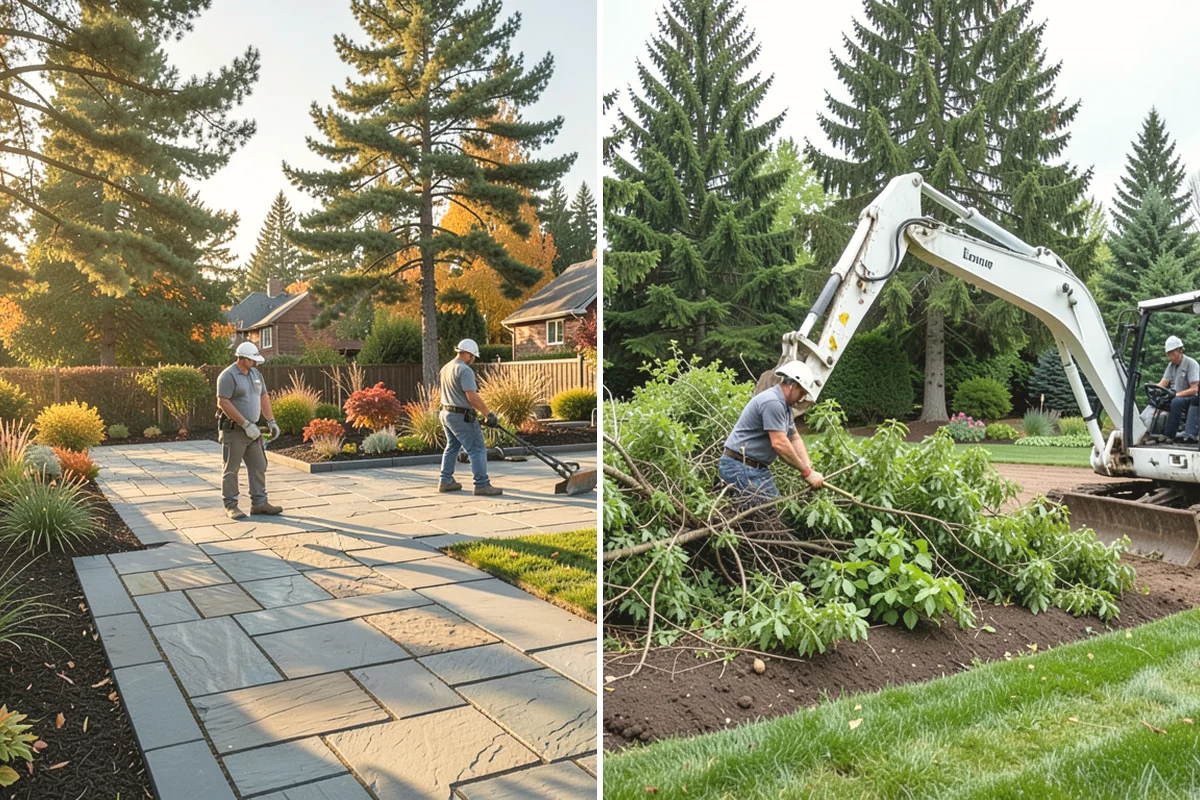
The work itself is simple to describe. We look at the site, including sun, space for the mature size, utilities overhead and below, and how water moves. We help you choose species that suit those conditions. Then we dig a planting hole wider than the root ball, set the tree at the correct depth, backfill, mulch and water it in. Spacing matters, since trees planted too tight for a screen can crowd each other later.
Washington Landscaping has been in business since 2004 and is licensed, bonded and insured. Financing is available, subject to credit approval.
Lake Stevens yard conditions at a glance
| USDA hardiness zone (2023) | 8b |
|---|---|
| Last / first frost (median) | Mar 24 / Nov 10 |
| Late last frost (1 year in 10) | on or after Apr 12 |
| Frost-free season | about 225 days |
| Dry months (under 1.25 in) | July |
| Soil drainage (rated land) | 4% well, 88% moderately well, 8% poorly drained |
A year in a Lake Stevens yard
- Late winter
- Dormant pruning for most deciduous trees and shrubs, before buds break.
- Spring
- Last frost is usually around Mar 24; in 1 year in 10 it comes on or after Apr 12. Plant frost-tender annuals and vegetables after that.
- Early summer
- Check sprinklers and drip lines before July, the start of the dry months here.
- Summer
- July average 0.7 in. Water deeply and less often; mulch beds to hold moisture.
- Fall
- Aerate, overseed and plant trees and shrubs while the soil is warm; first frost is usually around Nov 10. Winterize irrigation before then.
- Winter
- About 40 days a year freeze at night and thaw by day: keep drains, paver joints and wall weep holes clear.
Dates are medians for the city from Daymet 2005-2025; your yard and any given year can differ.
How Lake Stevens’s soils drain
- Well drained4%
- Moderately well88%
- Poorly drained8%
Share of rated land in the USDA SSURGO soil survey; built-over ground is not rated. A soil check on your lot tells you what you have.
Sources: Daymet daily weather (NASA/ORNL), 2023 USDA Plant Hardiness Zone Map data (PRISM, Oregon State University), USDA SSURGO soil survey, USGS 3DEP elevation, USFS/NLCD tree canopy 2025, US Census ACS 2020-2024.
Lake Stevens Evergreen Tree Planting

Local Service Information
Lake Stevens
A city surrounding the lake of the same name in central Snohomish County.
Benefits
Year-round green color, privacy, and structure; Conifer species native and adapted to the Northwest; Effective windbreaks and living screens; Careful siting for mature height and spread; Proper planting for decades of healthy growth
Process
Evergreen Tree Planting in nearby areas
Also serving Lake Stevens
- Tree replacement in Lake Stevensat Washington Tree Services
Get a Free Evergreen Tree Planting Estimate in Lake Stevens
Tell us about your project. We’ll review your needs and provide a customized, no-obligation proposal.
Request a Free Consultation
Complete the form or call our team to discuss your project.
On-Site Assessment
We’ll review your property, discuss your goals, and recommend an appropriate solution.
Receive a Customized Proposal
Receive a detailed estimate outlining the proposed work and pricing.