Shaping Your Outdoors. Surpassing Expectations.

Lake Stevens Heather Pruning
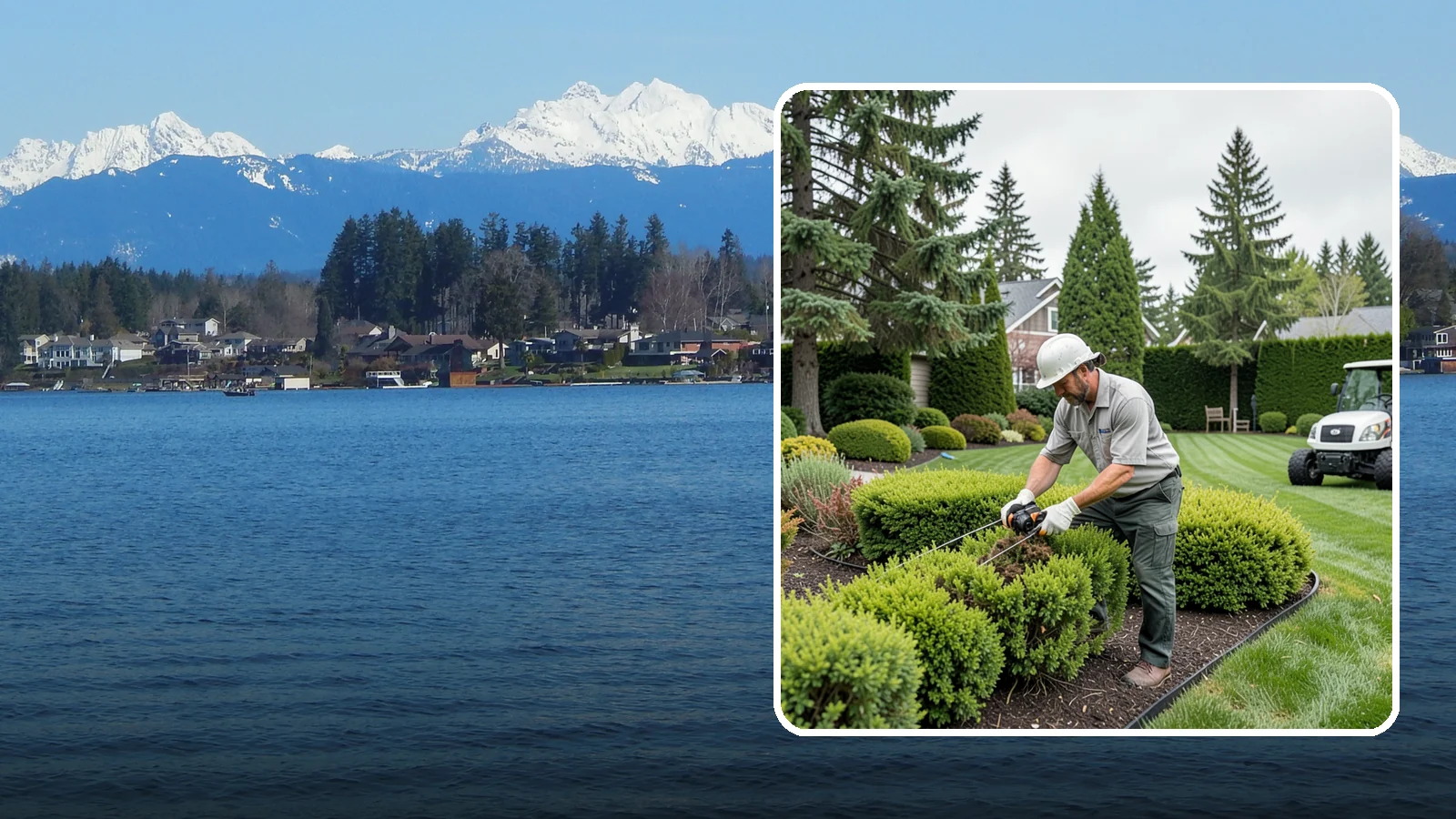
Light annual shearing of heaths and heathers just below spent flowers to keep plants compact and prevent woodiness.
In Lake Stevens, July is the one month that averages under 1.25 inches of rain, at about 0.74 inches (Daymet, 2005-2025). That matters for heather pruning. Heathers are trimmed after flowering, and the plants then need a few dry weeks to push new growth without stress.
Washington Landscaping prunes heather and heath for Lake Stevens homeowners. Our team includes an ISA Certified Arborist. Estimates are free, and you can call or text 425-433-9444 to set up a visit.
How We Prune Heather in Lake Stevens Yards
Heather responds well to light, regular pruning. Skipped for years, it gets woody and bare in the middle. Here is how the work usually goes.
Timing the cut
Winter-blooming heaths (Erica) are usually trimmed right after the flowers fade in spring. Summer-blooming heathers (Calluna) are usually cut in late winter or early spring, before new growth starts. Knowing which type you have decides the timing, so we identify the plant first.
The steps
- Remove dead, damaged or crossing stems.
- Shear off the spent flower spikes, cutting just below them.
- Keep cuts in green, leafy growth. Old bare wood often does not resprout.
- Shape the plant into a low, even mound.
- Clear clippings and debris from the planting bed.
What Lake Stevens conditions mean for you
Per the USDA soil survey, about 88% of rated land in Lake Stevens is moderately well drained, 4% is well drained and 8% is poorly drained. That describes the city as a whole. Your own yard may differ. Heather dislikes soggy roots, so if your plants sit in a wet spot, pruning will not fix the underlying problem. We can point out drainage issues while we work.
July averages only about 0.74 inches of rain here. After a spring or summer trim, new growth may need some watering in dry spells, especially on young plants.
Lake Stevens is in USDA hardiness zone 8b, with an average coldest night around 16.8 F. Heathers handle that range well. Frost can still come earlier or later than average in a given year, so we avoid heavy cuts late in the season that would prompt tender new growth.
Our ISA Certified Arborist can advise on plant health if a heather looks thin or diseased. Call or text 425-433-9444 for a free estimate.
Lake Stevens yard conditions at a glance
| USDA hardiness zone (2023) | 8b |
|---|---|
| Last / first frost (median) | Mar 24 / Nov 10 |
| Tree canopy | 31.4% of the city |
| Share of rain October to April | 78% |
| Dry months (under 1.25 in) | July |
A year in a Lake Stevens yard
- Late winter
- Dormant pruning for most deciduous trees and shrubs, before buds break.
- Spring
- Last frost is usually around Mar 24; in 1 year in 10 it comes on or after Apr 12. Plant frost-tender annuals and vegetables after that.
- Early summer
- Check sprinklers and drip lines before July, the start of the dry months here.
- Summer
- July average 0.7 in. Water deeply and less often; mulch beds to hold moisture.
- Fall
- Aerate, overseed and plant trees and shrubs while the soil is warm; first frost is usually around Nov 10. Winterize irrigation before then.
- Winter
- About 40 days a year freeze at night and thaw by day: keep drains, paver joints and wall weep holes clear.
Dates are medians for the city from Daymet 2005-2025; your yard and any given year can differ.
Sources: Daymet daily weather (NASA/ORNL), 2023 USDA Plant Hardiness Zone Map data (PRISM, Oregon State University), USDA SSURGO soil survey, USGS 3DEP elevation, USFS/NLCD tree canopy 2025, US Census ACS 2020-2024.
Lake Stevens Heather Pruning
Local Service Information
Lake Stevens
A city surrounding the lake of the same name in central Snohomish County.
Benefits
Keeps plants compact and prevents open, woody, leggy growth; Maintains dense foliage and vivid year-round color; Times shearing to each type’s bloom to protect the display; Extends plant life through consistent light renewal; Preserves the tidy carpet effect valued in PNW gardens
Process
Get a Free Heather Pruning Estimate in Lake Stevens
Tell us about your project. We’ll review your needs and provide a customized, no-obligation proposal.
Request a Free Consultation
Complete the form or call our team to discuss your project.
On-Site Assessment
We’ll review your property, discuss your goals, and recommend an appropriate solution.
Receive a Customized Proposal
Receive a detailed estimate outlining the proposed work and pricing.