Shaping Your Outdoors. Surpassing Expectations.
Lake Stevens Hedge Removal
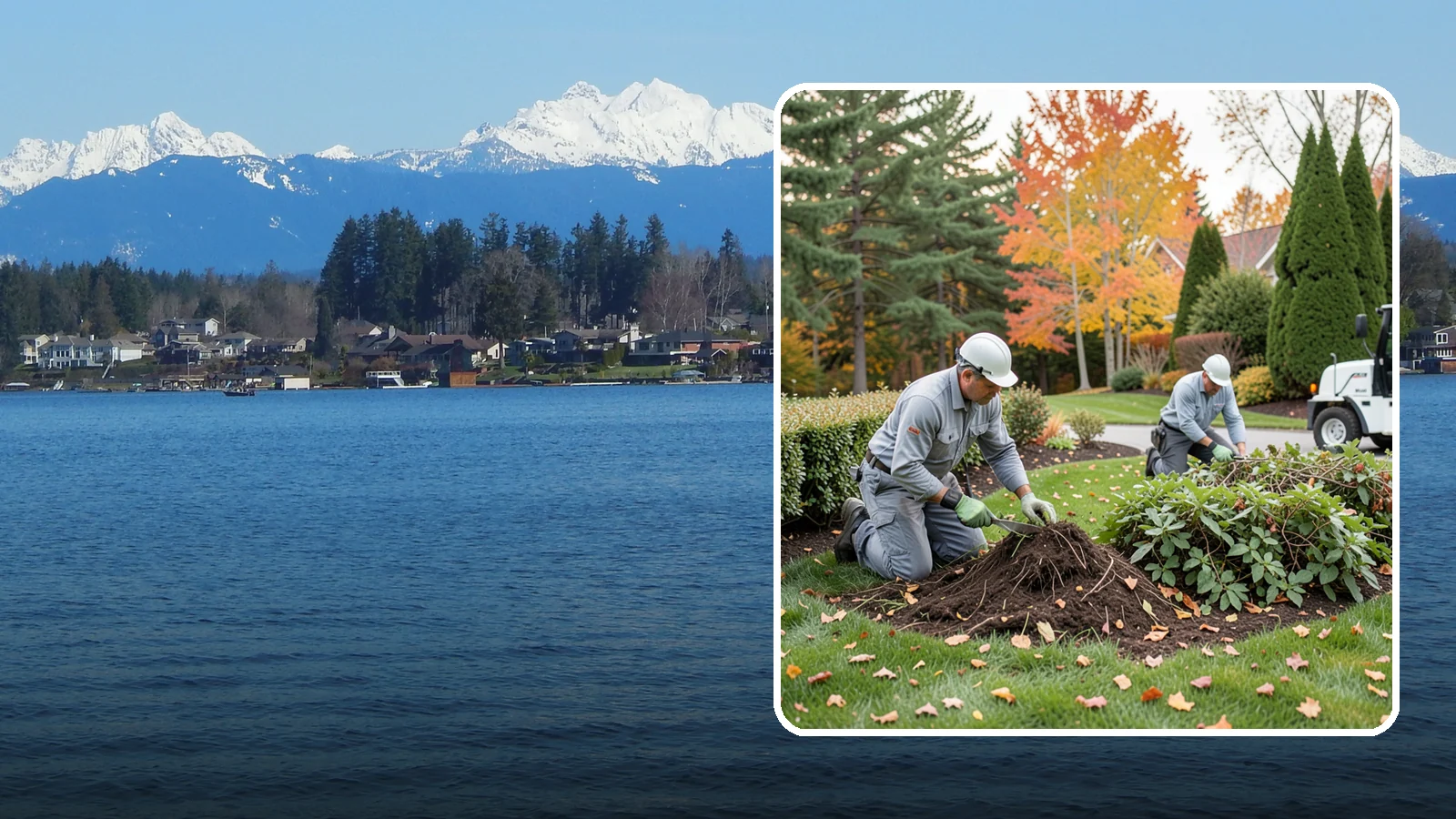
Complete hedge removal that clears tired or overgrown hedges down to the roots and reopens the space.
The hedge that once gave you privacy now leans into the driveway, blocks the light, or has gone bare and woody at the base. Maybe the roots are lifting a path, or trimming it every summer has become a chore you are tired of. Those are the usual reasons people start looking at removal.
Washington Landscaping, based in Bothell, WA, removes hedges for Lake Stevens homeowners. The work covers cutting the plants down, dealing with the stumps and roots, and leaving the strip ready for whatever comes next. Estimates are free.
Hedge removal in Lake Stevens: cause, timing and process
Most hedges reach the point of removal for a few plain reasons. Overgrown laurel or arborvitae often grows far past the size it was planted for. Lower branches shade themselves out and drop their leaves. Roots spread under pavement and along fences. Sometimes the plants are simply diseased or dead in patches, and replacing a few gaps will never match the rest.
Timing matters less for removal than for planting, but local weather still shapes the job. In Lake Stevens the median last spring frost is Mar 24 and the median first fall frost is Nov 10, per Daymet data for 2005-2025. That gives a frost-free growing season of about 225 days. These are medians, so frost can arrive earlier or later in any given year. If you plan to replant right after removal, that window is the one to keep in mind. Removal itself can be done outside it when the ground is workable.
Wet Puget Sound winters make the soil soft, and heavy equipment can rut a lawn. Your own yard may drain differently than the neighborhood next door, so it is worth walking the site before work begins and agreeing on where machines and debris will go.
How the work goes
Crews cut the hedge down in sections and haul the material away. Then comes the harder part, the stumps and roots. You can grind stumps below grade, which is faster and disturbs less soil, or pull them out whole when you need the space fully cleared. Which method fits depends on what you want to plant or build there next. Roots left in place can sprout or rot unevenly, so it helps to decide this early.
Washington Landscaping has an ISA Certified Arborist on staff, which is useful if a hedge is mixed with a larger tree or sits close to one, since cutting roots can affect a nearby tree. Ask about that during the estimate. The company is licensed, bonded and insured ($2M), and financing is available subject to credit approval. To start, call or text 425-433-9444.
Lake Stevens yard conditions at a glance
| Tree canopy | 31.4% of the city |
|---|---|
| Land sloping 15% or more | 12% (40% or more: 0.6%) |
| Soil drainage (rated land) | 4% well, 88% moderately well, 8% poorly drained |
| Share of rain October to April | 78% |
A year in a Lake Stevens yard
- Late winter
- Dormant pruning for most deciduous trees and shrubs, before buds break.
- Spring
- Last frost is usually around Mar 24; in 1 year in 10 it comes on or after Apr 12. Plant frost-tender annuals and vegetables after that.
- Early summer
- Check sprinklers and drip lines before July, the start of the dry months here.
- Summer
- July average 0.7 in. Water deeply and less often; mulch beds to hold moisture.
- Fall
- Aerate, overseed and plant trees and shrubs while the soil is warm; first frost is usually around Nov 10. Winterize irrigation before then.
- Winter
- About 40 days a year freeze at night and thaw by day: keep drains, paver joints and wall weep holes clear.
Dates are medians for the city from Daymet 2005-2025; your yard and any given year can differ.
How Lake Stevens’s soils drain
- Well drained4%
- Moderately well88%
- Poorly drained8%
Share of rated land in the USDA SSURGO soil survey; built-over ground is not rated. A soil check on your lot tells you what you have.
Sources: Daymet daily weather (NASA/ORNL), 2023 USDA Plant Hardiness Zone Map data (PRISM, Oregon State University), USDA SSURGO soil survey, USGS 3DEP elevation, USFS/NLCD tree canopy 2025, US Census ACS 2020-2024.
Lake Stevens Hedge Removal
Local Service Information
Lake Stevens
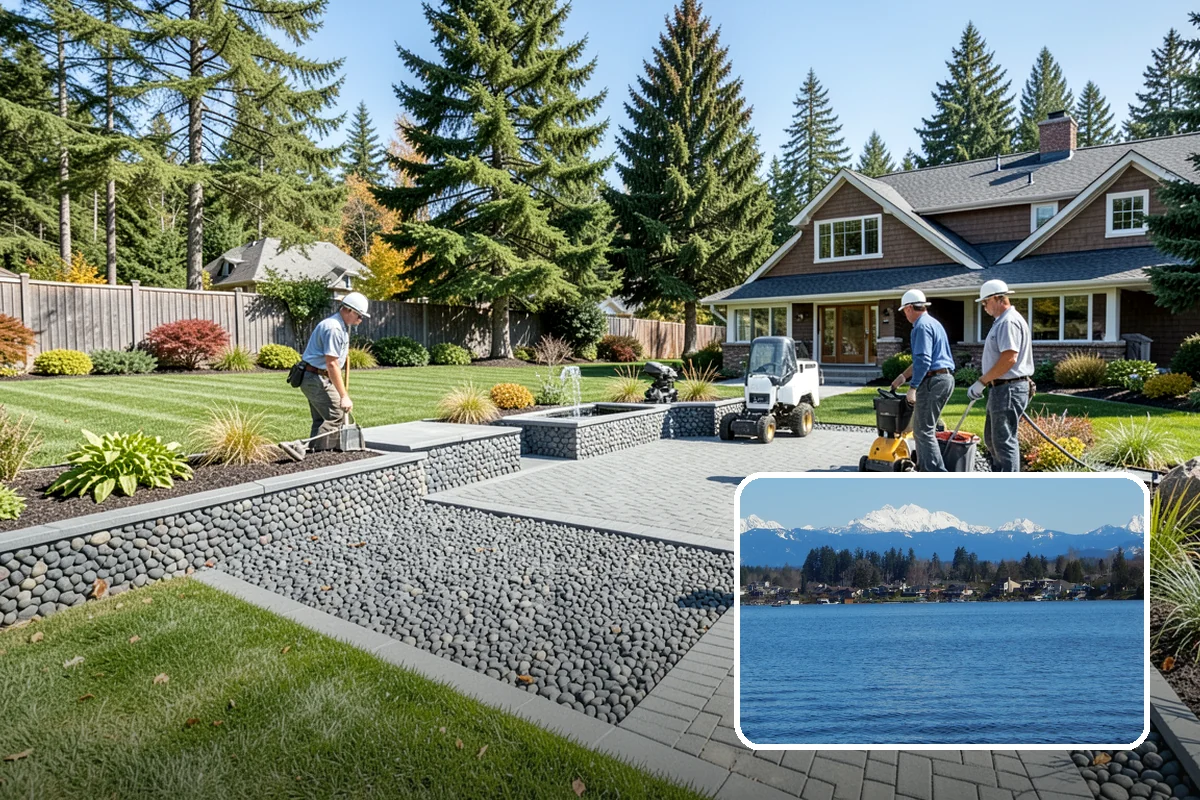
A city surrounding the lake of the same name in central Snohomish County.
Benefits
Removes woody, overgrown, or dead hedges entirely; Stumps and main roots grubbed out to stop resprouting; Reclaims walkways, fence lines, and bed space; Ground left workable for replanting or fencing; Full haul-off of woody debris
Process

Get a Free Hedge Removal Estimate in Lake Stevens
Tell us about your project. We’ll review your needs and provide a customized, no-obligation proposal.
Request a Free Consultation
Complete the form or call our team to discuss your project.
On-Site Assessment
We’ll review your property, discuss your goals, and recommend an appropriate solution.
Receive a Customized Proposal
Receive a detailed estimate outlining the proposed work and pricing.