Shaping Your Outdoors. Surpassing Expectations.

Lake Stevens Irrigation & Maintenance
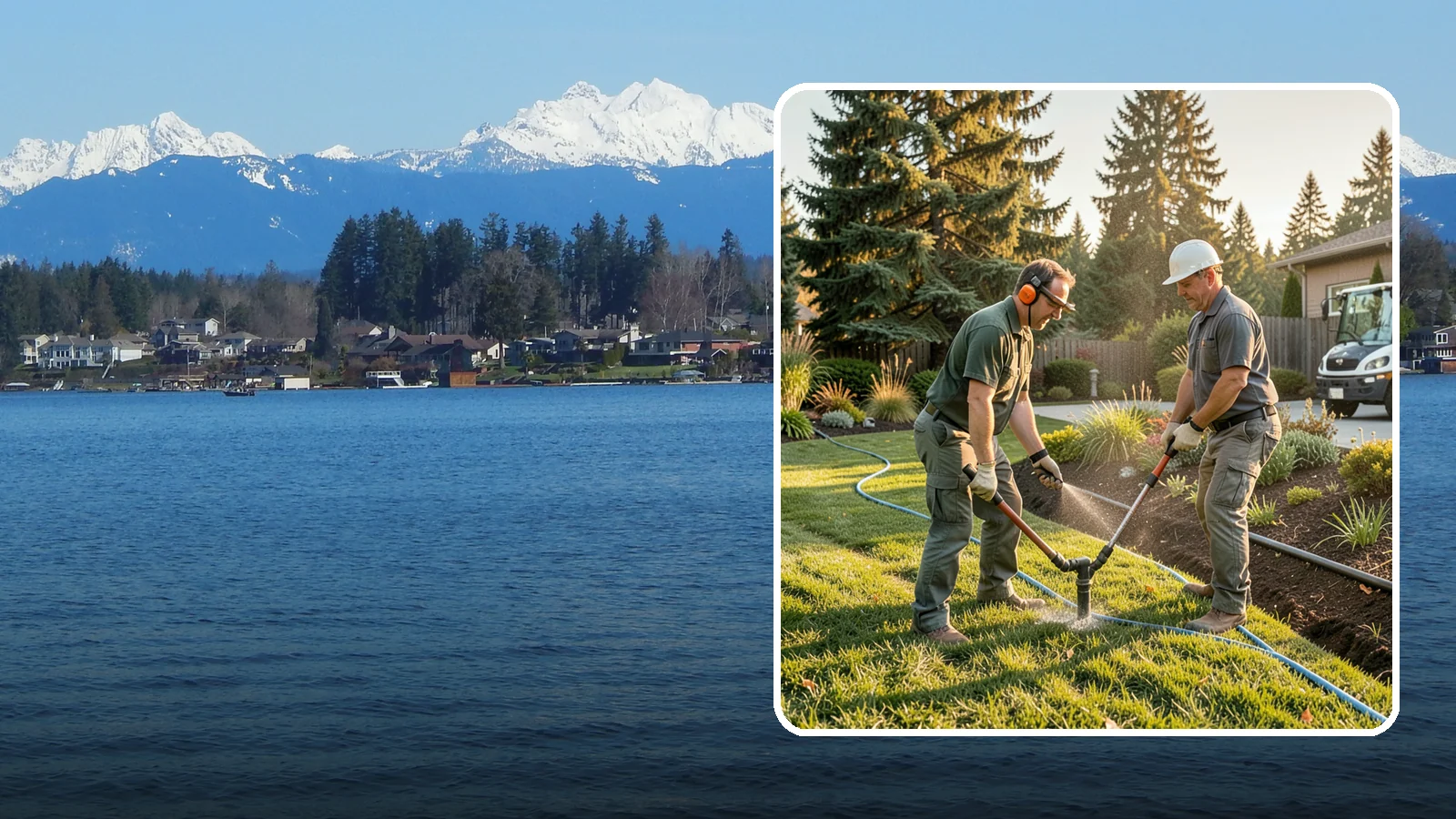
Ongoing irrigation maintenance that keeps your system efficient, leak-free, and watering evenly all season.
For irrigation in Lake Stevens, the useful window runs from late March to early November. The median last spring frost is Mar 24 and the median first fall frost is Nov 10 (Daymet, 2005-2025). Spring startup and testing fit after the frost risk drops. Fall shutdown belongs before the first hard freeze.
Washington Landscaping handles irrigation and ongoing maintenance for homeowners here. July is the driest month, averaging about 0.74 in of rain, so a system that works properly by then matters. Call or text 425-433-9444 to ask about a free estimate.
Planning Irrigation and Maintenance in Lake Stevens
Start with the calendar. Frost dates are medians, so frost can come earlier or later in a given year. A Mar 24 median last frost means pipes and valves can still freeze in early spring. Waiting until the weather settles before a full startup is sensible. The Nov 10 median first frost is the reason to schedule fall shutdown early rather than late. Water left in lines and backflow devices can crack them when it freezes.
What affects scope
Scope depends on what you already have. A new installation needs a plan for zones, since lawns, beds, trees and shrubs need different amounts of water. An older system may need only a check of heads, valves, timers and leaks. Slopes, shade, soil type and plant age all change how long and how often each zone should run. Your own yard may differ from city-wide patterns, so we look at the actual site.
Rain in Lake Stevens drops off sharply in summer. July averages about 0.74 in (Daymet, 2005-2025). Plants that coast through the wet months can stress quickly once that dry stretch begins. New plantings are the most dependent on a working system.
What to expect
A typical visit begins with walking the property and running each zone. We look for broken heads, uneven spray, clogged nozzles, pooling water and dry patches. You get a clear description of what needs repair and what can wait. Estimates are free. Financing is available subject to credit approval. Washington Landscaping has been in business since 2004 and is licensed, bonded and insured ($2M).
Maintenance can be seasonal: spring startup, a midsummer check and adjustment, and fall shutdown. Adjusting the controller schedule as seasons change keeps watering closer to what plants need.
Practical tip: run each zone yourself in late spring while you are outside, and note anything that looks off. Catching a misaligned head before July saves water and plants.
Lake Stevens yard conditions at a glance
| Dry months (under 1.25 in) | July |
|---|---|
| Average yearly precipitation | 50.8 in |
| Last / first frost (median) | Mar 24 / Nov 10 |
| Days that freeze at night and thaw by day | 40 a year |
| Frost-free season | about 225 days |
A year in a Lake Stevens yard
- Late winter
- Dormant pruning for most deciduous trees and shrubs, before buds break.
- Spring
- Last frost is usually around Mar 24; in 1 year in 10 it comes on or after Apr 12. Plant frost-tender annuals and vegetables after that.
- Early summer
- Check sprinklers and drip lines before July, the start of the dry months here.
- Summer
- July average 0.7 in. Water deeply and less often; mulch beds to hold moisture.
- Fall
- Aerate, overseed and plant trees and shrubs while the soil is warm; first frost is usually around Nov 10. Winterize irrigation before then.
- Winter
- About 40 days a year freeze at night and thaw by day: keep drains, paver joints and wall weep holes clear.
Dates are medians for the city from Daymet 2005-2025; your yard and any given year can differ.
How Lake Stevens’s soils drain
- Well drained4%
- Moderately well88%
- Poorly drained8%
Share of rated land in the USDA SSURGO soil survey; built-over ground is not rated. A soil check on your lot tells you what you have.
Sources: Daymet daily weather (NASA/ORNL), 2023 USDA Plant Hardiness Zone Map data (PRISM, Oregon State University), USDA SSURGO soil survey, USGS 3DEP elevation, USFS/NLCD tree canopy 2025, US Census ACS 2020-2024.
Lake Stevens Irrigation & Maintenance
Local Service Information
Lake Stevens
A city surrounding the lake of the same name in central Snohomish County.
Benefits
Even coverage maintained all season; Heads cleaned, adjusted, and tuned; Small leaks caught early; Schedules updated as plants grow; Lower water bills

Process
Irrigation & Maintenance in nearby areas
Also serving Lake Stevens
- Pier and Beam Foundation in Lake Stevensat Washington Construction
Get a Free Irrigation & Maintenance Estimate in Lake Stevens
Tell us about your project. We’ll review your needs and provide a customized, no-obligation proposal.
Request a Free Consultation
Complete the form or call our team to discuss your project.
On-Site Assessment
We’ll review your property, discuss your goals, and recommend an appropriate solution.
Receive a Customized Proposal
Receive a detailed estimate outlining the proposed work and pricing.