Shaping Your Outdoors. Surpassing Expectations.

Lake Stevens Living Wall Installation
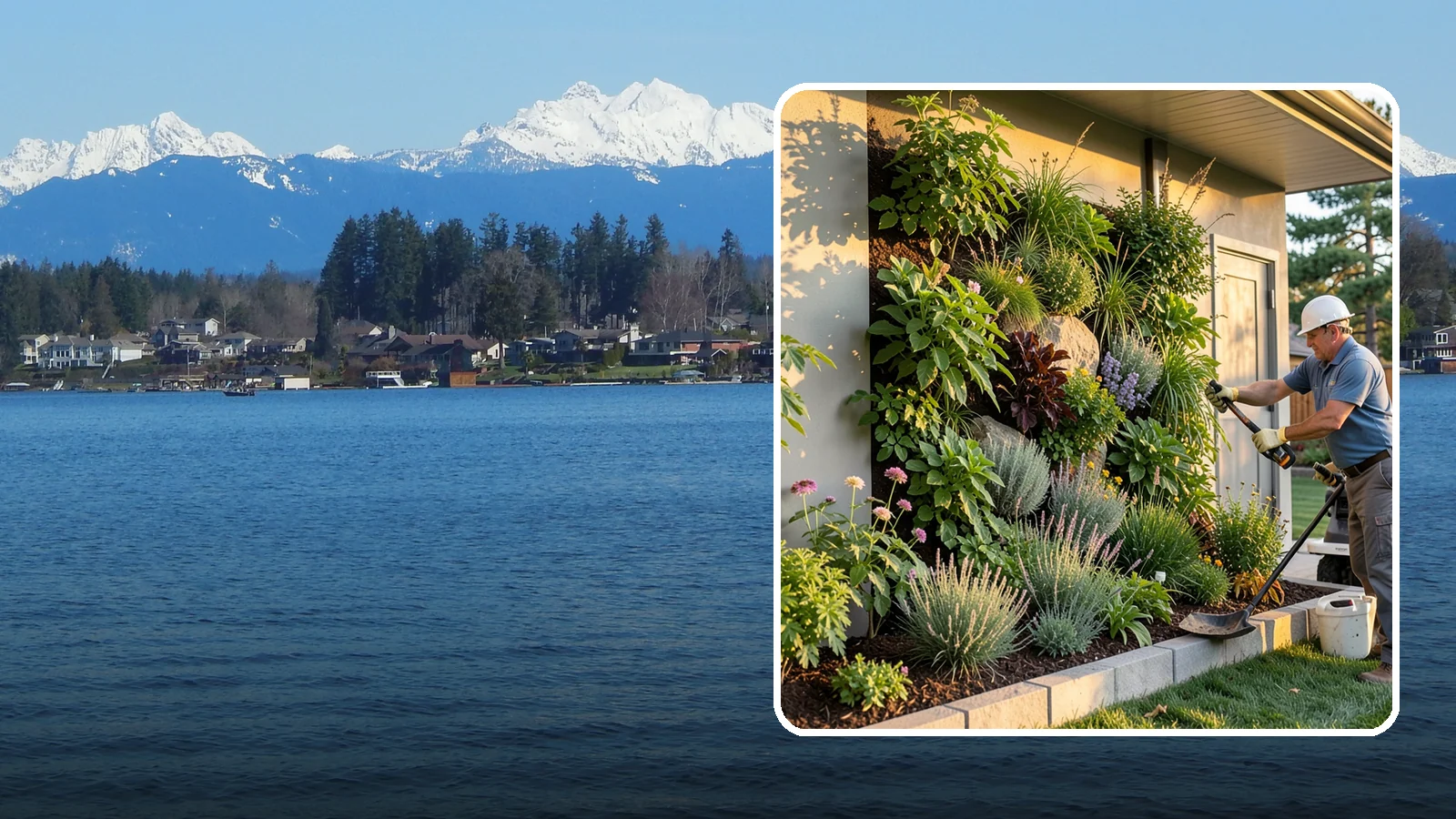
Vertical gardens and green walls that bring lush plantings to walls and fences, indoors or out.
Lake Stevens gets about 0.74 in of rain in July, per Daymet data for 2005-2025. A living wall holds plants in a thin layer of growing medium, so it dries out far faster than a garden bed. That dry month shapes how a wall here should be planned.
Washington Landscaping installs living walls for Lake Stevens homes and buildings. We look at the wall, the light and the water source first. Then we choose plants and set up the system. Estimates are free, and you can call or text 425-433-9444.
Planning a Living Wall in Lake Stevens, WA
A living wall is a vertical frame or panel system filled with plants. The work follows a few plain steps.
1. Choose the wall
We check which way the wall faces and how many hours of sun it gets. A shaded north wall suits ferns and other shade plants. A south or west wall needs tougher plants. We also check the wall surface and what it can support. Fixing a frame to a wall can raise permit questions, so we check permit needs with the city before work starts.
2. Plan the water
This is where Lake Stevens climate matters most. July averages about 0.74 in of rain, per Daymet data for 2005-2025, and that is the one month under 1.25 in. Rain will not keep a vertical planting wet through summer. Most walls need drip irrigation on a timer, with a water source close by. Even so, a wall under an eave or overhang may get no rain at all in other months, so we plan for that too.
3. Pick plants for the zone
The USDA lists Lake Stevens in zone 8b, with an average coldest winter night of about 16.8 F (2023 USDA map, PRISM data). That is an average. A colder night can happen, and a wall exposed to wind may get colder than a ground-level bed. Plants in a wall also have less soil to insulate their roots. We lean toward hardy evergreen ferns, heucheras and similar plants that are standard for Puget Sound walls.
4. Install and set up
- Mount the frame or panels to the wall
- Fill them with growing medium
- Plant and connect the irrigation
- Test the watering before we finish
Living walls need regular care. That includes checking the drip lines, trimming and replacing any plants that fail. We can talk through this at your free estimate.
Financing is available, subject to credit approval. Washington Landscaping has been in business since 2004 and is licensed, bonded and insured ($2M).
Lake Stevens yard conditions at a glance
| USDA hardiness zone (2023) | 8b |
|---|---|
| Last / first frost (median) | Mar 24 / Nov 10 |
| Late last frost (1 year in 10) | on or after Apr 12 |
| Frost-free season | about 225 days |
| Dry months (under 1.25 in) | July |
| Soil drainage (rated land) | 4% well, 88% moderately well, 8% poorly drained |
A year in a Lake Stevens yard
- Late winter
- Dormant pruning for most deciduous trees and shrubs, before buds break.
- Spring
- Last frost is usually around Mar 24; in 1 year in 10 it comes on or after Apr 12. Plant frost-tender annuals and vegetables after that.
- Early summer
- Check sprinklers and drip lines before July, the start of the dry months here.
- Summer
- July average 0.7 in. Water deeply and less often; mulch beds to hold moisture.
- Fall
- Aerate, overseed and plant trees and shrubs while the soil is warm; first frost is usually around Nov 10. Winterize irrigation before then.
- Winter
- About 40 days a year freeze at night and thaw by day: keep drains, paver joints and wall weep holes clear.
Dates are medians for the city from Daymet 2005-2025; your yard and any given year can differ.
How Lake Stevens’s soils drain
- Well drained4%
- Moderately well88%
- Poorly drained8%
Share of rated land in the USDA SSURGO soil survey; built-over ground is not rated. A soil check on your lot tells you what you have.
Sources: Daymet daily weather (NASA/ORNL), 2023 USDA Plant Hardiness Zone Map data (PRISM, Oregon State University), USDA SSURGO soil survey, USGS 3DEP elevation, USFS/NLCD tree canopy 2025, US Census ACS 2020-2024.
Lake Stevens Living Wall Installation
Local Service Information
Lake Stevens
A city surrounding the lake of the same name in central Snohomish County.
Benefits
Greenery where there is no ground; A dramatic vertical focal point; Proper structure and irrigation; Exterior accent or interior feature; Improves air and ambiance
Process
Living Wall Installation in nearby areas
Also serving Lake Stevens
- Residential Construction in Lake Stevensat Washington Construction
- Stucco House Washing in Lake Stevensat Washington Pressure Washing
- Partial Roof Replacement in Lake Stevensat Washington Roofing
Get a Free Living Wall Installation Estimate in Lake Stevens
Tell us about your project. We’ll review your needs and provide a customized, no-obligation proposal.
Request a Free Consultation
Complete the form or call our team to discuss your project.
On-Site Assessment
We’ll review your property, discuss your goals, and recommend an appropriate solution.
Receive a Customized Proposal
Receive a detailed estimate outlining the proposed work and pricing.