Shaping Your Outdoors. Surpassing Expectations.
Lake Stevens Ornamental Tree Planting
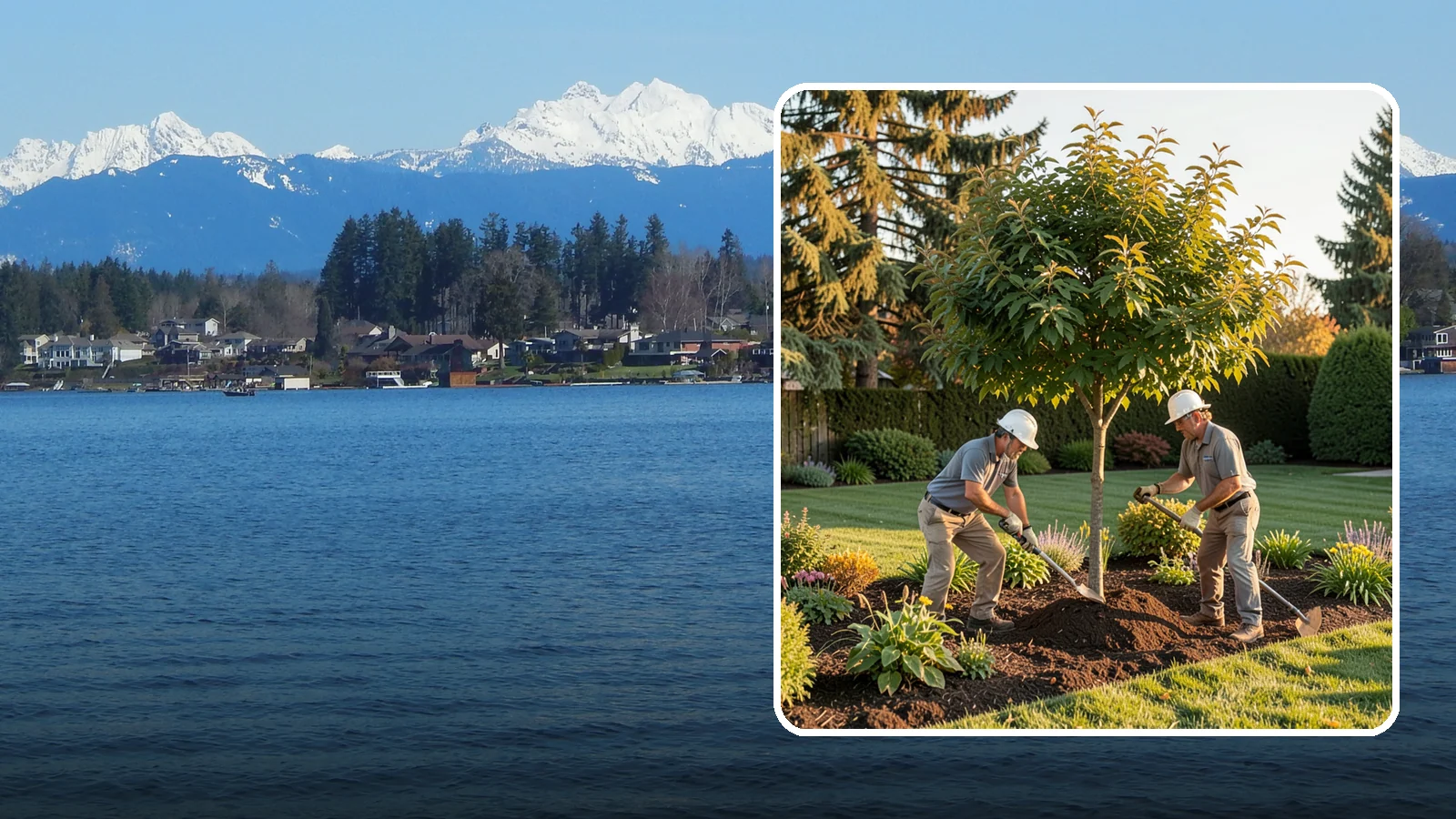
Specimen and ornamental trees planted for shade, privacy, and standout seasonal beauty.
When is the right time to plant an ornamental tree in Lake Stevens? For most homeowners, fall or early spring works well, because cool, wet weather helps young roots settle before summer. Planting just ahead of July, the driest month, means more watering work for you.
Washington Landscaping plants ornamental trees for Lake Stevens homeowners, and an ISA Certified Arborist is on staff to help match a tree to your yard. Call or text 425-433-9444 for a free estimate.
Planting Ornamental Trees in Lake Stevens: What to Know
Three local details shape how an ornamental tree should be chosen and planted here. Each one affects what you should do or expect.
Choose for zone 8b
The 2023 USDA map places Lake Stevens in zone 8b, with an average coldest winter night of about 16.8 F. That is an average, and a single winter can run colder. Japanese maples, serviceberry, dogwood and many flowering cherries are commonly grown in this range. Tell us if your yard is exposed to wind or sits low where cold air settles, since those spots can be harsher than the zone suggests. Our certified arborist can help you weigh the options.
Check your drainage first
Per the USDA SSURGO soil survey, about 4% of rated land in Lake Stevens is well drained, 88% is moderately well drained and 8% is poorly drained. That describes the city as a whole. Your own yard may differ, even from one side of the lot to the other. Moderately well drained soil can stay wet after heavy rain, so many trees do better planted with the root flare at or slightly above grade, not set deep. If water pools in your yard, we would look at that before choosing a species, because few ornamentals tolerate standing water for long.
Plan for the first dry summer
July averages about 0.74 in of rain, based on Daymet data from 2005 to 2025. A new tree has a small root system and cannot reach deep moisture yet. Expect to water it regularly through its first summers, even if the soil felt damp in spring. A layer of mulch, kept back from the trunk, helps hold moisture.
What to expect from us
- A free estimate before any work begins
- Species advice from an ISA Certified Arborist
- Licensed, bonded and insured work ($2M), with financing available subject to credit approval
Washington Landscaping has been in business since 2004. Call or text 425-433-9444 to talk through your yard.
Lake Stevens yard conditions at a glance
| USDA hardiness zone (2023) | 8b |
|---|---|
| Last / first frost (median) | Mar 24 / Nov 10 |
| Late last frost (1 year in 10) | on or after Apr 12 |
| Frost-free season | about 225 days |
| Dry months (under 1.25 in) | July |
| Soil drainage (rated land) | 4% well, 88% moderately well, 8% poorly drained |
A year in a Lake Stevens yard
- Late winter
- Dormant pruning for most deciduous trees and shrubs, before buds break.
- Spring
- Last frost is usually around Mar 24; in 1 year in 10 it comes on or after Apr 12. Plant frost-tender annuals and vegetables after that.
- Early summer
- Check sprinklers and drip lines before July, the start of the dry months here.
- Summer
- July average 0.7 in. Water deeply and less often; mulch beds to hold moisture.
- Fall
- Aerate, overseed and plant trees and shrubs while the soil is warm; first frost is usually around Nov 10. Winterize irrigation before then.
- Winter
- About 40 days a year freeze at night and thaw by day: keep drains, paver joints and wall weep holes clear.
Dates are medians for the city from Daymet 2005-2025; your yard and any given year can differ.
How Lake Stevens’s soils drain
- Well drained4%
- Moderately well88%
- Poorly drained8%
Share of rated land in the USDA SSURGO soil survey; built-over ground is not rated. A soil check on your lot tells you what you have.
Sources: Daymet daily weather (NASA/ORNL), 2023 USDA Plant Hardiness Zone Map data (PRISM, Oregon State University), USDA SSURGO soil survey, USGS 3DEP elevation, USFS/NLCD tree canopy 2025, US Census ACS 2020-2024.
Lake Stevens Ornamental Tree Planting
Local Service Information
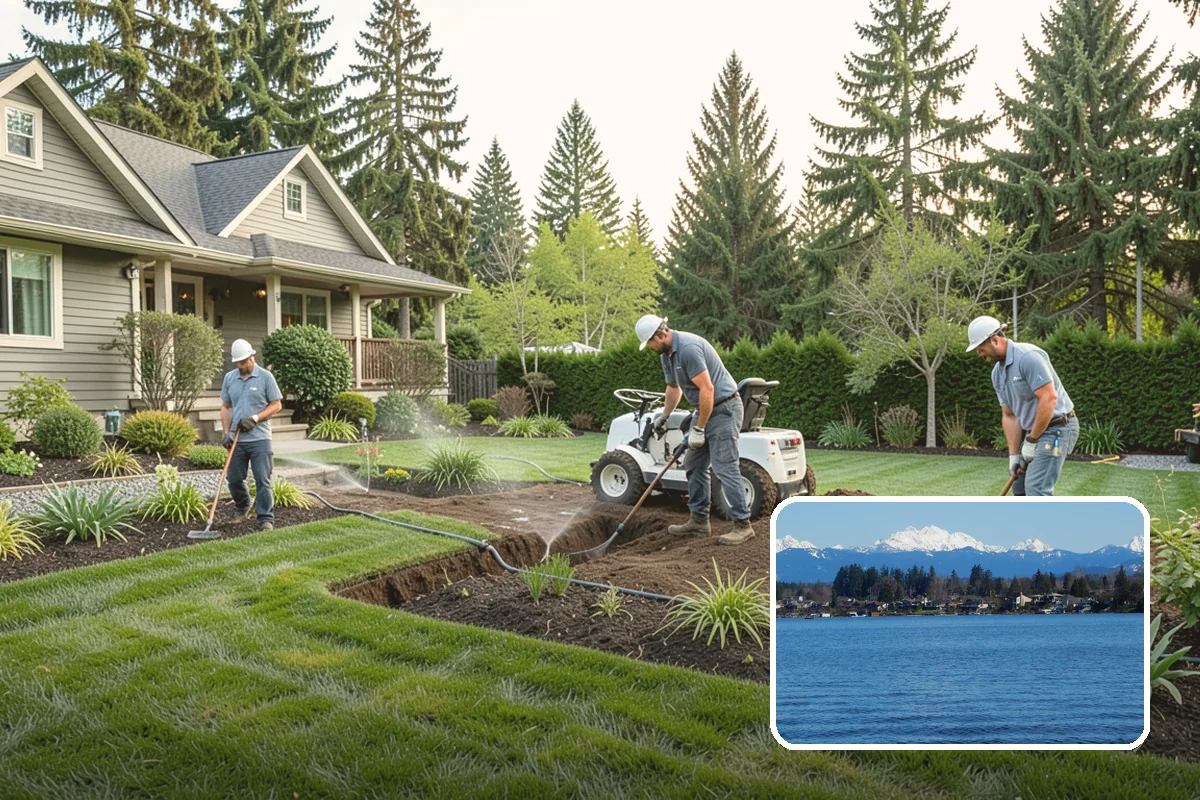
Lake Stevens
A city surrounding the lake of the same name in central Snohomish County.
Benefits
A striking focal point for the yard; Species matched to space and soil; Correct planting depth and hole prep; Shade, privacy, or seasonal color; Long-term landscape value

Process

Ornamental Tree Planting in nearby areas
Also serving Lake Stevens
- Reforestation planting in Lake Stevensat Washington Tree Services
Get a Free Ornamental Tree Planting Estimate in Lake Stevens
Tell us about your project. We’ll review your needs and provide a customized, no-obligation proposal.
Request a Free Consultation
Complete the form or call our team to discuss your project.
On-Site Assessment
We’ll review your property, discuss your goals, and recommend an appropriate solution.
Receive a Customized Proposal
Receive a detailed estimate outlining the proposed work and pricing.