Shaping Your Outdoors. Surpassing Expectations.

Lake Stevens Photinia Trimming
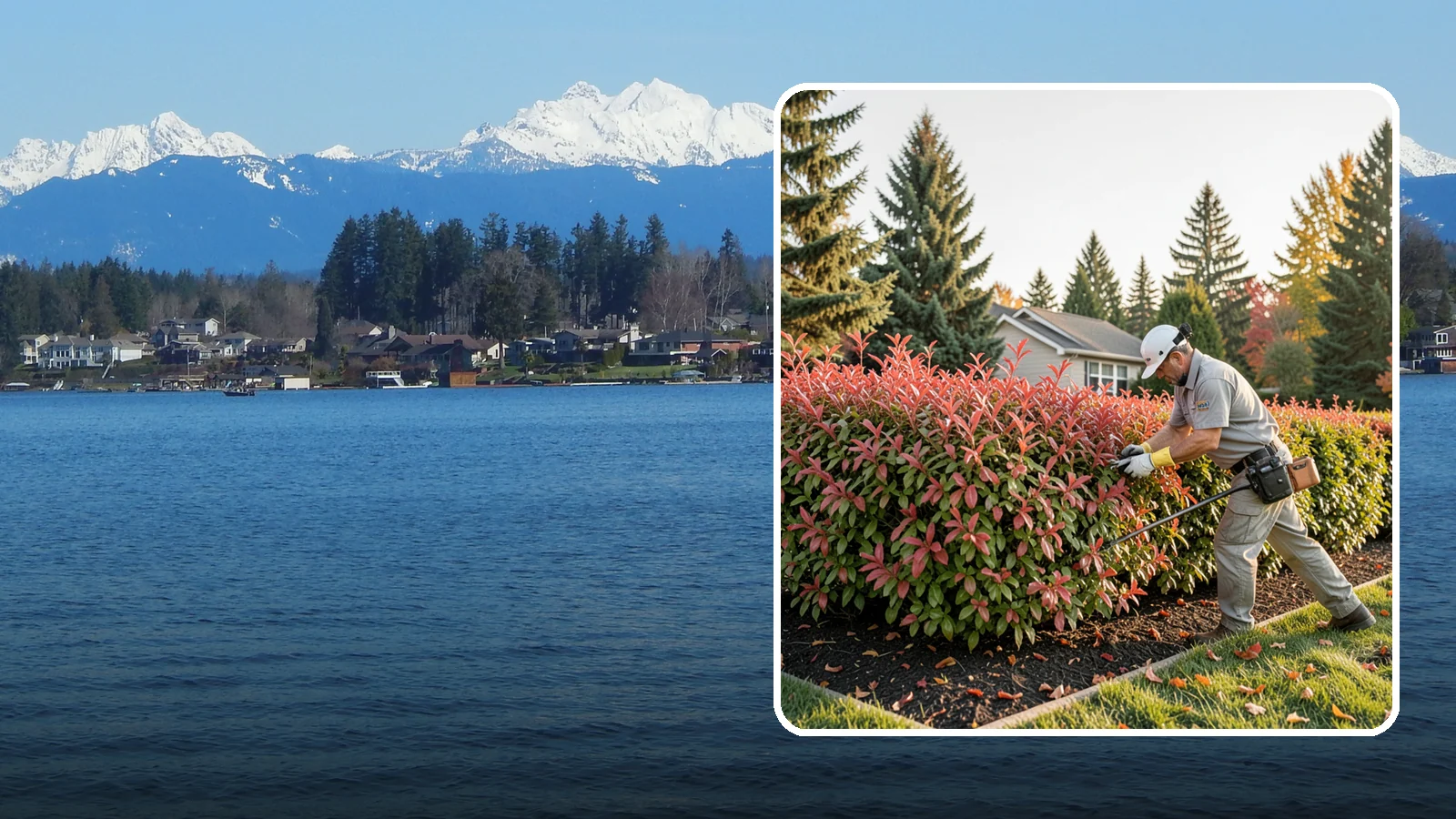
Strategic photinia trimming that triggers the vivid red new growth this hedge is famous for while managing leaf-spot disease.
Your photinia has gotten tall and leggy. Maybe the red new growth is out of reach, the hedge is leaning into the walkway, or the inner branches look bare and the leaves have spots. Photinia grows fast, and a hedge that was tidy last year can look ragged now.
Washington Landscaping trims photinia in Lake Stevens. We have an ISA Certified Arborist on staff, and estimates are free. Call or text 425-433-9444 to set up a visit.
Why Lake Stevens Photinia Needs Timed, Careful Trimming
Photinia is a vigorous evergreen shrub. It puts out bright red new leaves after each cut, and that flush is why many people grow it. It is also why a hedge gets overgrown so quickly. If it is only sheared on the surface, the outer leaves thicken and shade the inside. The inner branches then go bare, and the hedge becomes a thin green shell.
Timing matters because of frost. In Lake Stevens the median last spring frost (32 F) falls around Mar 24, per Daymet data for 2005-2025. Frost can come earlier or later in any given year. Heavy trimming pushes tender new growth, and a late frost can burn it. So we do not cut hard while frost is still possible. The same data shows a frost-free season of about 225 days, from about Mar 24 to Nov 10. That leaves a long window for trimming and for the hedge to regrow before cold returns.
Moisture is the second concern. Photinia is prone to leaf spot, and wet Puget Sound springs and falls help it spread. Dense growth that stays damp makes it worse. Opening up the hedge so air moves through it is standard practice. July is the driest month here, averaging about 0.74 in of rain. New growth after a cut can use steady watering then. Your own yard may be wetter or drier than the city average.
How the work goes
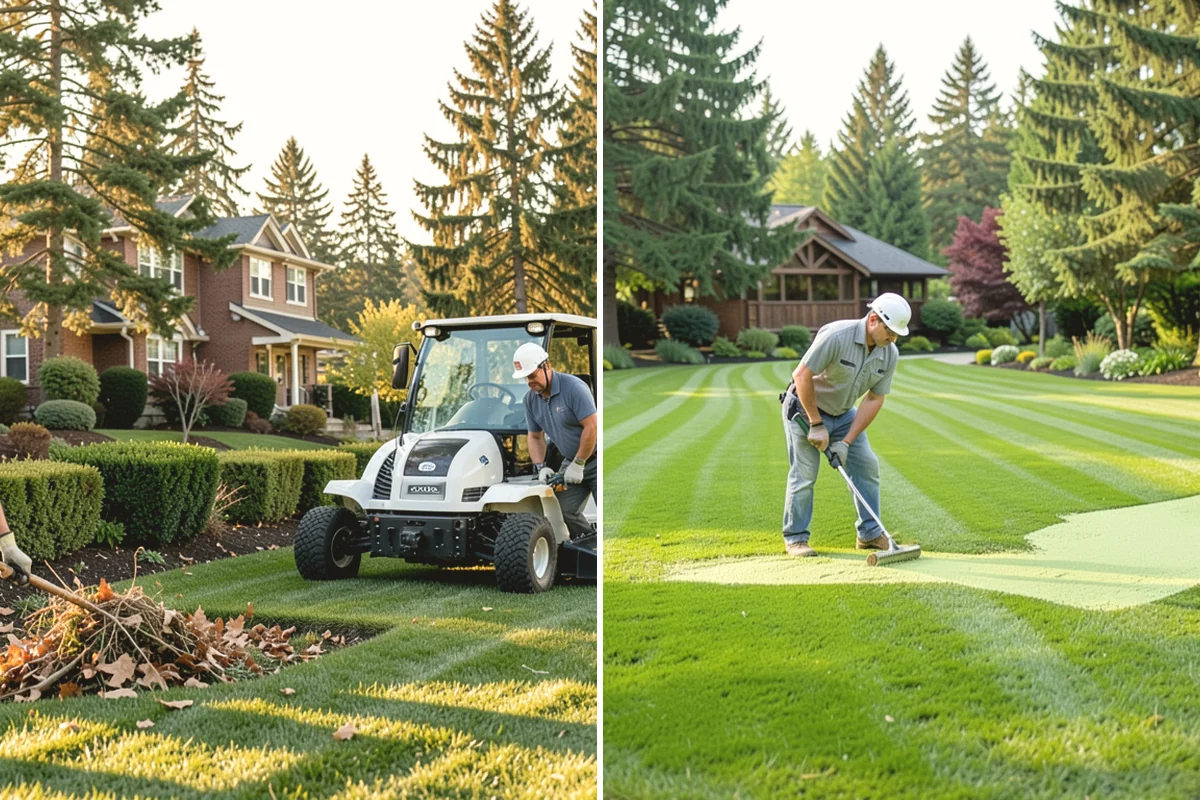
We start by looking at the shape and the health of the plants. We remove dead and crossing branches. We thin where the growth is crowded, and we shorten the height and width to the size you want. We aim for a hedge that is slightly wider at the base than the top, so light reaches the lower leaves. If the plants are badly overgrown, we may suggest staging the reduction over more than one season rather than cutting everything at once. Our arborist can advise on that. We also haul away the clippings.
If you are weighing options, ask about financing, which is subject to credit approval. We are licensed, bonded and insured.
Lake Stevens yard conditions at a glance
| USDA hardiness zone (2023) | 8b |
|---|---|
| Last / first frost (median) | Mar 24 / Nov 10 |
| Tree canopy | 31.4% of the city |
| Share of rain October to April | 78% |
| Dry months (under 1.25 in) | July |
A year in a Lake Stevens yard
- Late winter
- Dormant pruning for most deciduous trees and shrubs, before buds break.
- Spring
- Last frost is usually around Mar 24; in 1 year in 10 it comes on or after Apr 12. Plant frost-tender annuals and vegetables after that.
- Early summer
- Check sprinklers and drip lines before July, the start of the dry months here.
- Summer
- July average 0.7 in. Water deeply and less often; mulch beds to hold moisture.
- Fall
- Aerate, overseed and plant trees and shrubs while the soil is warm; first frost is usually around Nov 10. Winterize irrigation before then.
- Winter
- About 40 days a year freeze at night and thaw by day: keep drains, paver joints and wall weep holes clear.
Dates are medians for the city from Daymet 2005-2025; your yard and any given year can differ.
Sources: Daymet daily weather (NASA/ORNL), 2023 USDA Plant Hardiness Zone Map data (PRISM, Oregon State University), USDA SSURGO soil survey, USGS 3DEP elevation, USFS/NLCD tree canopy 2025, US Census ACS 2020-2024.
Lake Stevens Photinia Trimming
Local Service Information
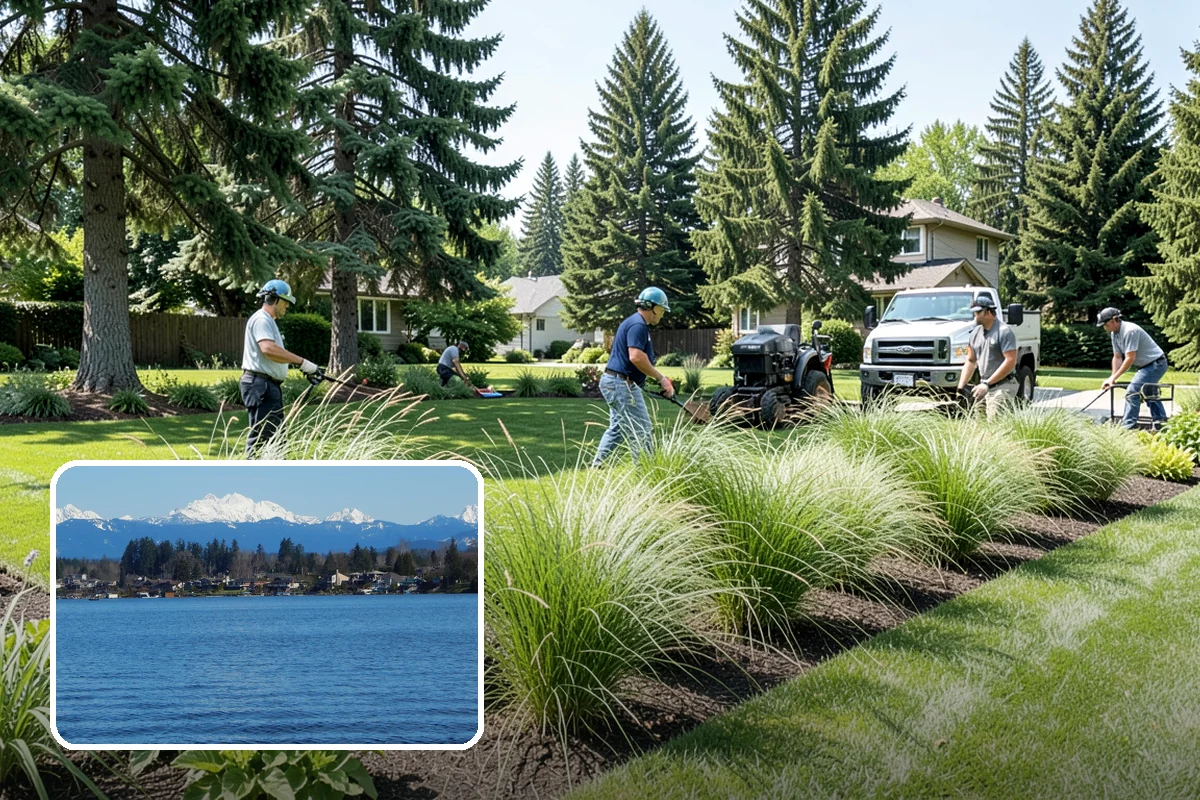
Lake Stevens
A city surrounding the lake of the same name in central Snohomish County.
Benefits
Triggers the signature vivid red new-growth flush; Times cuts to keep fresh color coming; Reduces Entomosporium leaf spot through airflow; Removes infected foliage to slow disease spread; Maintains a colorful, healthy screening hedge
Process
Photinia Trimming in nearby areas
Also serving Lake Stevens
- Crown thinning in Lake Stevensat Washington Tree Services
Get a Free Photinia Trimming Estimate in Lake Stevens
Tell us about your project. We’ll review your needs and provide a customized, no-obligation proposal.
Request a Free Consultation
Complete the form or call our team to discuss your project.
On-Site Assessment
We’ll review your property, discuss your goals, and recommend an appropriate solution.
Receive a Customized Proposal
Receive a detailed estimate outlining the proposed work and pricing.