Shaping Your Outdoors. Surpassing Expectations.

Lake Stevens Shrub Removal
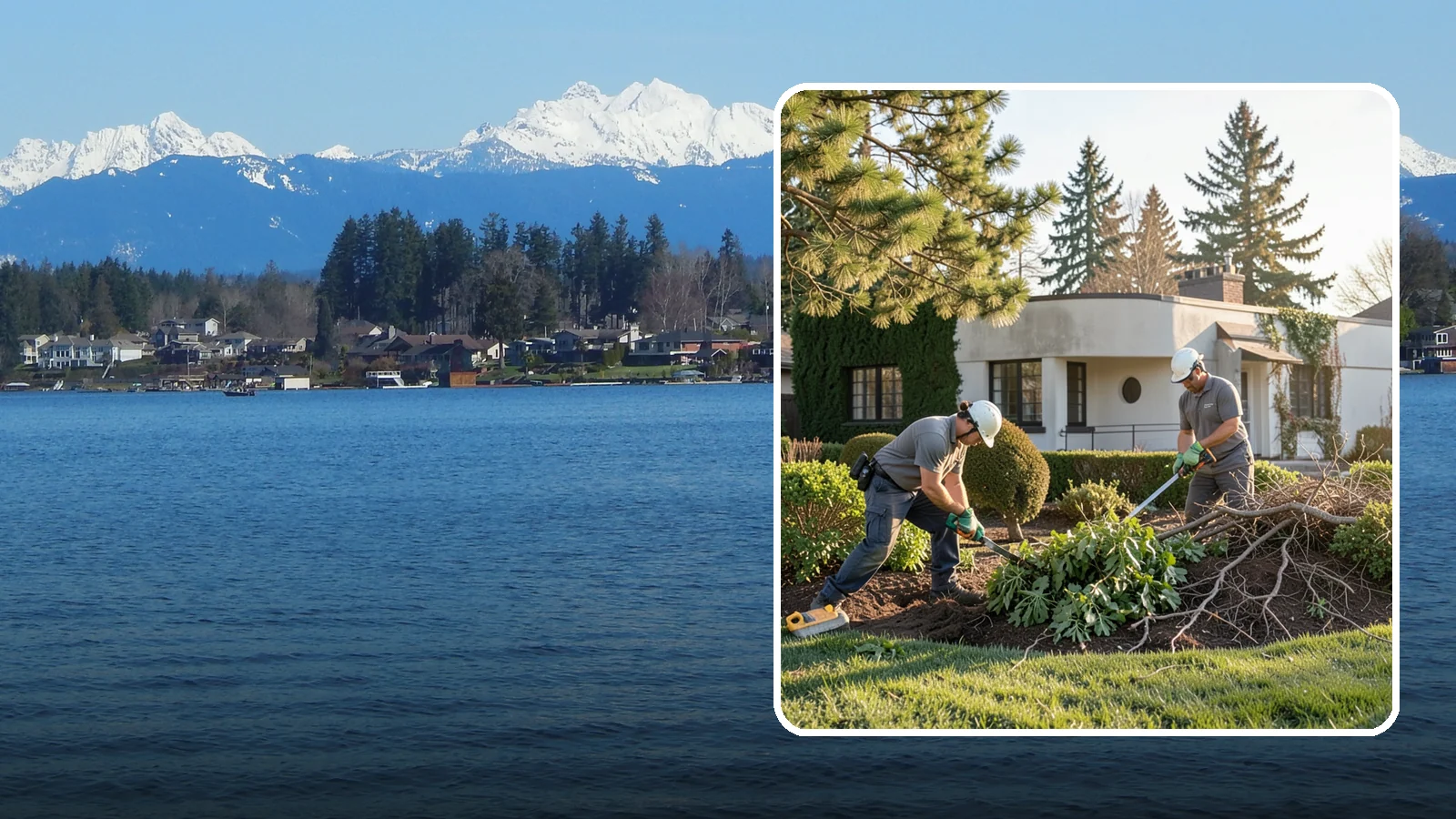
Complete removal of overgrown, dead, or unwanted shrubs and bushes, including roots and cleanup.
Can you just pull an old shrub out yourself in Lake Stevens? Sometimes, if it is small and shallow-rooted. Large, overgrown or long-established shrubs are harder, because the root ball is heavy and the roots can run under walkways, lawn and beds.
Washington Landscaping removes shrubs by cutting them down and digging out the roots so the space can be replanted, seeded or paved. Our team includes an ISA Certified Arborist, which helps when a shrub is really a small tree. Call or text 425-433-9444 for a free estimate.
Shrub Removal in Lake Stevens: What to Plan For
Decide what happens to the space
Removal is only half the job. Before anyone digs, decide what goes there next. A new shrub bed needs different prep than a lawn patch, and a patio base needs deeper root removal than either. Stump-sized roots left in the ground can sprout again or settle and leave a dip later. Telling us the plan up front lets us choose how much root to take out.
Timing around the growing season
Lake Stevens has a frost-free growing season of about 225 days, running from roughly Mar 24 to Nov 10. These are medians, so frost can come earlier or later in a given year. That long window means removal and replanting can often be scheduled across most of the year. If you want to replant right away, spring and fall are the usual choices in the Puget Sound region, since cooler, wetter weather helps new roots settle. Wet winter soil is heavy and easy to compact, so we may suggest waiting if the ground is saturated.
Shrub or small tree?
Tree canopy covers about 31.4% of Lake Stevens, per USFS/NLCD 2025. Many yards have mature trees nearby, and their roots matter. Digging out a shrub close to a larger tree can cut into that tree's roots. Our ISA Certified Arborist can look at the setting and advise how to remove a shrub without harming a tree you want to keep. Some plants sold as shrubs also grow into small trees, and those need a different approach.
Choosing replacements
Lake Stevens falls in USDA hardiness zone 8b, with an average coldest winter night of about 16.8 F (2023 USDA map). That is a useful guide when you pick replacement shrubs. Your own yard may be colder, shadier or wetter than the city average, so we match plants to the spot.
Lake Stevens yard conditions at a glance
| Tree canopy | 31.4% of the city |
|---|---|
| Land sloping 15% or more | 12% (40% or more: 0.6%) |
| Soil drainage (rated land) | 4% well, 88% moderately well, 8% poorly drained |
| Share of rain October to April | 78% |
A year in a Lake Stevens yard
- Late winter
- Dormant pruning for most deciduous trees and shrubs, before buds break.
- Spring
- Last frost is usually around Mar 24; in 1 year in 10 it comes on or after Apr 12. Plant frost-tender annuals and vegetables after that.
- Early summer
- Check sprinklers and drip lines before July, the start of the dry months here.
- Summer
- July average 0.7 in. Water deeply and less often; mulch beds to hold moisture.
- Fall
- Aerate, overseed and plant trees and shrubs while the soil is warm; first frost is usually around Nov 10. Winterize irrigation before then.
- Winter
- About 40 days a year freeze at night and thaw by day: keep drains, paver joints and wall weep holes clear.
Dates are medians for the city from Daymet 2005-2025; your yard and any given year can differ.
How Lake Stevens’s soils drain
- Well drained4%
- Moderately well88%
- Poorly drained8%
Share of rated land in the USDA SSURGO soil survey; built-over ground is not rated. A soil check on your lot tells you what you have.
Sources: Daymet daily weather (NASA/ORNL), 2023 USDA Plant Hardiness Zone Map data (PRISM, Oregon State University), USDA SSURGO soil survey, USGS 3DEP elevation, USFS/NLCD tree canopy 2025, US Census ACS 2020-2024.
Lake Stevens Shrub Removal
Local Service Information
Lake Stevens
A city surrounding the lake of the same name in central Snohomish County.
Benefits
Removes overgrown and unwanted shrubs; Roots dug out to prevent resprouting; Opens up space and views; All debris hauled away; Area left ready for replanting
Process

Shrub Removal in nearby areas
Also serving Lake Stevens
- Root collar excavation in Lake Stevensat Washington Tree Services
Get a Free Shrub Removal Estimate in Lake Stevens
Tell us about your project. We’ll review your needs and provide a customized, no-obligation proposal.
Request a Free Consultation
Complete the form or call our team to discuss your project.
On-Site Assessment
We’ll review your property, discuss your goals, and recommend an appropriate solution.
Receive a Customized Proposal
Receive a detailed estimate outlining the proposed work and pricing.