Shaping Your Outdoors. Surpassing Expectations.

Renton Japanese Maple Pruning
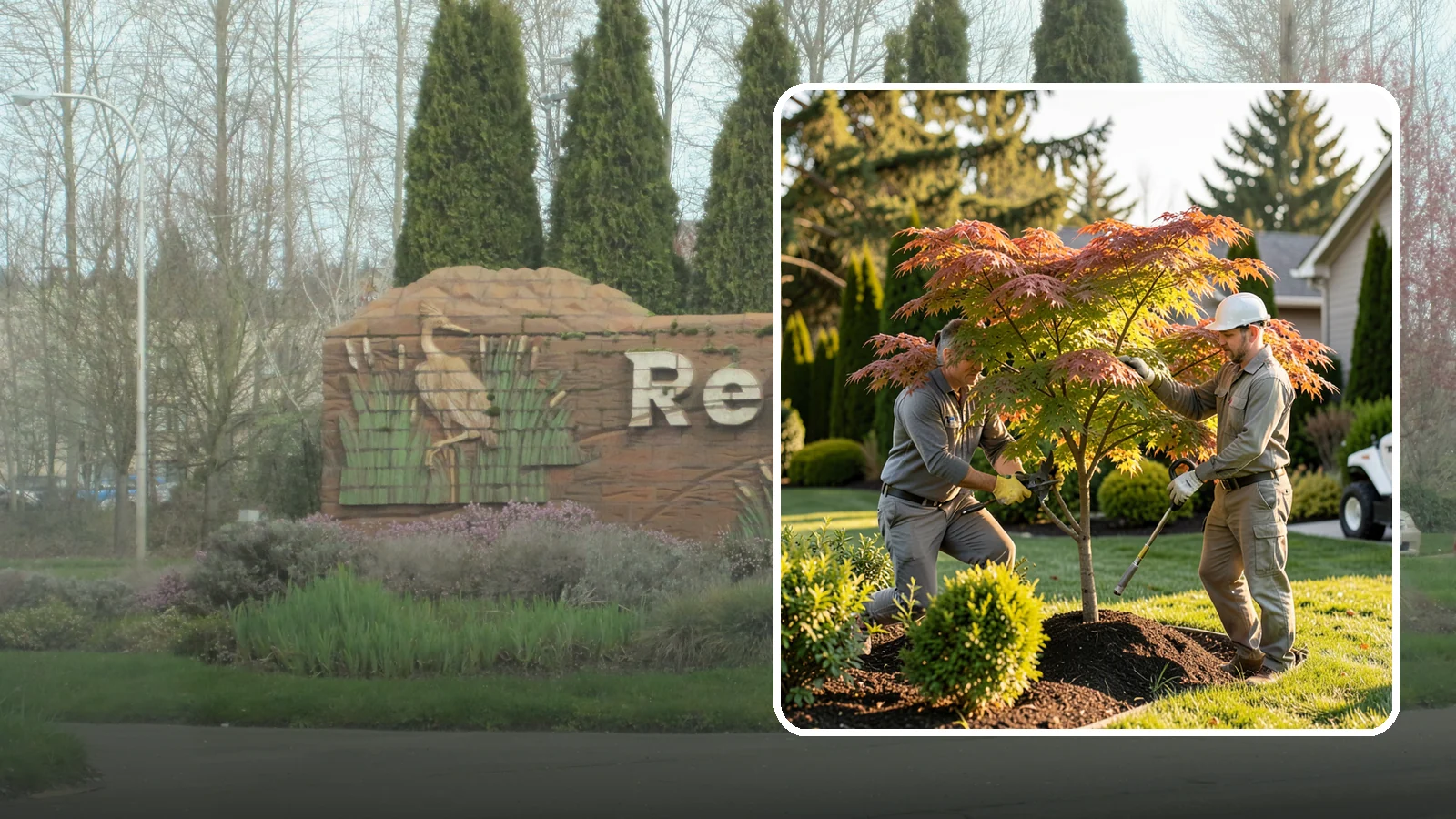
Careful, artful pruning that preserves the delicate layered form Japanese maples are prized for.
For most Japanese maples in Renton, the main structural pruning makes sense in late fall through winter, once the leaves have dropped and the branch framework is easy to read. Light trimming can also happen in early summer. Avoid cutting hard during July and August, the two driest months here, when a freshly pruned tree is already under stress.
Washington Landscaping has an ISA Certified Arborist on staff, which matters for a tree this slow-growing and this easy to spoil with heavy cuts. Call or text 425-433-9444 for a free estimate.
Planning Japanese Maple Pruning in Renton
Start by deciding what you want the tree to look like. A good Japanese maple pruning job is mostly restraint. The goal is usually to show off the branch structure, not to shrink the tree. We look at the whole tree first, then pick which branches to remove.
What affects the scope
Size and age are the biggest factors. A young tree may need only a few cuts to guide its shape. An older tree may have crossing limbs, dead twigs, and dense inner growth that blocks light and air. Access matters too, since a tree tucked behind a fence or over a patio takes more care to work on.
Neighboring trees also play a part. Per the USFS/NLCD 2025 data, tree canopy covers about 25.2% of Renton. If your maple sits under larger conifers or maples, it may be reaching for light and growing leggy. That can change which branches we thin and how much. Your own yard may differ from the city average, so we judge it on site.
Cold exposure is another factor. Renton is rated USDA zone 9a, with parts of the city from 8b to 9a, so most Japanese maples are hardy here. Still, a tree with frost-damaged tips may need those tips cut back once new growth shows what survived. Frost timing varies from year to year, so we avoid assuming a fixed date.
What to expect
Expect selective cuts made just outside the branch collar, with no flat topping or shearing. We remove deadwood, crossing or rubbing branches, and some interior twigs. Cut debris is cleaned up afterward. The tree should look lighter and more open, not stripped.
A pruned maple often needs only light attention the next year. Heavy corrections, if needed, are better spread over more than one season than done all at once.
Practical tip: take a photo of the tree in full leaf this summer, then another in winter. Comparing them shows which branches crowd the canopy, and you can point to them when we walk the tree together.
Renton yard conditions at a glance
| USDA hardiness zone (2023) | 9a (parts 8b to 9a) |
|---|---|
| Last / first frost (median) | Mar 19 / Nov 17 |
| Tree canopy | 25.2% of the city |
| Share of rain October to April | 82% |
| Dry months (under 1.25 in) | July and August |
A year in a Renton yard
- Late winter
- Dormant pruning for most deciduous trees and shrubs, before buds break.
- Spring
- Last frost is usually around Mar 19; in 1 year in 10 it comes on or after Apr 4. Plant frost-tender annuals and vegetables after that.
- Early summer
- Check sprinklers and drip lines before July, the start of the dry months here.
- Summer
- July and August average 0.5 in and 0.9 in. Water deeply and less often; mulch beds to hold moisture.
- Fall
- Aerate, overseed and plant trees and shrubs while the soil is warm; first frost is usually around Nov 17. Winterize irrigation before then.
- Winter
- About 29 days a year freeze at night and thaw by day: keep drains, paver joints and wall weep holes clear.
Dates are medians for the city from Daymet 2005-2025; your yard and any given year can differ.
Sources: Daymet daily weather (NASA/ORNL), 2023 USDA Plant Hardiness Zone Map data (PRISM, Oregon State University), USDA SSURGO soil survey, USGS 3DEP elevation, USFS/NLCD tree canopy 2025, US Census ACS 2020-2024.
Renton Japanese Maple Pruning

Local Service Information
Renton
A city at the south end of Lake Washington where the Cedar River meets the lake.
Benefits
Preserves the delicate, layered form; Light hand that avoids stress and water sprouts; Deadwood and crossing branches removed; Canopy opened to show branch structure; Keeps the tree’s refined, sculptural shape

Process

Also serving Renton
- Seasonal pruning in Rentonat Washington Tree Services
Get a Free Japanese Maple Pruning Estimate in Renton
Tell us about your project. We’ll review your needs and provide a customized, no-obligation proposal.
Request a Free Consultation
Complete the form or call our team to discuss your project.
On-Site Assessment
We’ll review your property, discuss your goals, and recommend an appropriate solution.
Receive a Customized Proposal
Receive a detailed estimate outlining the proposed work and pricing.