Shaping Your Outdoors. Surpassing Expectations.

Renton Landscape Fabric Installation
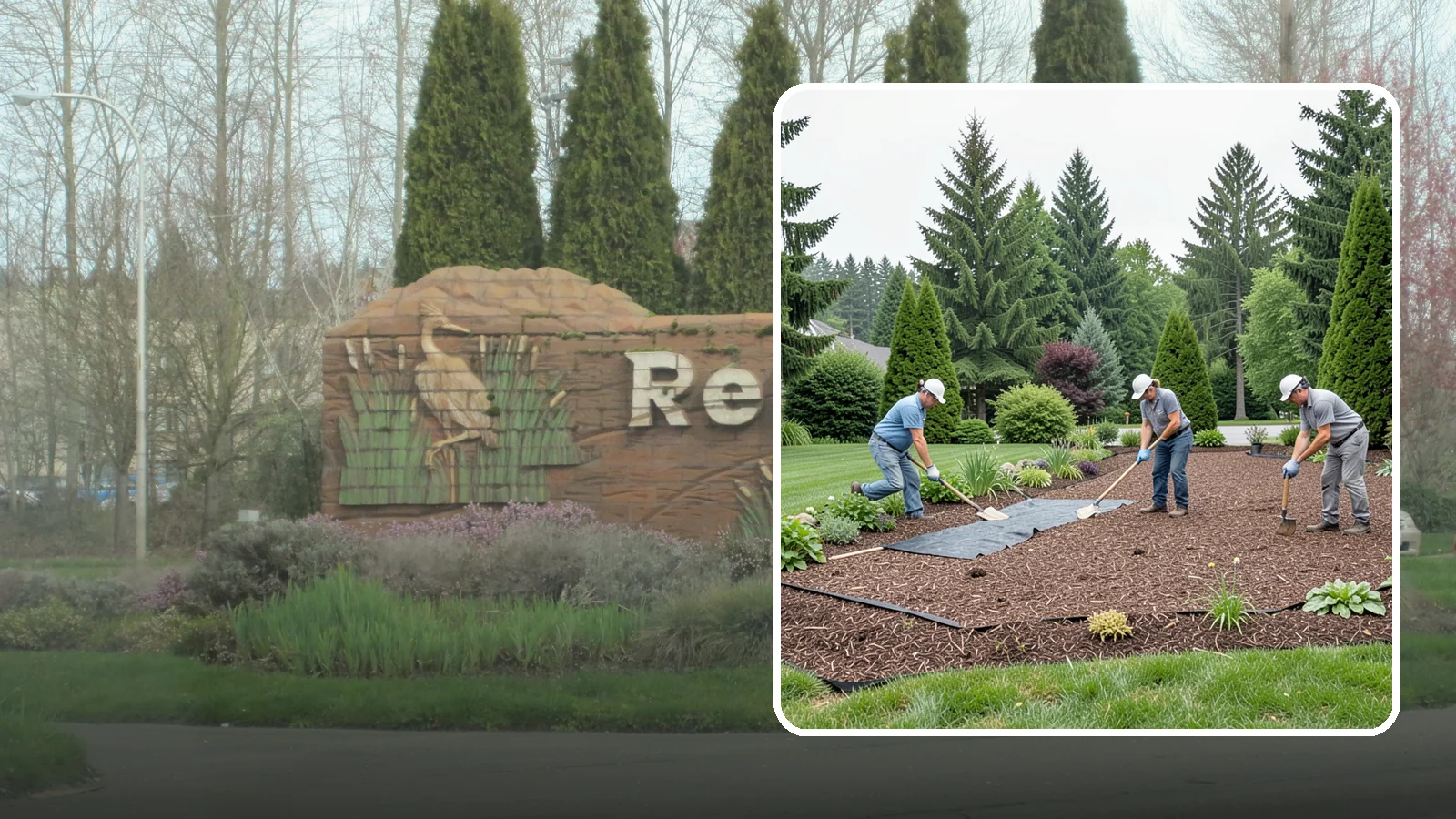
Professional-grade weed barrier fabric installed beneath mulch or rock for lasting weed control.
Weeds keep coming back through the mulch. Bark chips sink into the soil, and gravel paths turn muddy and green by midsummer. If you are seeing this in a Renton bed or walkway, landscape fabric may be the missing layer.
Washington Landscaping installs landscape fabric under mulch, gravel and stone. The work starts with clearing and leveling the area, then laying the fabric flat and pinning it down. Call or text 425-433-9444 for a free estimate.
How Landscape Fabric Works in Renton Yards
Weeds in a bed come from two places: seeds already in the soil and seeds that land on top of the mulch. Fabric helps with the first group. It blocks light, so buried seeds have a harder time sprouting. It does less against seeds that blow in and root in the mulch itself. Over time, that top layer needs some upkeep either way.
Timing matters here. Renton's frost-free growing season runs about 244 days, from about March 19 to November 17. These are median dates, so frost can come earlier or later in a given year. That is a long stretch for weeds to grow. Laying fabric before spring growth takes off means fewer weeds to clear first.
Drainage is the other thing to think about. Per the USDA soil survey, about 23% of Renton's rated land is well drained, 65% is moderately well drained and 12% is poorly drained. That describes the city as a whole. Your own yard may differ, and it is worth checking where water sits after a rain. Good fabric is woven or perforated so water passes through. In a soggy corner, though, the fabric will not fix the drainage. Those spots may need a different base or some grading, and permit needs for grading are checked with the city before work starts.
What the installation involves
We start by removing existing weeds, sod and debris. Then we rake the ground smooth, because bumps and rocks wear through fabric. The fabric goes down in overlapping strips so no gaps are left. We pin it with staples, and cut openings around shrubs and trees. Mulch, bark or gravel goes on top, since bare fabric breaks down in sunlight.
Fabric suits gravel paths, rock beds, and the ground around established shrubs. It is a poor choice under beds where you plan to add many perennials or spread the plants by division, because roots and the fabric get in each other's way. If you are not sure which fits your yard, we can talk it through during a free estimate.
Renton yard conditions at a glance
| Frost-free season | about 244 days |
|---|---|
| Tree canopy | 25.2% of the city |
| Days with 0.1 in or more of rain | 109 a year |
| Dry months (under 1.25 in) | July and August |
| Last / first frost (median) | Mar 19 / Nov 17 |
A year in a Renton yard
- Late winter
- Dormant pruning for most deciduous trees and shrubs, before buds break.
- Spring
- Last frost is usually around Mar 19; in 1 year in 10 it comes on or after Apr 4. Plant frost-tender annuals and vegetables after that.
- Early summer
- Check sprinklers and drip lines before July, the start of the dry months here.
- Summer
- July and August average 0.5 in and 0.9 in. Water deeply and less often; mulch beds to hold moisture.
- Fall
- Aerate, overseed and plant trees and shrubs while the soil is warm; first frost is usually around Nov 17. Winterize irrigation before then.
- Winter
- About 29 days a year freeze at night and thaw by day: keep drains, paver joints and wall weep holes clear.
Dates are medians for the city from Daymet 2005-2025; your yard and any given year can differ.
Sources: Daymet daily weather (NASA/ORNL), 2023 USDA Plant Hardiness Zone Map data (PRISM, Oregon State University), USDA SSURGO soil survey, USGS 3DEP elevation, USFS/NLCD tree canopy 2025, US Census ACS 2020-2024.
Renton Landscape Fabric Installation

Local Service Information
Renton
A city at the south end of Lake Washington where the Cedar River meets the lake.
Benefits
Blocks aggressive PNW weeds while allowing water to drain through; Keeps rock and mulch from sinking and mixing into soil; Slashes ongoing weeding time and maintenance cost; Breathable woven fabric supports long-term soil and plant health
Process

Also serving Renton
- Debris Cleanup in Rentonat Washington Tree Services
Get a Free Landscape Fabric Installation Estimate in Renton
Tell us about your project. We’ll review your needs and provide a customized, no-obligation proposal.
Request a Free Consultation
Complete the form or call our team to discuss your project.
On-Site Assessment
We’ll review your property, discuss your goals, and recommend an appropriate solution.
Receive a Customized Proposal
Receive a detailed estimate outlining the proposed work and pricing.