Shaping Your Outdoors. Surpassing Expectations.

Renton Lawn Grading & Leveling
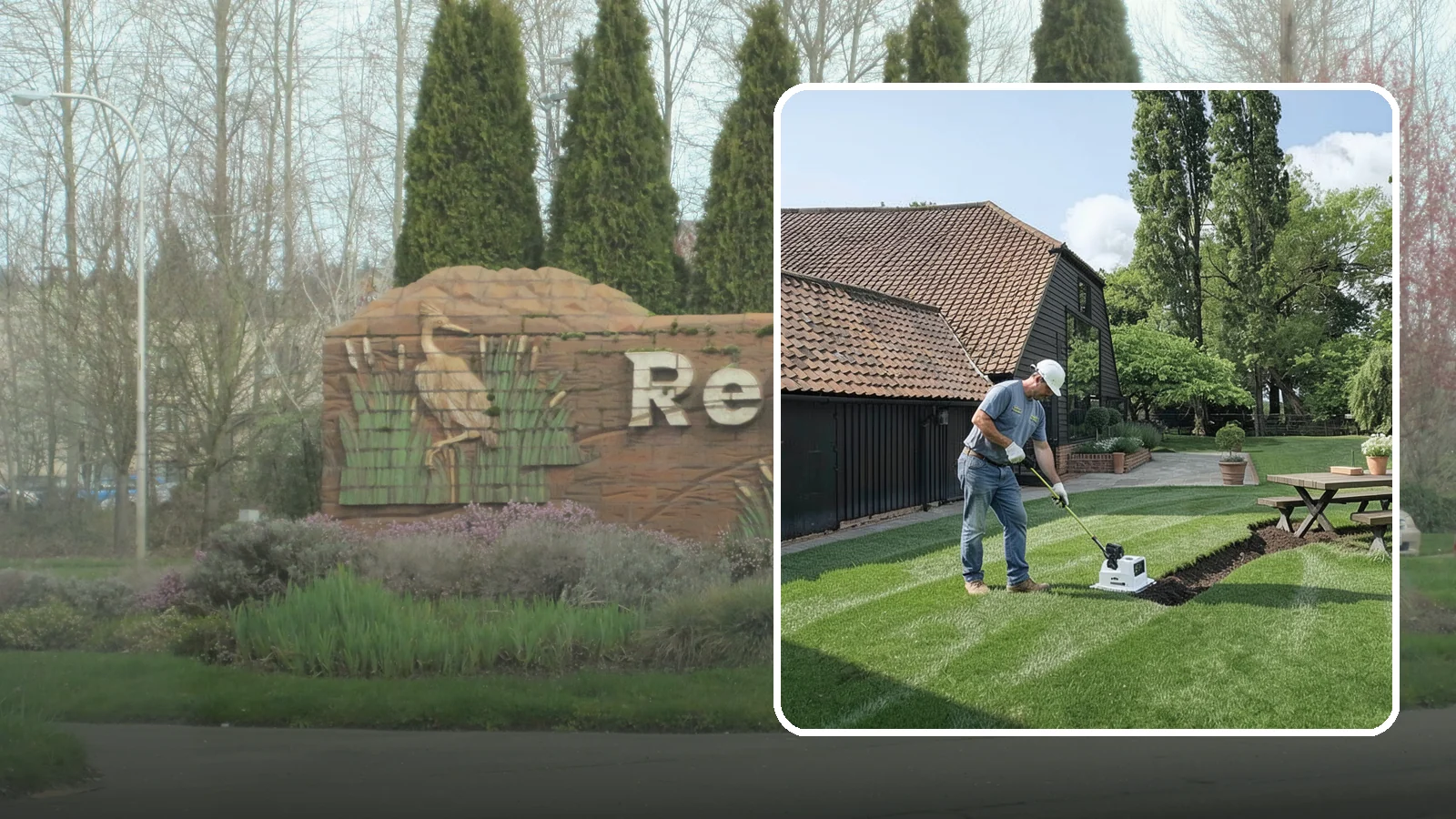
Smooth out bumps, dips, and low spots and correct slope so your lawn drains and mows evenly.
You walk across the lawn after a storm and your shoes sink in. Water sits in one corner for days. Or the mower scalps a hump and bounces over a dip. These are the usual signs that the ground has settled, or that it never sloped the right way to begin with.
Lawn grading and leveling reshapes the soil surface so water moves away from the house and the turf sits evenly. Washington Landscaping, based in Bothell, offers free estimates for this work in Renton. Call or text 425-433-9444 to talk through what your yard is doing.
Why Renton yards pool water and how grading helps
Standing water and uneven turf usually come from a few causes. Fill soil settles after construction or utility trenching. Old tree stumps rot and leave hollows. Compacted ground sheds water instead of absorbing it. Sometimes the original grade simply tilts toward the foundation.
Local conditions can make these problems more or less likely. Per the USDA SSURGO soil survey, poorly drained soils cover about 12% of Renton's rated land. That figure describes the city as a whole, and your own yard may differ. If your soil is one of the slow-draining types, water has fewer places to go, so surface slope matters more.
Rain adds to this. Daymet data for 2005-2025 shows about 42.4 inches a year in Renton, but only about 4.8 days a year with an inch or more. Most of the rain comes as long, steady wetting rather than a few big downpours. That keeps low spots soggy for long stretches, so fixing the grade is worth more than waiting for a dry spell.
Slope is the other piece. USGS 3DEP elevation data shows about 15% of Renton's land slopes 15% or more. If your lot is on a hillside, grading is less about flattening and more about directing runoff so it does not wash across the lawn or toward the house. Flatter lots tend to need help getting water to leave at all.
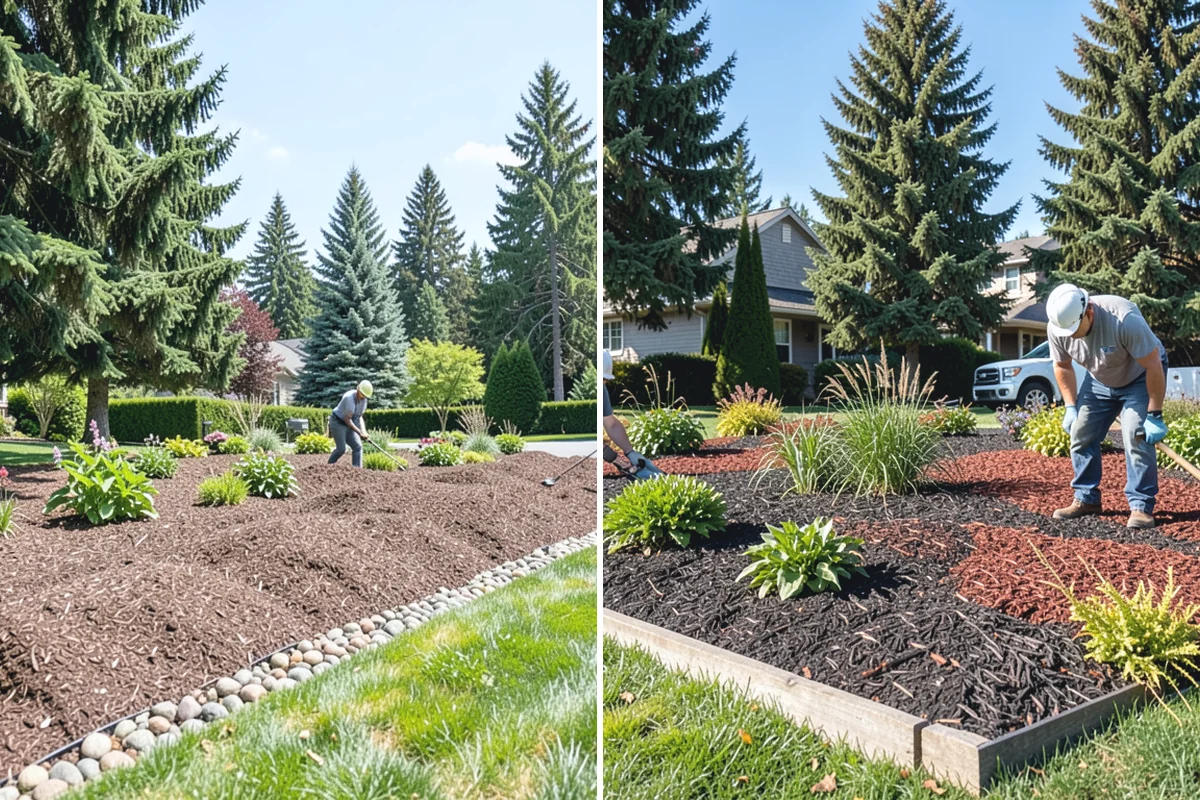
The work itself is straightforward. We mark where water collects and which way it should go. Low areas are filled with suitable soil and high spots are cut down. The surface is then raked to a smooth, gentle fall away from the structure. Compacted areas may be loosened first. Afterward the lawn is reseeded or re-sodded.
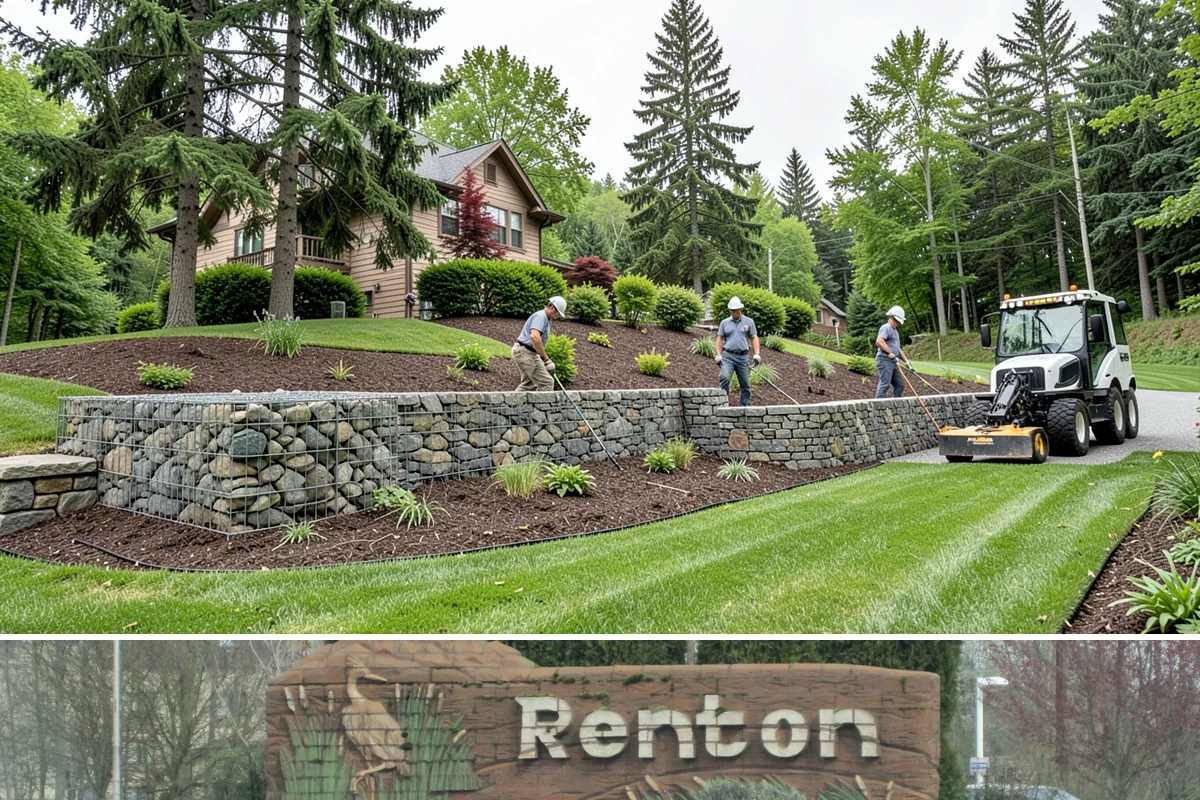
If the job involves retaining walls or major regrading, permit needs are checked with the city before work starts. We are licensed, bonded and insured, and financing is available subject to credit approval.
Renton yard conditions at a glance
| Soil drainage (rated land) | 23% well, 65% moderately well, 12% poorly drained |
|---|---|
| Days with 1 in or more of rain | 4.8 a year |
| Share of rain October to April | 82% |
| Land sloping 15% or more | 15% (40% or more: 3.5%) |
| Average yearly precipitation | 42.4 in |
A year in a Renton yard
- Late winter
- Dormant pruning for most deciduous trees and shrubs, before buds break.
- Spring
- Last frost is usually around Mar 19; in 1 year in 10 it comes on or after Apr 4. Plant frost-tender annuals and vegetables after that.
- Early summer
- Check sprinklers and drip lines before July, the start of the dry months here.
- Summer
- July and August average 0.5 in and 0.9 in. Water deeply and less often; mulch beds to hold moisture.
- Fall
- Aerate, overseed and plant trees and shrubs while the soil is warm; first frost is usually around Nov 17. Winterize irrigation before then.
- Winter
- About 29 days a year freeze at night and thaw by day: keep drains, paver joints and wall weep holes clear.
Dates are medians for the city from Daymet 2005-2025; your yard and any given year can differ.
How Renton’s soils drain
- Well drained23%
- Moderately well65%
- Poorly drained12%
Share of rated land in the USDA SSURGO soil survey; built-over ground is not rated. A soil check on your lot tells you what you have.
Sources: Daymet daily weather (NASA/ORNL), 2023 USDA Plant Hardiness Zone Map data (PRISM, Oregon State University), USDA SSURGO soil survey, USGS 3DEP elevation, USFS/NLCD tree canopy 2025, US Census ACS 2020-2024.
Renton Lawn Grading & Leveling
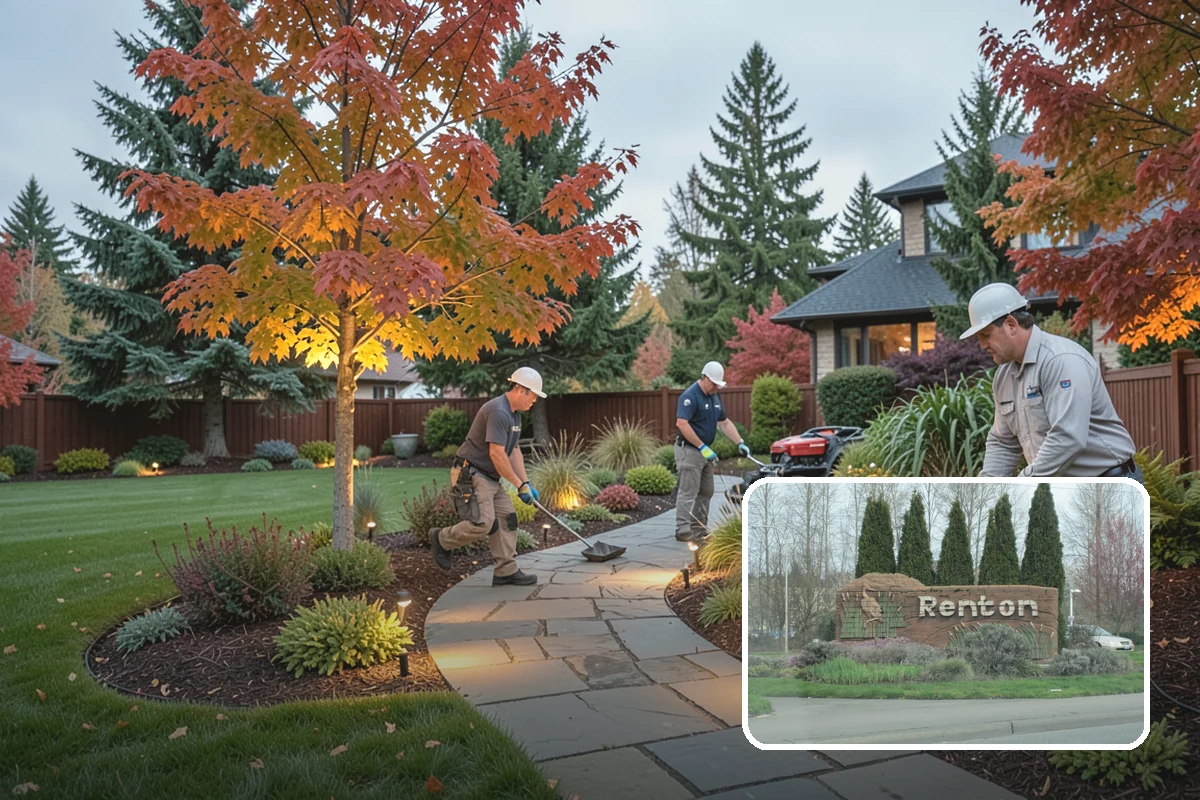
Local Service Information
Renton
A city at the south end of Lake Washington where the Cedar River meets the lake.
Benefits
Even surface that mows cleanly with no scalping; Corrects low spots that pond and stay soggy; Slopes water away from structures and turf; Foundation for a healthy, uniform lawn; Reduces mowing wear and lawn stress
Process
Also serving Renton
- Native tree planting in Rentonat Washington Tree Services
Get a Free Lawn Grading & Leveling Estimate in Renton
Tell us about your project. We’ll review your needs and provide a customized, no-obligation proposal.
Request a Free Consultation
Complete the form or call our team to discuss your project.
On-Site Assessment
We’ll review your property, discuss your goals, and recommend an appropriate solution.
Receive a Customized Proposal
Receive a detailed estimate outlining the proposed work and pricing.