Shaping Your Outdoors. Surpassing Expectations.

Renton Lawn Removal
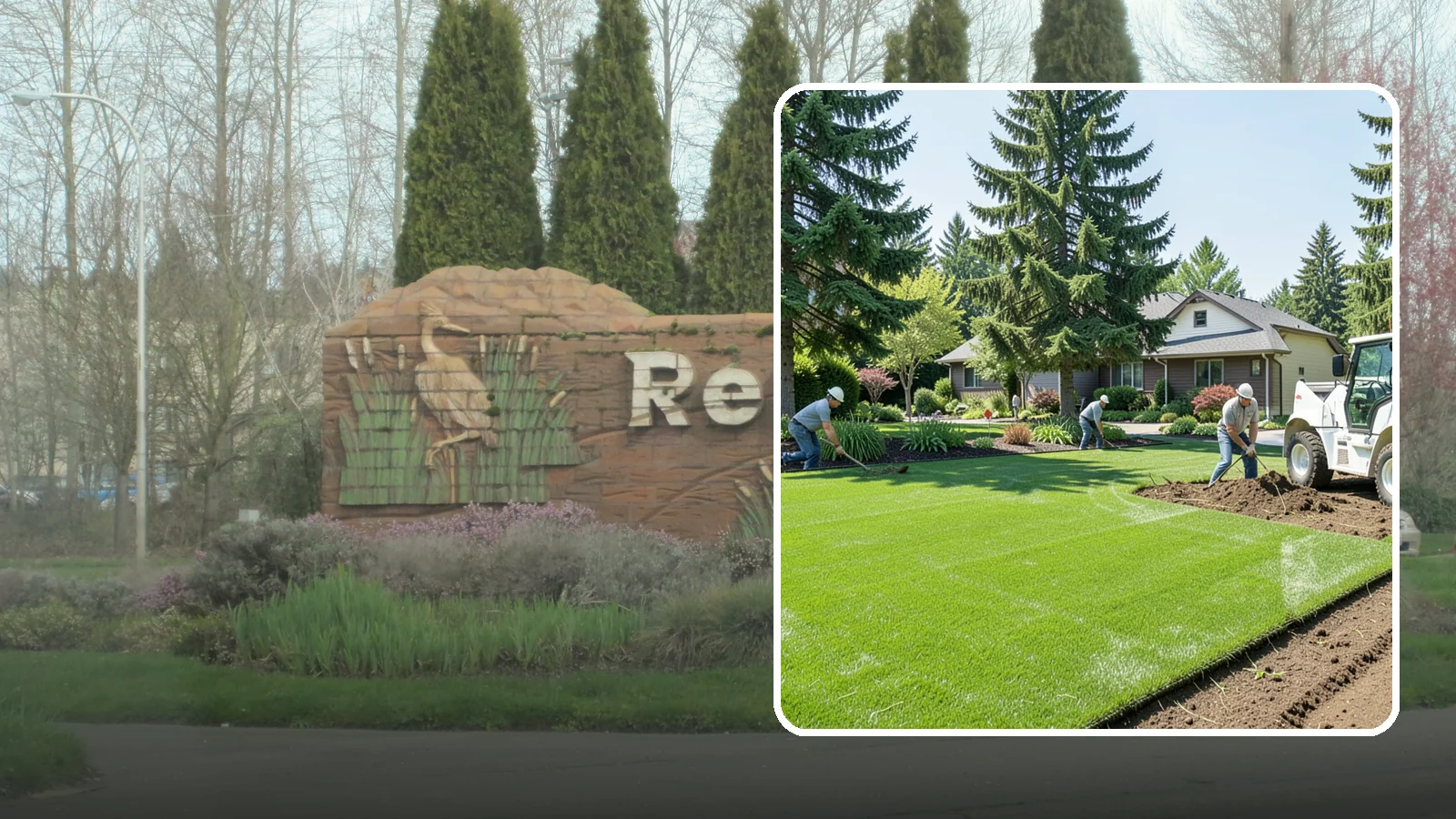
Complete removal of old, dead, or unwanted lawn to make way for new turf, beds, or hardscape.
The lawn in your Renton yard may be thin, patchy, or full of moss and weeds, and mowing it feels like a chore with little to show for it. Some homeowners want to replace turf with beds, groundcover, or a simpler layout. Others just want to stop watering and feeding grass they no longer use.
Lawn removal clears the turf so the ground can be reused. Washington Landscaping, based in Bothell and in business since 2004, offers free estimates. Call or text 425-433-9444 to talk through your yard.
How Lawn Removal Works in Renton Yards
Grass looks tired for a few common reasons. Shade, compacted soil, and soggy ground all weaken turf, and summer dryness can finish it off. Removal makes sense when fixing those problems costs more effort than the lawn is worth to you.
Local conditions matter here. Per the USDA soil survey, about 23% of Renton's rated land is well drained, 65% moderately well drained, and 12% poorly drained. That describes the city as a whole, so your own yard may differ. It affects the work because a wet spot may need different handling after the sod is gone. Bare soil that stays soggy can turn muddy, and the right next step depends on what you plan to plant or build there.
Tree cover is another factor. The USFS/NLCD 2025 data shows canopy over about 25.2% of Renton. If your lawn sits under large trees, the shade may be the reason it struggles. Removing turf near trees calls for care around surface roots, so the work is done in a way that avoids cutting into them where possible.
Timing also plays a role. July and August are Renton's dry months, with average rain of about 0.54 in and 0.93 in (Daymet, 2005-2025). Grass often goes dormant and brown then, which can make it easy to mistake dormancy for death. New plantings put in during that stretch need regular watering to establish. Many homeowners prefer to remove turf in a wetter part of the year and plant after, but your plan should set the schedule.
The work itself is straightforward. The turf is cut and lifted, or otherwise cleared, and the debris is hauled off. The soil is then checked and prepared for whatever comes next, such as mulch, planting beds, or new hardscape. If the plan includes walls, grading, or structures, permit needs are checked with the city before work starts.
We are licensed, bonded and insured, and financing is available subject to credit approval.
Renton yard conditions at a glance
| Soil drainage (rated land) | 23% well, 65% moderately well, 12% poorly drained |
|---|---|
| Dry months (under 1.25 in) | July and August |
| Frost-free season | about 244 days |
| Tree canopy | 25.2% of the city |
| Days with 0.1 in or more of rain | 109 a year |
A year in a Renton yard
- Late winter
- Dormant pruning for most deciduous trees and shrubs, before buds break.
- Spring
- Last frost is usually around Mar 19; in 1 year in 10 it comes on or after Apr 4. Plant frost-tender annuals and vegetables after that.
- Early summer
- Check sprinklers and drip lines before July, the start of the dry months here.
- Summer
- July and August average 0.5 in and 0.9 in. Water deeply and less often; mulch beds to hold moisture.
- Fall
- Aerate, overseed and plant trees and shrubs while the soil is warm; first frost is usually around Nov 17. Winterize irrigation before then.
- Winter
- About 29 days a year freeze at night and thaw by day: keep drains, paver joints and wall weep holes clear.
Dates are medians for the city from Daymet 2005-2025; your yard and any given year can differ.
How Renton’s soils drain
- Well drained23%
- Moderately well65%
- Poorly drained12%
Share of rated land in the USDA SSURGO soil survey; built-over ground is not rated. A soil check on your lot tells you what you have.
Sources: Daymet daily weather (NASA/ORNL), 2023 USDA Plant Hardiness Zone Map data (PRISM, Oregon State University), USDA SSURGO soil survey, USGS 3DEP elevation, USFS/NLCD tree canopy 2025, US Census ACS 2020-2024.
Renton Lawn Removal
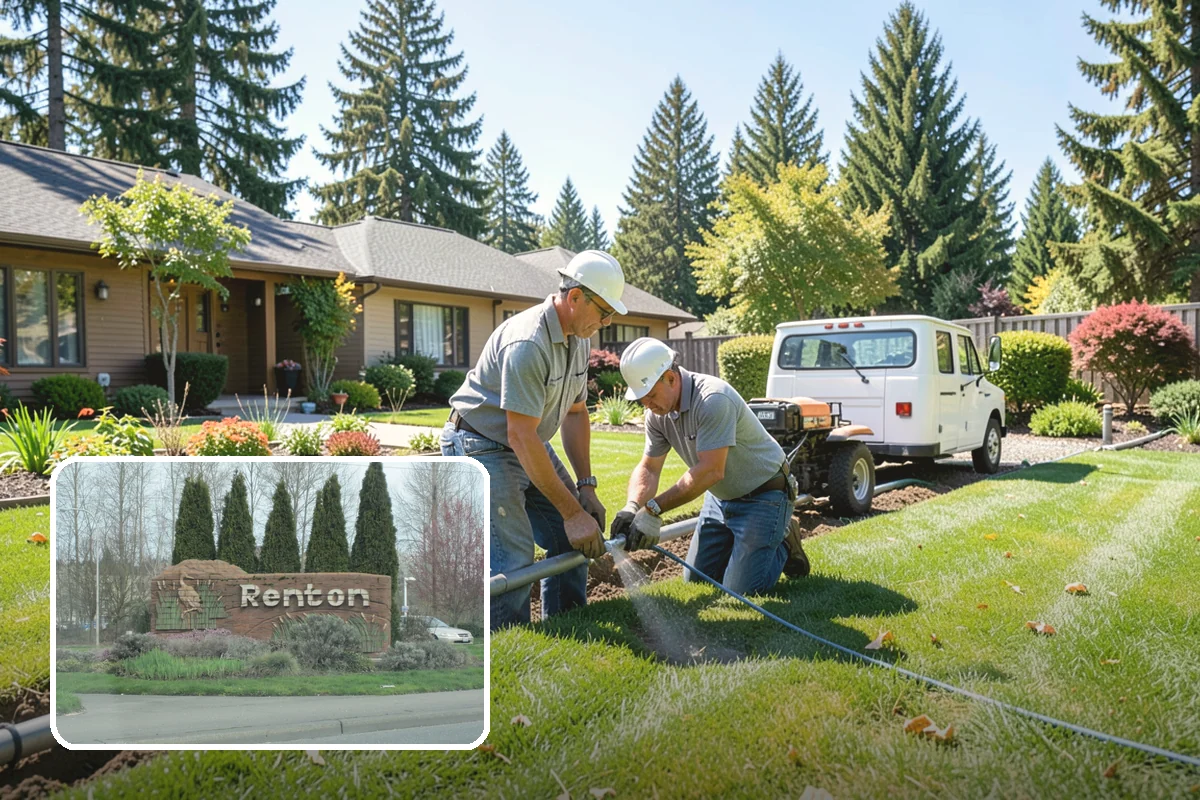
Local Service Information
Renton
A city at the south end of Lake Washington where the Cedar River meets the lake.
Benefits
Clean slate for new turf, beds, or hardscape; Removes grass and roots so it does not return; Options from sod stripping to full excavation; Debris hauled away and disposed of; Sets up any follow-on install for success

Process
Also serving Renton
- Tree replacement in Rentonat Washington Tree Services
Get a Free Lawn Removal Estimate in Renton
Tell us about your project. We’ll review your needs and provide a customized, no-obligation proposal.
Request a Free Consultation
Complete the form or call our team to discuss your project.
On-Site Assessment
We’ll review your property, discuss your goals, and recommend an appropriate solution.
Receive a Customized Proposal
Receive a detailed estimate outlining the proposed work and pricing.