Shaping Your Outdoors. Surpassing Expectations.

Renton Lawn Seeding
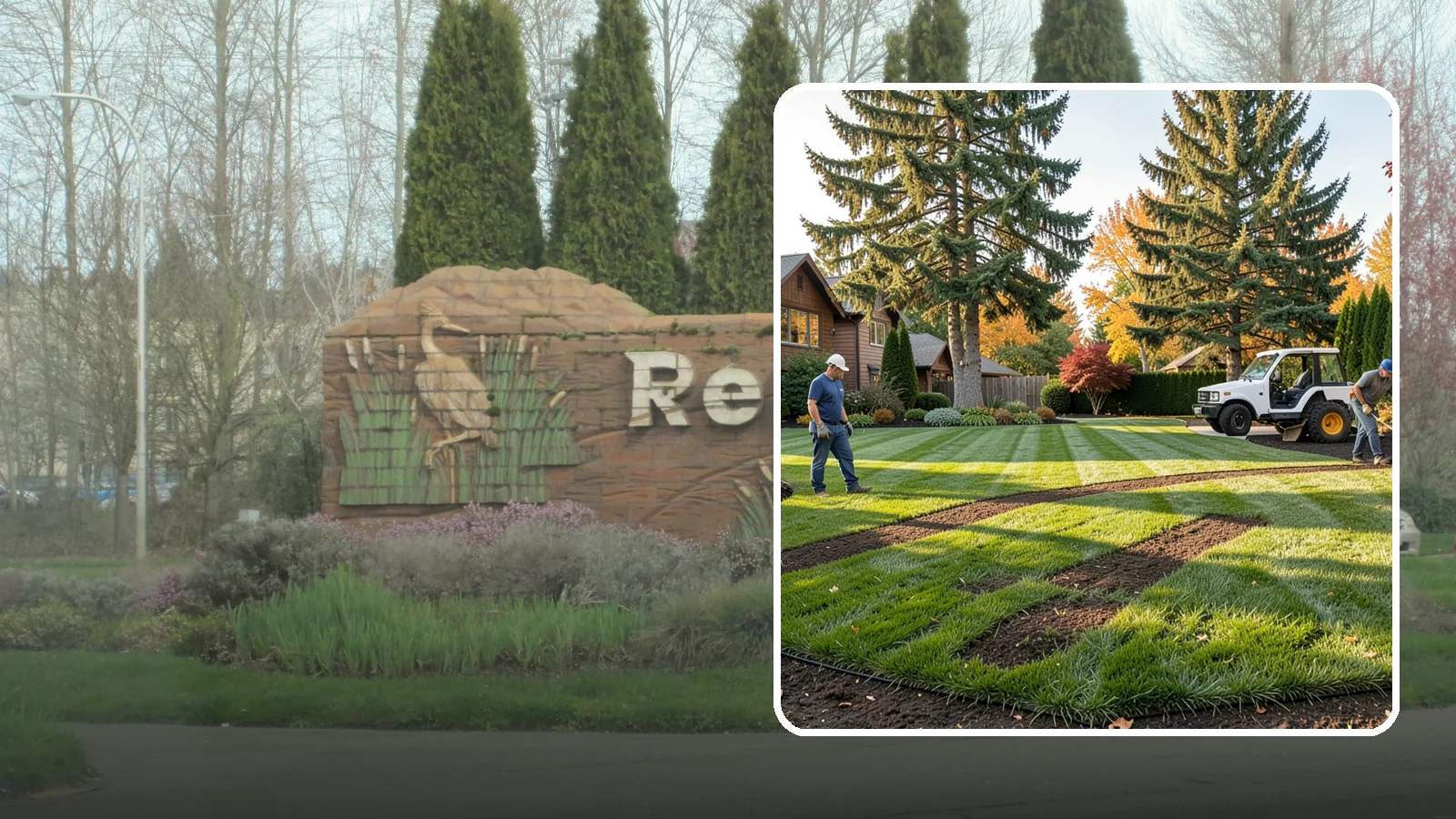
New lawn establishment from quality grass seed matched to your soil, sun, and Pacific Northwest climate.
In Renton, lawn seeding makes the most sense in early fall or in spring. Seed needs steady moisture to sprout, and those seasons usually supply it. The median last spring frost here is Mar 19, and the median first fall frost is Nov 17 (Daymet, 2005-2025). Frost can come earlier or later in any given year.
July and August are the dry months, averaging about 0.54 in and 0.93 in of rain. Seed sown then needs frequent watering to survive. Washington Landscaping plans seeding jobs around these windows, and we can talk through your yard and timing with a free estimate.
Planning a Lawn Seeding Project in Renton, WA
Good seeding starts with the ground, not the seed. Before anything is sown, we look at what is there now: thin turf, bare patches, moss, compacted soil or weeds. Each one calls for a different starting point. A small patch may only need loosening and fresh seed. A whole lawn may need old turf removed, the soil loosened and the surface graded smooth.
What affects scope
Size is the obvious factor, but condition matters more. Compacted soil often needs aerating or tilling so roots can go deep. Poor soil may need compost worked in. Drainage is another one. Puddles that linger after rain will drown new grass, so low spots may need regrading before seeding. Shade also counts. Under trees, a shade-tolerant seed mix does better than a sun mix, and some spots may be better suited to something other than lawn. Your own yard may differ from the city as a whole, so we judge it on site.
Timing and what to expect
Because the last spring frost has a median date of Mar 19, spring seeding generally fits from then into the following weeks, once the soil has warmed a bit. Fall seeding should be done early enough for roots to establish before the median first frost on Nov 17. Frost dates are medians, so a cold snap can arrive sooner.
After seeding, expect to keep the top layer of soil damp. That can mean light watering once or more a day until the grass is up. Germination takes a couple of weeks or longer, depending on the seed and the weather. Early growth looks patchy. Keep foot traffic off the area, and wait to mow until the grass is tall enough, then take only a small amount off the top.
Practical tip: if you must seed in summer, plan for the dry stretch in July and August. Set up a sprinkler with a timer before the seed goes down, so watering stays steady and does not depend on your schedule.
Renton yard conditions at a glance
| Soil drainage (rated land) | 23% well, 65% moderately well, 12% poorly drained |
|---|---|
| Dry months (under 1.25 in) | July and August |
| Frost-free season | about 244 days |
| Tree canopy | 25.2% of the city |
| Days with 0.1 in or more of rain | 109 a year |
A year in a Renton yard
- Late winter
- Dormant pruning for most deciduous trees and shrubs, before buds break.
- Spring
- Last frost is usually around Mar 19; in 1 year in 10 it comes on or after Apr 4. Plant frost-tender annuals and vegetables after that.
- Early summer
- Check sprinklers and drip lines before July, the start of the dry months here.
- Summer
- July and August average 0.5 in and 0.9 in. Water deeply and less often; mulch beds to hold moisture.
- Fall
- Aerate, overseed and plant trees and shrubs while the soil is warm; first frost is usually around Nov 17. Winterize irrigation before then.
- Winter
- About 29 days a year freeze at night and thaw by day: keep drains, paver joints and wall weep holes clear.
Dates are medians for the city from Daymet 2005-2025; your yard and any given year can differ.
How Renton’s soils drain
- Well drained23%
- Moderately well65%
- Poorly drained12%
Share of rated land in the USDA SSURGO soil survey; built-over ground is not rated. A soil check on your lot tells you what you have.
Sources: Daymet daily weather (NASA/ORNL), 2023 USDA Plant Hardiness Zone Map data (PRISM, Oregon State University), USDA SSURGO soil survey, USGS 3DEP elevation, USFS/NLCD tree canopy 2025, US Census ACS 2020-2024.
Renton Lawn Seeding
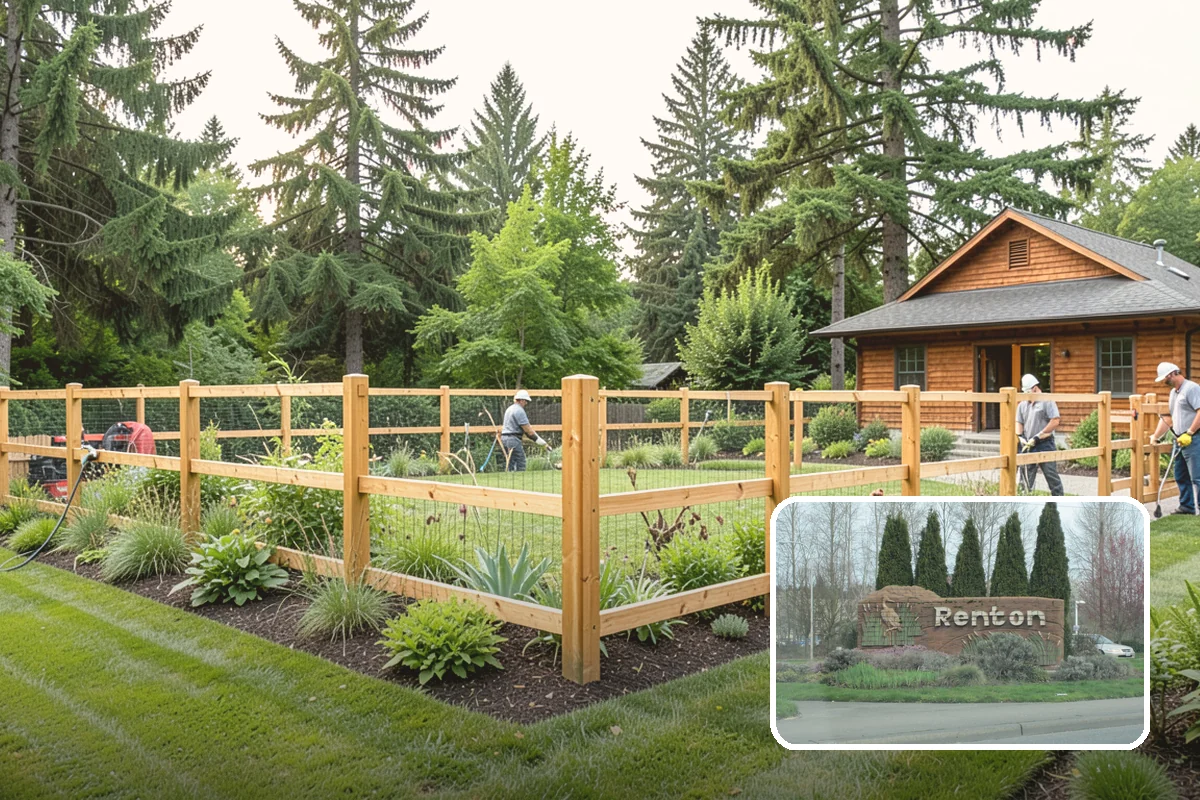
Local Service Information
Renton
A city at the south end of Lake Washington where the Cedar River meets the lake.
Benefits
Lowest-cost way to establish a new lawn; Seed blend tailored to sun, shade, and soil; Deep-rooted, resilient turf over time; Great for filling in thin or renovated lawns; Blends chosen for PNW climate
Process
Also serving Renton
- Privacy screen planting in Rentonat Washington Tree Services
Get a Free Lawn Seeding Estimate in Renton
Tell us about your project. We’ll review your needs and provide a customized, no-obligation proposal.
Request a Free Consultation
Complete the form or call our team to discuss your project.
On-Site Assessment
We’ll review your property, discuss your goals, and recommend an appropriate solution.
Receive a Customized Proposal
Receive a detailed estimate outlining the proposed work and pricing.