Shaping Your Outdoors. Surpassing Expectations.

Renton Magnolia Pruning
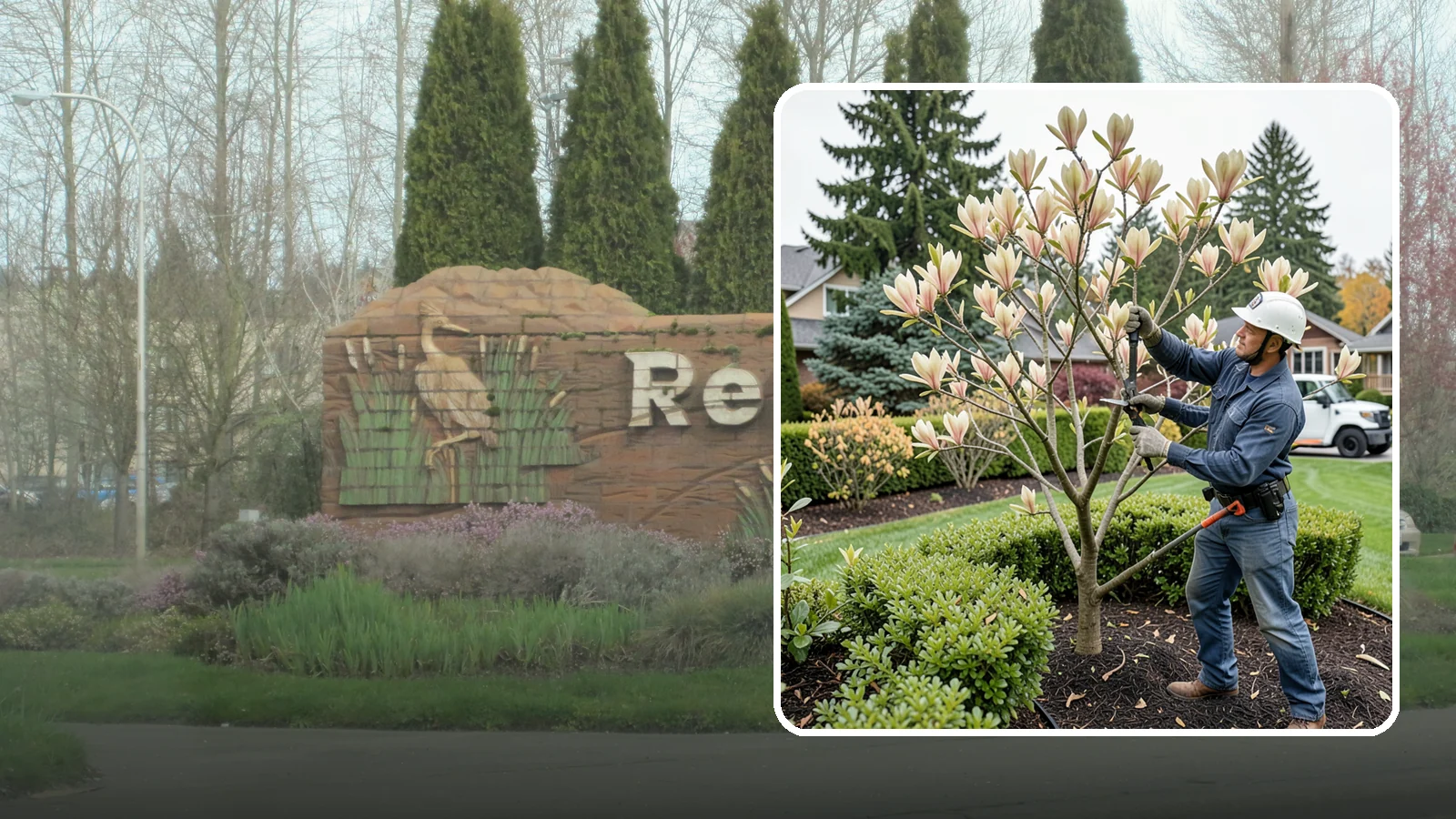
Minimal, careful pruning for magnolias, which resent heavy cuts and slow to heal.
Magnolia pruning in Renton usually makes the most sense in late spring to summer, after the tree has finished flowering. Many magnolias set next year's flower buds soon after bloom, so cutting in late winter or early spring can remove the flowers you were waiting for.
Washington Landscaping has an ISA Certified Arborist on staff. That matters for magnolias, which heal slowly and do best with a few well-chosen cuts rather than heavy shearing. Call or text 425-433-9444 to ask about an estimate; estimates are free.
Planning Magnolia Pruning in Renton, WA
Start with the type of magnolia. Deciduous kinds, such as saucer magnolias, bloom on bare branches in early spring. Evergreen kinds, such as southern magnolias, bloom later and hold their leaves. Timing and cuts differ, so identifying the tree comes first.
Frost is part of the plan too. In Renton the median last spring frost is March 19, and the median first fall frost is November 17 (Daymet, 2005-2025). These are medians, so frost can come earlier or later in a given year. Pruning stimulates new growth, and soft new shoots can be nipped by frost. Avoiding cuts late in the season gives new growth time to harden before the first cold nights.
Renton falls in USDA zone 9a, with parts of the city ranging from 8b to 9a. The average coldest winter night is about 20.4 F (2023 USDA map, PRISM data). Most magnolias grown in the Puget Sound region handle that range, but your own yard may run colder or warmer than the city as a whole, especially in low spots or open, windy sites.
What affects scope
Size and access matter most. A small tree that needs light shaping is a different job from a mature tree that has crowded a roof, a driveway or power lines. Deadwood, crossing branches, storm damage and low limbs that block a walkway all add work. So does how much debris must be hauled out.
What to expect
A good visit begins with a walk around the tree to look at its structure. Cuts are made back to a branch or collar, not into stubs. Large branches are removed in stages to avoid tearing bark. The goal is a natural shape with better light and airflow. A magnolia should not be topped or stripped, because it responds poorly to that.
Washington Landscaping is licensed, bonded and insured ($2M), and financing is available subject to credit approval.
One practical tip: note when your magnolia finishes blooming this year, and photograph the tree. That makes it easy to plan pruning for the right window and to point out the branches that concern you.
Renton yard conditions at a glance
| USDA hardiness zone (2023) | 9a (parts 8b to 9a) |
|---|---|
| Last / first frost (median) | Mar 19 / Nov 17 |
| Tree canopy | 25.2% of the city |
| Share of rain October to April | 82% |
| Dry months (under 1.25 in) | July and August |
A year in a Renton yard
- Late winter
- Dormant pruning for most deciduous trees and shrubs, before buds break.
- Spring
- Last frost is usually around Mar 19; in 1 year in 10 it comes on or after Apr 4. Plant frost-tender annuals and vegetables after that.
- Early summer
- Check sprinklers and drip lines before July, the start of the dry months here.
- Summer
- July and August average 0.5 in and 0.9 in. Water deeply and less often; mulch beds to hold moisture.
- Fall
- Aerate, overseed and plant trees and shrubs while the soil is warm; first frost is usually around Nov 17. Winterize irrigation before then.
- Winter
- About 29 days a year freeze at night and thaw by day: keep drains, paver joints and wall weep holes clear.
Dates are medians for the city from Daymet 2005-2025; your yard and any given year can differ.
Sources: Daymet daily weather (NASA/ORNL), 2023 USDA Plant Hardiness Zone Map data (PRISM, Oregon State University), USDA SSURGO soil survey, USGS 3DEP elevation, USFS/NLCD tree canopy 2025, US Census ACS 2020-2024.
Renton Magnolia Pruning

Local Service Information
Renton
A city at the south end of Lake Washington where the Cedar River meets the lake.
Benefits
Respects the magnolia’s dislike of heavy cuts; Deadwood and rubbing branches removed; Clean cuts that limit stress; Form and flowers preserved; Minimal, necessary pruning only
Process
Also serving Renton
- Young tree training in Rentonat Washington Tree Services
Get a Free Magnolia Pruning Estimate in Renton
Tell us about your project. We’ll review your needs and provide a customized, no-obligation proposal.
Request a Free Consultation
Complete the form or call our team to discuss your project.
On-Site Assessment
We’ll review your property, discuss your goals, and recommend an appropriate solution.
Receive a Customized Proposal
Receive a detailed estimate outlining the proposed work and pricing.